
Introduction
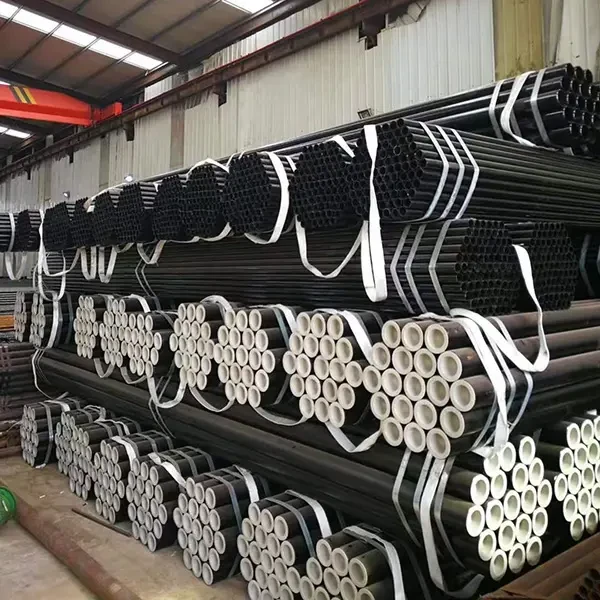
Inconel 601 seamless pipe is a nickel-chromium-iron alloy renowned for its exceptional resistance to oxidation, corrosion, and high-temperature creep. Positioned within the critical infrastructure of industries such as aerospace, chemical processing, and power generation, this piping serves as a vital conduit for aggressive media and high-temperature processes. Unlike standard stainless steels, Inconel 601 maintains its mechanical strength and integrity even under severe conditions, making it indispensable in applications where failure is not an option. Its seamless construction further enhances its reliability by eliminating weld seams – potential points of weakness. Core performance characteristics include high tensile strength at elevated temperatures, resistance to chloride stress-corrosion cracking, and consistent dimensional stability. The increasing demand for higher operating temperatures and more corrosive environments drives continued utilization of Inconel 601, cementing its role as a premier material for demanding applications.
Material Science & Manufacturing
Inconel 601’s base composition comprises approximately 61% nickel, 14% chromium, 8% iron, and 5% aluminum, with minor additions of titanium and other elements for refinement. Nickel contributes to the alloy’s corrosion resistance and ductility, while chromium forms a protective oxide layer. Aluminum and titanium aid in solid solution strengthening, improving creep resistance at high temperatures. The raw materials are typically sourced as nickel and chromium metal, ferroalloys, and refined iron. Manufacturing begins with vacuum induction melting (VIM) or electro-slag remelting (ESR) to achieve a high level of purity and homogeneity. The molten alloy is then cast into billets. These billets undergo hot working, specifically extrusion, to produce seamless pipes. Key parameters during extrusion include temperature control (typically between 1150°C and 1250°C), reduction ratio, and die design. Following extrusion, pipes are cold-drawn to achieve the desired dimensions and mechanical properties. Cold drawing introduces work hardening, which is then relieved through annealing – a precisely controlled heat treatment process – to restore ductility while maintaining strength. Quality control at each stage, including spectroscopic analysis of composition, ultrasonic testing for defects, and mechanical testing (tensile, yield, and elongation), is crucial. Finally, surface finishing processes, such as pickling and passivation, are employed to remove scale and enhance corrosion resistance.

Performance & Engineering
The performance of Inconel 601 seamless pipe is heavily governed by its resistance to creep, oxidation, and corrosion under high-temperature, high-pressure conditions. Force analysis in piping systems necessitates consideration of internal pressure, external loads (weight, thermal expansion), and potential stresses induced by thermal cycling. The alloy exhibits excellent creep rupture strength up to 980°C (1800°F), allowing for prolonged service in demanding environments. Environmental resistance is paramount; Inconel 601 effectively resists scaling in oxidizing atmospheres up to 1175°C (2150°F). It also demonstrates superior resistance to pitting and crevice corrosion in chloride-containing environments. Engineering design must account for thermal expansion coefficient (approximately 13.2 x 10⁻⁶ /°C) to prevent excessive stress on connected components. Compliance requirements include adherence to ASME B31.3 for process piping, ensuring safe and reliable operation. Further, if utilized in aerospace applications, specific material certifications according to AMS specifications are required. The alloy's resistance to fatigue cracking is also a critical consideration, particularly in applications involving cyclic loading. Proper support and stress analysis are critical to prevent premature failure due to vibration or fluctuating pressures. Careful consideration of welding procedures is vital; controlled heat input and post-weld heat treatment are required to maintain the alloy’s corrosion resistance and mechanical properties.
Technical Specifications
| Specification | Value (Typical) | Test Method | Units |
|---|---|---|---|
| Tensile Strength, Ultimate | 790 | ASTM E8 | MPa |
| Yield Strength, 0.2% Offset | 276 | ASTM E8 | MPa |
| Elongation in 2 inches | 30 | ASTM E8 | % |
| Hardness, Rockwell B | 85 | ASTM E18 | HRB |
| Density | 8.27 | ASTM B778 | g/cm3 |
| Coefficient of Thermal Expansion (21-538°C) | 13.2 x 10⁻⁶ | ASTM E228 | /°C |
Failure Mode & Maintenance
Inconel 601 seamless pipe, despite its inherent robustness, is susceptible to specific failure modes. Creep rupture, occurring at elevated temperatures over extended periods, is a primary concern, particularly in applications exceeding design limits. Oxidation can lead to material loss and thinning of the pipe wall, particularly in cyclic oxidation environments. Chloride stress-corrosion cracking (SCC) represents a significant risk in environments with high chloride concentrations, especially under tensile stress. Fatigue cracking can occur due to cyclic loading, particularly near weld seams or areas of stress concentration. Pitting corrosion, though less common, can initiate in localized areas with surface defects. Maintenance strategies focus on preventative measures and regular inspections. Visual inspections should be conducted to identify signs of oxidation, corrosion, or mechanical damage. Non-destructive testing (NDT), such as ultrasonic testing and radiographic testing, can detect internal flaws and wall thinning. Periodic hydrostatic testing verifies the pipe’s integrity under pressure. If SCC is suspected, electrochemical potential measurements can assess the corrosion susceptibility. For repairs, welding with matched filler metal (typically Inconel weld consumables) is the preferred method, followed by post-weld heat treatment to restore mechanical properties and corrosion resistance. Replacement is necessary when the pipe wall thickness falls below the minimum allowable limit specified in the design code.
Industry FAQ
Q: What is the primary advantage of using a seamless pipe versus a welded pipe in a high-temperature, corrosive environment?
A: The primary advantage of seamless pipe lies in the absence of weld seams. Welds represent potential points of weakness susceptible to intergranular corrosion and reduced creep resistance. Seamless pipes offer a more homogeneous microstructure and eliminate these localized vulnerabilities, ensuring greater long-term reliability in harsh conditions.
Q: How does Inconel 601 compare to Inconel 625 in terms of corrosion resistance?
A: While both alloys exhibit excellent corrosion resistance, Inconel 625 generally surpasses Inconel 601 in resistance to pitting and crevice corrosion, particularly in seawater environments due to its higher molybdenum content. However, Inconel 601 offers superior resistance to oxidation and high-temperature scaling, making it preferable for applications primarily involving high-temperature oxidizing environments.
Q: What is the recommended heat treatment for Inconel 601 after cold working?
A: Annealing is the recommended heat treatment after cold working. A typical annealing cycle involves heating to 980°C (1800°F), holding for 1-2 hours, and then air cooling. This process relieves internal stresses induced by cold working, restores ductility, and optimizes mechanical properties without significantly compromising corrosion resistance.
Q: What are the critical considerations when welding Inconel 601?
A: Minimizing heat input is crucial to prevent sensitization (chromium carbide precipitation at grain boundaries) which can reduce corrosion resistance. Use appropriate filler metals specifically designed for Inconel 601, such as ERNiCrMo-3. Shielding gas should be highly inert (argon or helium). Post-weld heat treatment is often recommended to restore mechanical properties and maintain corrosion resistance.
Q: What is the typical service life expectancy of Inconel 601 piping in a chemical processing plant handling sulfuric acid at 300°C?
A: Service life expectancy is highly dependent on acid concentration, flow rate, and the presence of other corrosive species. However, under controlled conditions of moderate sulfuric acid concentration (e.g., < 50%), at 300°C, and with appropriate corrosion monitoring, a service life exceeding 10-15 years can be reasonably expected. Regular wall thickness monitoring is critical to track corrosion rates and predict remaining life.
Conclusion
Inconel 601 seamless pipe stands as a cornerstone material in industries demanding exceptional resistance to high temperatures, corrosive environments, and mechanical stress. Its unique combination of nickel, chromium, and iron, coupled with precise manufacturing processes, delivers unparalleled performance and reliability. Understanding the material’s properties, potential failure modes, and appropriate maintenance protocols is paramount to maximizing its service life and ensuring safe operation.
The continued development of advanced NDT techniques and predictive modeling will further enhance the ability to assess the integrity of Inconel 601 piping systems. Furthermore, ongoing research into novel surface coatings and alloy modifications promises to further extend its operational limits and broaden its application scope, solidifying its position as a premier material for critical infrastructure worldwide.
