
Introduction
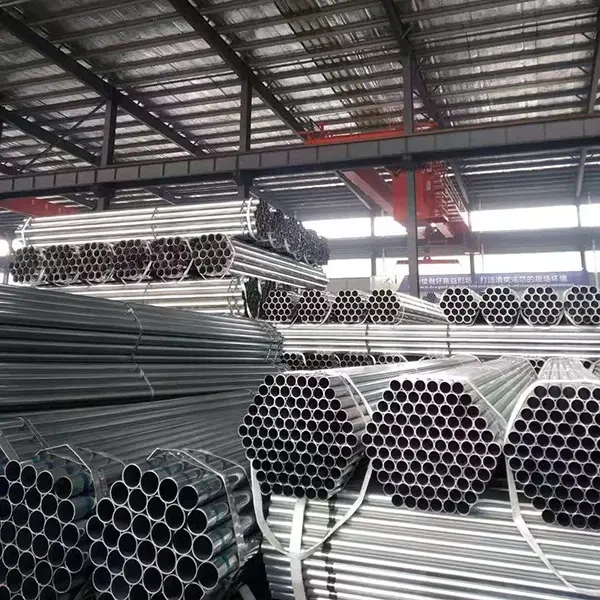
Inconel seamless pipe represents a critical component in numerous high-performance applications across aerospace, chemical processing, power generation, and oil & gas industries. These pipes are characterized by their exceptional resistance to corrosion, oxidation, and extreme temperatures, owing to the nickel-chromium-based alloy composition. Unlike welded pipe, seamless construction eliminates the weld seam, a potential point of failure, thereby enhancing structural integrity and reliability. Positioned within the supply chain as a finished product ready for system integration, inconel seamless pipe dictates process safety and longevity in demanding environments. Its core performance characteristics – high strength, creep resistance, and resistance to pitting and crevice corrosion – are paramount in applications where material failure is unacceptable. The selection of appropriate inconel alloy grade and pipe dimensions is crucial to achieving optimal performance and meeting stringent industry regulations.
Material Science & Manufacturing
Inconel alloys are a family of austenitic nickel-chromium-based superalloys, frequently containing molybdenum, titanium, and other elements to enhance specific properties. Common grades for seamless pipe include Inconel 625, 718, and 825, each exhibiting differing compositions and performance characteristics. Inconel 625, for example, boasts high nickel content (58-62%) coupled with 20-23% chromium and 8-10% molybdenum, contributing to exceptional corrosion resistance. Raw materials are typically sourced as alloy ingots. The manufacturing process begins with billet preparation, followed by hot working – typically piercing and extrusion – to create the seamless pipe preform. Key parameters during hot working, such as temperature control (maintained within a precise range to prevent grain boundary precipitation) and reduction ratios, profoundly impact the final microstructure and mechanical properties. Cold drawing follows to achieve the desired dimensions and tolerances. Throughout the process, stringent quality control measures, including non-destructive testing (NDT) like eddy current and ultrasonic testing, are employed to detect defects. Solution annealing and stabilization heat treatments are then applied to optimize the alloy’s microstructure and enhance its creep rupture strength and resistance to stress corrosion cracking. Chemical composition verification is performed via optical emission spectroscopy (OES) and combustion analysis to ensure compliance with material specifications such as ASTM B167 and AMS 7825.
Performance & Engineering
The performance of inconel seamless pipe is dictated by its ability to withstand high temperatures, pressures, and corrosive environments. Force analysis, particularly concerning hoop stress in pressurized systems, is critical for determining appropriate wall thickness. The Barlow's formula (σ = PD/2t, where σ is hoop stress, P is internal pressure, D is outer diameter, and t is wall thickness) provides a fundamental basis for this calculation. Furthermore, consideration must be given to thermal stresses induced by temperature gradients and cyclic loading. Creep resistance – the ability to resist deformation under sustained load at elevated temperatures – is a defining characteristic of inconel alloys, particularly crucial in power generation applications. Environmental resistance necessitates careful evaluation of the operating environment's corrosivity. Pitting, crevice corrosion, and stress corrosion cracking are major concerns. Passivation, forming a protective oxide layer, contributes to corrosion resistance, but this layer can be compromised by chlorides or other aggressive species. Compliance requirements vary by industry. For example, ASME Boiler and Pressure Vessel Code Section VIII, Division 1 governs the design and fabrication of pressure vessels utilizing inconel alloys. Aerospace applications adhere to stringent standards set by organizations like SAE International. Functional implementation involves proper welding procedures, employing matching filler metals to maintain corrosion resistance and mechanical properties. Post-weld heat treatment is often required to restore ductility and relieve residual stresses.
Technical Specifications
| Alloy Grade | Tensile Strength (MPa) | Yield Strength (MPa) | Elongation (%) | Minimum Operating Temperature (°C) | Maximum Operating Temperature (°C) |
|---|---|---|---|---|---|
| Inconel 625 | 965 | 485 | 30 | -196 | 982 |
| Inconel 718 | 1380 | 930 | 12 | -253 | 704 |
| Inconel 825 | 790 | 310 | 40 | -196 | 650 |
| ASTM B167 Specification | Variable (Grade Dependent) | Variable (Grade Dependent) | Variable (Grade Dependent) | - | - |
| AMS 7825 Specification | Variable (Grade Dependent) | Variable (Grade Dependent) | Variable (Grade Dependent) | - | - |
| Wall Thickness Range (mm) | 1.0 | 2.0 | 3.0 | 5.0 | 10.0 |
Failure Mode & Maintenance
Inconel seamless pipe, while highly durable, is susceptible to several failure modes. Fatigue cracking, induced by cyclic loading, can initiate at surface imperfections or weld defects. Creep rupture, particularly at elevated temperatures, results from time-dependent deformation leading to fracture. Pitting and crevice corrosion occur in the presence of aggressive ions, undermining the protective passive layer. Intergranular stress corrosion cracking (IGSCC) can occur in sensitized areas where chromium carbides have precipitated at grain boundaries. Oxidation at high temperatures can lead to material loss and weakening. Delamination, though less common in seamless pipe, may occur due to manufacturing defects or inconsistencies in the alloy composition. Preventive maintenance is crucial. Regular non-destructive testing (NDT) – including ultrasonic testing, radiography, and eddy current testing – can detect cracks and corrosion. Periodic inspections for signs of pitting, crevice corrosion, and oxidation are essential. Maintaining a clean operating environment and employing corrosion inhibitors can mitigate corrosion risks. If damage is detected, repair welding with appropriate filler metals, followed by post-weld heat treatment, may be considered, though a full replacement is often the preferred solution for critical applications. Proper insulation and temperature control can minimize thermal stresses and creep rates.
Industry FAQ
Q: What is the primary difference between Inconel 625 and Inconel 718 in terms of application suitability?
A: Inconel 625 excels in highly corrosive environments, especially those containing chlorides, due to its superior pitting and crevice corrosion resistance. It's favored in chemical processing and marine applications. Inconel 718, however, offers superior high-temperature strength and creep rupture resistance, making it ideal for aerospace applications like turbine blades and exhaust systems where sustained high-temperature performance is critical.
Q: How does seamless construction enhance the reliability of inconel piping compared to welded alternatives?
A: The weld seam in welded pipe represents a potential failure point, susceptible to corrosion, cracking, and reduced strength. Seamless pipe eliminates this weakness, providing a more homogenous structure and enhanced structural integrity, particularly crucial in high-pressure, high-temperature, or corrosive environments.
Q: What NDT methods are commonly used to inspect inconel seamless pipe for defects?
A: Ultrasonic testing (UT) is widely used to detect internal flaws like cracks and inclusions. Radiographic testing (RT) provides a visual representation of the internal structure. Eddy current testing (ECT) is effective for detecting surface defects and corrosion. Liquid penetrant testing (LPT) is employed to reveal surface cracks and discontinuities.
Q: What impact does sensitization have on the corrosion resistance of inconel?
A: Sensitization occurs during certain heat treatments where chromium carbides precipitate at grain boundaries, depleting the surrounding areas of chromium and making them susceptible to intergranular corrosion. Proper heat treatment controls and stabilization procedures are essential to prevent sensitization.
Q: What are the critical considerations when welding inconel seamless pipe?
A: Utilizing matching filler metals is paramount to maintaining corrosion resistance and mechanical properties. A controlled welding environment, using shielding gas like argon, is essential to prevent oxidation. Post-weld heat treatment (PWHT) is often required to restore ductility and relieve residual stresses, minimizing the risk of stress corrosion cracking.
Conclusion
Inconel seamless pipe remains a vital material for demanding industrial applications where high temperature strength, corrosion resistance, and structural integrity are paramount. Understanding the nuanced interplay between alloy composition, manufacturing processes, and performance characteristics is critical for ensuring optimal reliability and longevity. Careful consideration of potential failure modes and implementation of robust maintenance protocols are essential to maximizing the service life of inconel piping systems.
The continued development of advanced inconel alloys and innovative manufacturing techniques promises to further enhance the performance capabilities of seamless pipe, enabling its application in even more challenging environments. Adherence to relevant industry standards and rigorous quality control procedures will remain fundamental to ensuring the safe and reliable operation of these critical components.
