
Introduction
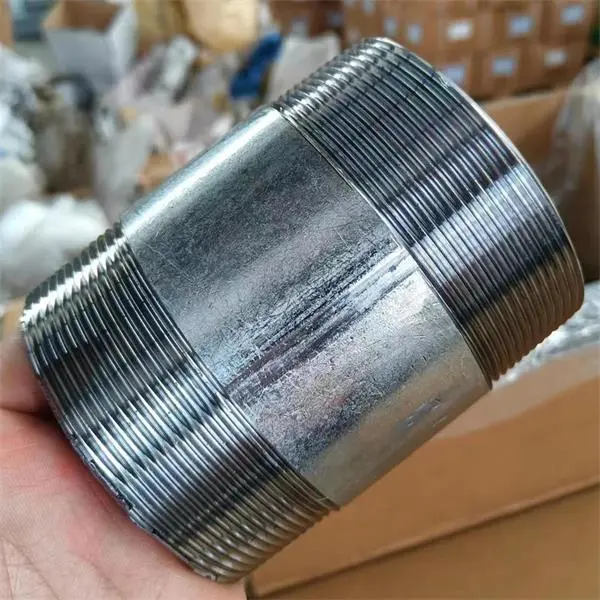
Seamless black pipe, typically manufactured from carbon steel, is a foundational component in numerous industrial applications, including oil and gas transmission, structural engineering, and water distribution systems. Unlike welded pipe, seamless pipe is produced without a welded seam, offering enhanced structural integrity and resistance to high pressure and temperature. Its ‘black’ designation refers to the mill scale coating left on the exterior surface, providing some corrosion resistance but frequently removed through cleaning processes depending on the intended application. The technical position of seamless black pipe within the industry chain is as a semi-finished product, requiring further processing such as threading, coating, or bending to meet specific project requirements. Core performance characteristics revolve around its yield strength, tensile strength, pressure rating, and resistance to various forms of corrosion, dictating its suitability for demanding operational environments. The increasing focus on safety and reliability in critical infrastructure projects drives the demand for high-quality seamless black pipe adhering to stringent industry standards.
Material Science & Manufacturing
The primary raw material for seamless black pipe is carbon steel, with specific grades (e.g., A53, A106 Grade B) defining the chemical composition and mechanical properties. Key alloying elements include carbon, manganese, silicon, and phosphorus, each contributing to specific characteristics. Carbon content influences hardness and strength, while manganese enhances strength and weldability. The manufacturing process typically involves hot rolling or extrusion. Hot rolling starts with a solid steel billet heated to a high temperature (around 1200°C) and then passed through rollers to progressively reduce its diameter and form a hollow tube. Extrusion involves forcing the heated billet through a die, creating a seamless pipe. Critical parameters during manufacturing include temperature control, rolling/extrusion speed, and die design. These parameters directly impact the pipe's dimensional accuracy, wall thickness, and mechanical properties. Mill scale, an iron oxide layer formed during hot processing, provides a degree of atmospheric corrosion protection but can also be detrimental in certain applications, requiring pickling (acid washing) or blasting for removal. The microstructure of the steel, including grain size and phase composition (ferrite, pearlite, austenite), is critical to its performance, and is controlled through heat treatment processes like normalizing and annealing after rolling or extrusion. The presence of inclusions and defects, such as porosity and voids, can significantly reduce the pipe's strength and ductility and are rigorously inspected for during quality control.
Performance & Engineering
Performance of seamless black pipe is heavily dependent on its ability to withstand internal and external pressures, tensile stresses, and environmental factors. Force analysis, utilizing principles of statics and mechanics of materials, is crucial in determining safe operating pressures and load-bearing capacities. Hoop stress, the stress acting circumferentially around the pipe, is particularly critical. Environmental resistance is a major consideration, particularly in corrosive environments. The pipe's material selection must consider the potential for corrosion due to factors like pH, chloride concentration, and temperature. Protective coatings, such as epoxy or polyethylene, are often applied to enhance corrosion resistance. Compliance requirements are dictated by industry-specific standards and regulations, such as those issued by ASME (American Society of Mechanical Engineers) for pressure vessels and piping. These standards specify requirements for material selection, manufacturing processes, non-destructive testing (NDT), and hydrostatic testing. Functional implementation involves proper joining techniques, such as welding or threading. Welding requires careful control of welding parameters (current, voltage, travel speed, shielding gas) to ensure a sound and durable weld. Threading must adhere to specific standards (e.g., ANSI/ASME B1.20.1) to ensure proper sealing and prevent leakage. Fatigue analysis is essential for applications involving cyclical loading, assessing the pipe's resistance to crack initiation and propagation under repeated stress.
Technical Specifications
| Specification | ASTM A53 Grade B | ASTM A106 Grade B | API 5L X42 | API 5L X52 |
|---|---|---|---|---|
| Yield Strength (MPa) | 240 | 250 | 345 | 379 |
| Tensile Strength (MPa) | 400 | 415 | 485 | 530 |
| Wall Thickness Range (mm) | 2.6 - 10.3 | 2.6 - 10.3 | 2.2 – 25.4 | 2.2 – 25.4 |
| Outside Diameter Range (mm) | 21.3 - 660.4 | 21.3 - 660.4 | 10.2 - 1219.2 | 10.2 - 1219.2 |
| Elongation (%) | 20 | 20 | 22 | 22 |
| Hydrostatic Test Pressure (MPa) | 6.2 | 6.9 | Variable, based on grade & size | Variable, based on grade & size |
Failure Mode & Maintenance
Seamless black pipe can experience several failure modes in practical applications. Corrosion, particularly localized corrosion like pitting and crevice corrosion, is a prevalent issue, especially in aggressive environments. Fatigue cracking can occur under cyclical loading, initiating from surface defects or stress concentrations. Hydrogen embrittlement, a phenomenon where hydrogen diffuses into the steel and reduces its ductility, can lead to brittle fracture. Stress corrosion cracking (SCC) occurs when a combination of tensile stress and a corrosive environment leads to crack propagation. Denting or deformation due to external loads can compromise the pipe's structural integrity. Maintenance solutions include regular inspection for signs of corrosion or damage using visual inspection, ultrasonic testing (UT), and radiographic testing (RT). Protective coatings should be periodically inspected and repaired to maintain their effectiveness. Internal cleaning to remove deposits and scale can help prevent corrosion. Cathodic protection, a technique that uses an electric current to reduce corrosion rates, can be employed in buried pipelines. For fatigue-critical applications, regular monitoring of stress levels and implementation of stress relief measures are essential. Hydrostatic testing should be conducted periodically to verify the pipe's pressure-holding capacity. Proper handling and storage practices are crucial to prevent mechanical damage during transportation and installation.
Industry FAQ
Q: What is the significance of the ‘black’ coating on seamless pipe and when is it removed?
A: The ‘black’ coating is mill scale, an iron oxide layer formed during the hot manufacturing process. While it offers some initial corrosion resistance, it’s often rough and can interfere with coating adhesion. It’s typically removed via pickling or blasting when a smoother surface is required for coatings, or for applications where the mill scale could contaminate the fluid being transported.
Q: How does the manufacturing process of seamless pipe impact its mechanical properties compared to welded pipe?
A: The absence of a weld seam in seamless pipe generally results in more uniform mechanical properties and increased resistance to fatigue and stress corrosion cracking. Welded seams can introduce localized stress concentrations and potential weaknesses. Seamless pipe tends to have superior ductility and impact toughness.
Q: What non-destructive testing (NDT) methods are commonly used for quality control of seamless black pipe?
A: Ultrasonic testing (UT) is widely used to detect internal flaws such as voids and inclusions. Radiographic testing (RT) provides a visual image of the pipe's internal structure. Magnetic particle inspection (MPI) is used to detect surface cracks. Hydrostatic testing verifies the pipe's pressure-holding capacity.
Q: What is the role of API 5L in specifying seamless pipe for the oil and gas industry?
A: API 5L is a crucial standard that defines the requirements for line pipe used in the transportation of oil and gas. It specifies material grades, manufacturing processes, testing procedures, and dimensional tolerances to ensure the pipe’s suitability for high-pressure and harsh operating conditions.
Q: What factors should be considered when selecting a seamless black pipe grade for a specific application?
A: Factors include the operating pressure, temperature, fluid being transported (corrosivity), external loads, and applicable industry standards. Yield strength, tensile strength, and corrosion resistance are key properties to consider when selecting the appropriate grade.
Conclusion
Seamless black pipe remains a critical material in a wide range of industrial applications due to its inherent strength, reliability, and resistance to pressure. The manufacturing process, while demanding, yields a product with superior properties compared to welded alternatives, particularly in high-stress environments. Understanding the material science, performance characteristics, and potential failure modes of seamless black pipe is paramount for ensuring the safe and efficient operation of critical infrastructure.
Looking ahead, advancements in steel alloy development and manufacturing techniques will continue to enhance the performance of seamless pipe. The increasing demand for lightweight and high-strength materials may drive the adoption of new alloy compositions and manufacturing processes. Furthermore, the implementation of advanced inspection techniques, such as phased array ultrasonic testing (PAUT), will improve the accuracy and reliability of defect detection, ultimately contributing to the long-term integrity of pipeline systems.
