
Introduction
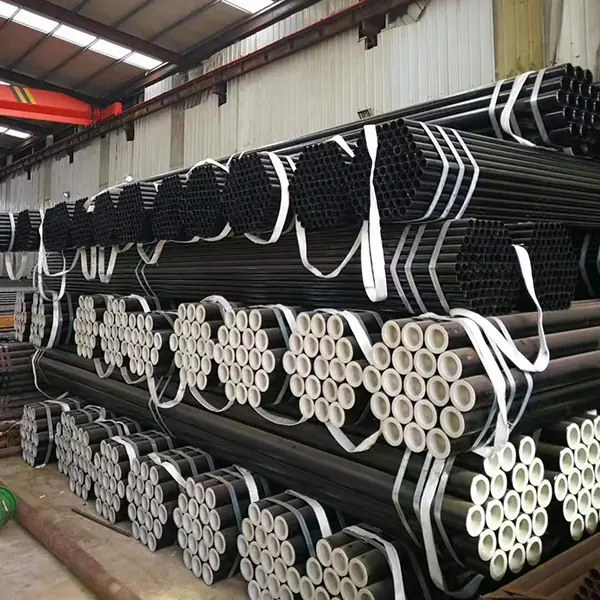
Seamless black steel, manufactured without a weld seam, represents a critical component in numerous industrial applications ranging from oil and gas pipelines to structural engineering and high-pressure systems. Its defining characteristic is the result of extrusion or piercing processes applied to solid steel billets, creating a hollow tube. The “black” designation refers to the mill scale coating present on the surface, a byproduct of the manufacturing process which provides a degree of corrosion resistance, though typically requiring further surface treatment for more aggressive environments. Seamless pipes offer superior strength and reliability compared to welded alternatives, particularly under high pressure or stress conditions. This guide provides an in-depth technical analysis of seamless black steel, covering its material composition, manufacturing processes, performance characteristics, potential failure modes, and relevant industry standards. The core performance criteria encompass yield strength, tensile strength, pressure rating, and resistance to various forms of corrosion and erosion.
Material Science & Manufacturing
Seamless black steel is typically produced from carbon steel grades, with variations in chemical composition impacting the final properties. Common grades include ASTM A53 Grade B, A106 Grade B, and API 5L X42. The raw materials consist primarily of iron ore, carbon (typically 0.05% to 0.30% depending on the grade), manganese (0.05% to 1.35%), silicon (0.05% to 0.30%), phosphorus (maximum 0.04%), and sulfur (maximum 0.03%). Trace elements may also be present. The manufacturing process begins with heating a solid steel billet to a high temperature (around 1200°C). This billet is then either extruded through a die (extrusion process) or pierced by a mandrel while being rolled over a forming tool (mandrel piercing process). The extrusion process is suited for smaller diameters, while mandrel piercing is used for larger diameters. Key parameters during manufacturing include temperature control (critical for avoiding defects like cracks), reduction ratio (affects grain structure and mechanical properties), and mandrel speed (in piercing operations). Post-manufacturing, the steel undergoes heat treatment (normalizing or annealing) to refine the grain structure and achieve desired mechanical properties. Mill scale forms during the high-temperature processing and is not removed unless specified by the customer; removal requires pickling or blasting which adds cost. Grain size refinement is paramount to maximizing yield strength and toughness. Control of sulfur and phosphorus content is crucial to prevent brittleness.
Performance & Engineering
The performance of seamless black steel is heavily reliant on its mechanical properties and its resistance to environmental factors. Force analysis under pressure dictates the minimum wall thickness required for a given diameter and operating pressure, calculated using formulas like Barlow’s formula (S = PD/2t, where S = stress, P = pressure, D = diameter, and t = wall thickness). Yield strength, typically between 36,000 and 50,000 psi for common grades, defines the point at which permanent deformation occurs. Tensile strength, generally between 70,000 and 90,000 psi, indicates the maximum stress the material can withstand before fracturing. Environmental resistance is a critical factor, particularly concerning corrosion. The mill scale provides limited protection, but exposure to moisture, chlorides, and other corrosive agents can lead to rusting. Coatings (epoxy, polyurethane, galvanization) are frequently applied to enhance corrosion resistance. Compliance with industry standards, such as ASME B31.3 for process piping, dictates allowable stress levels, inspection requirements, and safety factors. Fatigue analysis is essential in applications involving cyclic loading, determining the material’s resistance to crack propagation. Welding, even with a seamless base material, requires careful consideration of heat-affected zone properties and potential weld defects. The Charpy impact test assesses the material's toughness at different temperatures, crucial for low-temperature applications.
Technical Specifications
| Parameter | ASTM A53 Grade B | ASTM A106 Grade B | API 5L X42 |
|---|---|---|---|
| Yield Strength (psi) | 36,000 | 35,000 | 34,500 |
| Tensile Strength (psi) | 60,000 | 60,000 | 65,000 |
| Wall Thickness (in) | Schedule 40, 80, 160 | Schedule 40, 80, 160 | 0.154 – 0.500 |
| Outside Diameter (in) | 0.5 – 8.625 | 0.5 – 8.625 | 2.375 – 24 |
| Carbon Content (%) | ≤ 0.25 | ≤ 0.30 | ≤ 0.22 |
| Manganese Content (%) | ≤ 1.06 | ≤ 1.06 | ≤ 1.15 |
Failure Mode & Maintenance
Seamless black steel is susceptible to several failure modes. Corrosion, as previously discussed, is a primary concern, leading to material loss and weakening of the pipe. Fatigue cracking can occur under cyclic loading, initiated by stress concentrations at defects or geometric discontinuities. Stress corrosion cracking (SCC) occurs when tensile stress and a corrosive environment combine. Hydrogen embrittlement, particularly in high-strength steels, can lead to brittle fracture. Erosion, caused by the impact of particles in flowing fluids, can wear away the material. Manufacturing defects, such as inclusions or porosity, can act as initiation sites for cracks. Maintenance strategies include regular visual inspections for corrosion or damage, non-destructive testing (NDT) methods like ultrasonic testing (UT) and radiographic testing (RT) to detect internal flaws, and application of protective coatings. Cathodic protection can be employed to mitigate corrosion. Periodic hydrostatic testing verifies the integrity of the pipe under pressure. For pipelines, pigging (cleaning with a device called a “pig”) removes debris and corrosion products. Proper storage conditions, preventing exposure to moisture and corrosive environments, are also essential for extending service life.
Industry FAQ
Q: What is the impact of sulfur content on the weldability of seamless black steel?
A: Higher sulfur content can reduce weldability, promoting the formation of brittle iron sulfides in the heat-affected zone. This can lead to cracking during or after welding. Lower sulfur content grades, or the use of specialized welding procedures, are often required for critical applications.
Q: How does heat treatment affect the mechanical properties of seamless black steel?
A: Heat treatment, such as normalizing or annealing, refines the grain structure, increases ductility, and improves toughness. Normalizing typically increases yield strength, while annealing enhances ductility. The specific heat treatment process is chosen based on the desired properties and the steel grade.
Q: What are the key differences between ASTM A53 and ASTM A106 seamless steel pipes?
A: A106 is typically used for high-temperature, high-pressure applications, and exhibits higher toughness at lower temperatures compared to A53. A53 is a more general-purpose pipe commonly used in water, oil, and gas transmission where extreme temperatures aren't a factor.
Q: What NDT methods are commonly used for inspecting seamless steel pipes?
A: Ultrasonic testing (UT) is widely used to detect internal flaws like cracks and porosity. Radiographic testing (RT) provides a visual representation of the pipe's internal structure, revealing defects. Magnetic particle inspection (MPI) is suitable for detecting surface cracks.
Q: How does the mill scale affect the application of coatings on seamless steel pipe?
A: Mill scale is loosely adhered to the steel surface and can interfere with coating adhesion if not properly prepared. Surface preparation typically involves abrasive blasting to remove the mill scale, providing a clean, roughened surface for optimal coating bonding.
Conclusion
Seamless black steel remains a foundational material in numerous industrial sectors, prized for its strength, reliability, and versatility. The manufacturing process, rooted in established methods like extrusion and mandrel piercing, demands rigorous parameter control to ensure consistent quality and performance. Understanding the interplay between material composition, mechanical properties, and environmental factors is critical for successful application and longevity.
The selection of the appropriate grade and specification, alongside diligent maintenance practices—including corrosion mitigation and periodic inspection—are paramount to preventing premature failure. As demands evolve, ongoing research into advanced coatings and improved manufacturing techniques will further enhance the performance and lifespan of seamless black steel components.
