

Introduction
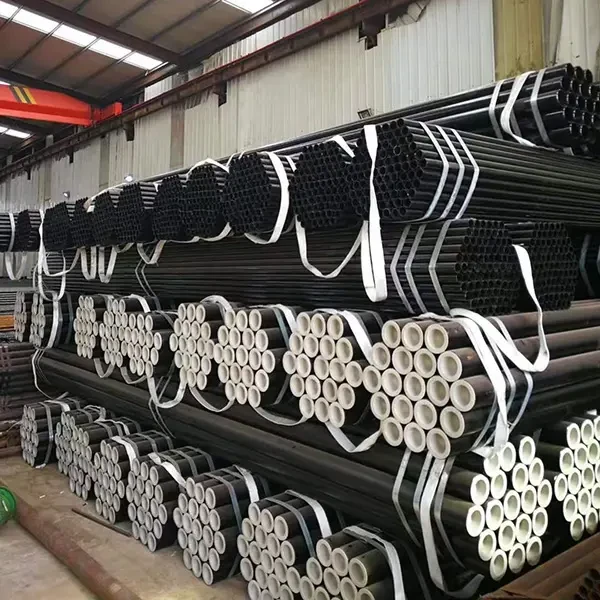
Seamless hydraulic tubing is a precision-engineered component critical to fluid power systems across diverse industries, including aerospace, automotive, oil and gas, and heavy machinery. Distinguished by its construction – manufactured without a welded seam – it offers superior pressure-bearing capacity, resistance to corrosion, and long-term reliability compared to welded or extruded tubing. Its technical position within the industry chain lies between the steel mill producing the raw material and the system integrator assembling the complete hydraulic circuit. Core performance characteristics revolve around burst pressure, yield strength, dimensional accuracy, surface finish, and resistance to media compatibility, dictating its suitability for high-demand applications where fluid integrity is paramount. The key challenge in hydraulic system design centers on minimizing pressure losses and ensuring system longevity; seamless tubing directly addresses these concerns through a consistently smooth inner bore and robust structural integrity.
Material Science & Manufacturing
The predominant material for seamless hydraulic tubing is carbon steel, specifically alloys like AISI 1026, SAE 1020, and DIN EN 10305-1 E235/E355. These steels offer a balance of strength, ductility, and weldability, facilitating downstream component integration. Stainless steels (304, 316L) are utilized in corrosive environments, offering superior resistance to chemical attack, albeit at a higher cost. The manufacturing process begins with solid billets heated to high temperatures and then forced through a piercing die and a mandrel, forming a hollow tube. This is the “Mandrel Mill” process. Key parameters controlled during this process include billet temperature (critical for ductility), reduction ratio (affecting wall thickness and grain structure), mandrel speed (influencing surface finish), and lubrication (preventing galling and ensuring dimensional accuracy). Subsequent cold drawing further refines the inner diameter, wall thickness, and mechanical properties, increasing the yield and tensile strength through work hardening. Heat treatment, typically annealing or normalizing, is employed to relieve residual stresses and restore ductility. Non-destructive testing methods like eddy current testing and ultrasonic testing are crucial for detecting flaws and ensuring dimensional compliance. Chemical composition is tightly controlled using spectroscopic analysis to meet relevant industry standards.
Performance & Engineering
The performance of seamless hydraulic tubing is heavily influenced by its ability to withstand internal pressure without failure. Force analysis involves calculating hoop stress (generated by internal pressure acting on the tube wall) and longitudinal stress (resulting from end caps or fittings). The Barlow’s formula (σ = PD/2t, where σ is hoop stress, P is internal pressure, D is outer diameter, and t is wall thickness) provides a fundamental estimate of stress levels. Finite element analysis (FEA) is commonly used for more complex geometries and loading conditions, accounting for stress concentrations at bends, flares, and fittings. Environmental resistance is a critical consideration, particularly in applications exposed to salt spray, extreme temperatures, or corrosive fluids. Material selection plays a vital role here, with stainless steel providing superior resistance in harsh environments. Compliance requirements are dictated by industry standards (detailed in the footer) and application-specific regulations. Functional implementation involves proper tube bending techniques (utilizing mandrels to prevent ovality and kinking), secure fitting connections (using appropriate sealing methods like O-rings or flared fittings), and thorough system testing to verify leak-free operation and pressure capacity. Consideration must be given to the fluid's viscosity, operating temperature range, and potential for contamination, all impacting performance and lifespan.
Technical Specifications
| Parameter | AISI 1026 | SAE 1020 | 304 Stainless Steel | 316L Stainless Steel |
|---|---|---|---|---|
| Outer Diameter (mm) | 6 - 102 | 6 - 76 | 4 - 152 | 4 - 108 |
| Wall Thickness (mm) | 1 - 10 | 1 - 8 | 1 - 6 | 1 - 5 |
| Yield Strength (MPa) | 250 | 275 | 205 | 240 |
| Tensile Strength (MPa) | 440 | 485 | 515 | 585 |
| Burst Pressure (MPa) | 800 | 900 | 1100 | 1250 |
| Surface Roughness (Ra, µm) | 0.8 | 0.8 | 0.6 | 0.6 |
Failure Mode & Maintenance
Seamless hydraulic tubing is susceptible to several failure modes. Fatigue cracking, initiated by repeated pressure cycles, often occurs at stress concentrations like bends or weld areas (if fittings are welded). Corrosion, particularly pitting corrosion in chloride-rich environments, weakens the tube wall and leads to leaks. Erosion, caused by abrasive particles in the fluid, degrades the inner surface. Delamination, though less common in seamless tubing compared to welded, can occur due to manufacturing defects or material inconsistencies. Oxidation at high temperatures can reduce the tube’s mechanical properties. Maintenance involves regular visual inspections for signs of corrosion, dents, or cracks. Pressure testing should be conducted periodically to verify system integrity. Proper fluid filtration is crucial to minimize erosion and contamination. If corrosion is detected, the affected section should be replaced. Preventive maintenance includes flushing the system to remove debris and replenish hydraulic fluid. For stainless steel tubing, passivation treatments can enhance corrosion resistance. Careful handling during installation and operation is essential to avoid damage and ensure long-term reliability.
Industry FAQ
Q: What are the key advantages of seamless tubing over welded tubing for hydraulic applications?
A: Seamless tubing offers significantly higher burst pressure and fatigue life due to the absence of a weld seam, which represents a potential point of failure. The smooth inner bore minimizes pressure drop and turbulence, leading to improved hydraulic efficiency. It also provides superior corrosion resistance in many applications.
Q: How does material selection impact the performance of hydraulic tubing in corrosive environments?
A: Stainless steels (304, 316L) are specifically chosen for their resistance to corrosion. 316L offers better chloride resistance than 304, making it suitable for marine or chemical processing applications. Carbon steel tubing requires protective coatings or inhibitors in corrosive environments.
Q: What is the importance of surface finish in hydraulic tubing?
A: A smooth inner surface reduces friction and turbulence, minimizing pressure loss and improving energy efficiency. It also reduces the risk of particle adhesion and contamination. A consistent outer surface is critical for proper fitting engagement and sealing.
Q: What non-destructive testing (NDT) methods are commonly used to ensure the quality of seamless hydraulic tubing?
A: Eddy current testing is used to detect surface cracks and flaws. Ultrasonic testing provides a more comprehensive assessment of the material’s internal structure, detecting inclusions and voids. Hydrostatic testing is also employed to verify the tube’s burst pressure.
Q: How do bending radius and bending techniques affect the integrity of seamless hydraulic tubing?
A: An insufficient bending radius can cause kinking, ovality, and thinning of the tube wall, reducing its pressure capacity and increasing the risk of failure. Mandrel bending is preferred to maintain a consistent cross-section and prevent deformation during bending. The bending process introduces residual stresses that may require heat treatment.
Conclusion
Seamless hydraulic tubing represents a critical component in fluid power systems, providing a robust and reliable solution for transporting fluids under high pressure. Its manufacturing process, material science, and performance characteristics are carefully engineered to meet demanding industry requirements. Proper material selection, adherence to stringent manufacturing standards, and implementation of effective maintenance practices are essential for maximizing its lifespan and ensuring safe, efficient operation.
Future trends point towards the development of advanced alloys with enhanced corrosion resistance and higher strength-to-weight ratios. Innovations in manufacturing techniques, such as laser welding for fitting integration, will further improve the reliability and performance of hydraulic systems. Ultimately, a thorough understanding of the technical principles governing seamless hydraulic tubing is paramount for engineers and procurement professionals seeking to optimize system design and ensure long-term operational success.
