
Introduction
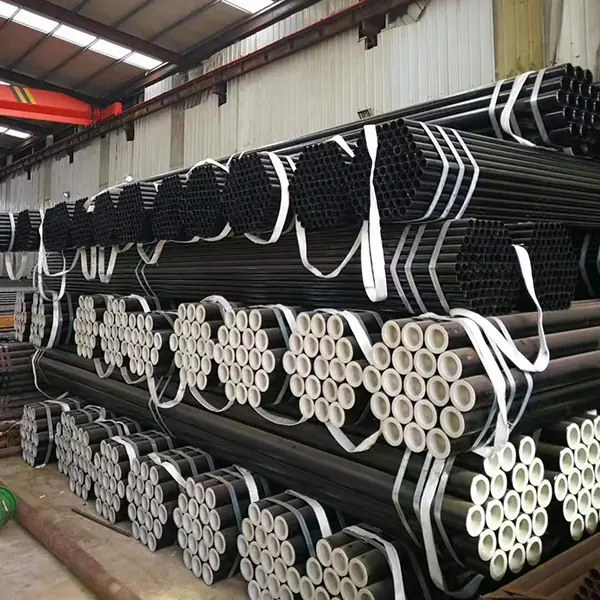
Seamless mechanical tubing represents a critical component in numerous industrial applications, differing significantly from welded tubing due to the absence of a weld seam. This distinction directly impacts its mechanical properties and suitability for high-pressure, high-temperature, and corrosive environments. Positioned within the broader steel manufacturing industry, seamless tubing typically undergoes a hot extrusion or drawing process, resulting in a hollow profile with superior uniformity and strength. Core performance characteristics revolve around its pressure rating, tensile strength, dimensional accuracy, and resistance to various forms of degradation. The increasing demand for reliable fluid conveyance systems and structural components is driving consistent growth in the seamless tubing market, emphasizing the need for detailed understanding of its properties and manufacturing processes.
Material Science & Manufacturing
The foundational material for seamless mechanical tubing is predominantly carbon steel, alloy steel (including chromium-molybdenum alloys like 4140 and 5140), and stainless steel (304, 316, and duplex grades are common). Carbon steel offers cost-effectiveness for general-purpose applications, while alloy steels provide enhanced strength and toughness. Stainless steels exhibit superior corrosion resistance. The manufacturing process begins with billet preparation – precisely cutting the steel stock to the appropriate length. Hot extrusion is a primary method, where the billet is heated to a malleable temperature and forced through a die, forming the tubular shape. Cold drawing follows to refine the dimensions, improve surface finish, and enhance mechanical properties. Critical process parameters include die angle, reduction ratio (the amount of diameter reduction per pass), lubrication, and drawing speed. These parameters directly influence grain structure, residual stresses, and the final mechanical properties. Heat treatment, such as annealing or normalizing, is often employed to relieve stresses and achieve desired ductility. Non-destructive testing (NDT) methods – ultrasonic testing, eddy current testing, and hydrostatic testing – are crucial for ensuring defect-free tubing. Chemical composition control is paramount, necessitating strict adherence to material specifications (e.g., ASTM A53, ASTM A335).
Performance & Engineering
Performance of seamless mechanical tubing is governed by its ability to withstand internal and external pressures, tensile loads, and torsional stresses. Force analysis necessitates consideration of hoop stress (resulting from internal pressure), longitudinal stress, and bending moments. The material’s yield strength and ultimate tensile strength are crucial parameters in determining the safe operating limits. Environmental resistance is another critical factor. In corrosive environments, material selection is paramount. Stainless steel alloys, particularly those containing molybdenum, offer superior resistance to pitting and crevice corrosion. In high-temperature applications, oxidation and creep resistance become important considerations. Compliance requirements vary significantly depending on the industry. For example, ASME B31.3 governs pressure piping systems, dictating allowable stresses, inspection intervals, and welding procedures (if any joining is required for system construction). API 5L specifies requirements for line pipe, including hydrostatic testing and material traceability. Dimensional accuracy – particularly wall thickness and outer diameter – is critical for ensuring proper fit-up and preventing leaks. Finite element analysis (FEA) is frequently employed to simulate stress distributions and optimize tube geometry for specific applications.
Technical Specifications
| Material Grade | Outer Diameter (in) | Wall Thickness (in) | Yield Strength (psi) |
|---|---|---|---|
| ASTM A53 Grade B | 0.5 | 0.083 | 36,000 |
| ASTM A53 Grade B | 1.0 | 0.120 | 36,000 |
| ASTM A335 P11 | 1.25 | 0.140 | 50,000 |
| ASTM A335 P22 | 1.66 | 0.180 | 65,000 |
| 304/304L Stainless Steel | 0.75 | 0.065 | 30,000 |
| 316/316L Stainless Steel | 2.0 | 0.218 | 30,000 |
Failure Mode & Maintenance
Seamless mechanical tubing is susceptible to several failure modes. Corrosion is a primary concern, leading to pitting, crevice corrosion, and ultimately, wall thinning. Fatigue cracking can occur under cyclic loading, initiating at stress concentrators (e.g., dents, scratches, or weld areas – if any supplementary welding is present). Erosion-corrosion results from the combined effect of fluid flow and corrosive attack. Hydrogen embrittlement, particularly in high-strength steels, can lead to brittle fracture. Defects introduced during manufacturing, such as inclusions or laminations, can propagate under stress. Maintenance strategies involve regular inspections using NDT methods (ultrasonic testing, eddy current testing, and visual inspection). Proper surface preparation and coating application (e.g., epoxy coatings) can mitigate corrosion. Cathodic protection is employed in aggressive environments. Periodic hydrostatic testing verifies the integrity of the tubing. Preventive maintenance schedules should be based on operating conditions, fluid properties, and material specifications. Prompt repair or replacement of damaged tubing is crucial to prevent catastrophic failure. Documentation of inspection results and maintenance activities is essential for maintaining a reliable system.
Industry FAQ
Q: What is the primary advantage of seamless tubing over welded tubing in high-pressure applications?
A: The absence of a weld seam in seamless tubing eliminates a potential point of failure under high pressure. The weld seam, even with rigorous quality control, inherently introduces a discontinuity in the material’s microstructure, which can reduce the overall pressure rating and fatigue life. Seamless tubing offers a more uniform and consistent mechanical structure, providing greater reliability.
Q: How does material selection impact the corrosion resistance of seamless tubing?
A: Material selection is paramount. Carbon steel is susceptible to corrosion in many environments. Alloy steels with chromium and molybdenum additions enhance corrosion resistance. Stainless steels (304, 316, duplex) provide superior resistance, with 316 offering improved resistance to chlorides. The operating environment – pH, temperature, and the presence of corrosive agents – dictates the appropriate alloy.
Q: What non-destructive testing (NDT) methods are commonly used for quality control of seamless tubing?
A: Ultrasonic testing (UT) is widely used to detect internal flaws such as inclusions or laminations. Eddy current testing (ECT) identifies surface cracks and near-surface defects. Radiographic testing (RT) provides a visual image of the internal structure, but is less commonly used due to safety concerns and cost. Hydrostatic testing verifies the pressure integrity of the tubing.
Q: What are the key considerations when specifying seamless tubing for cryogenic applications?
A: Materials must exhibit high toughness and ductility at cryogenic temperatures to prevent brittle fracture. Austenitic stainless steels (304, 316) are generally preferred. Weld seams (if any supplementary welding is performed) must be carefully controlled to avoid embrittlement. Thermal contraction during cooling must be accounted for in the system design.
Q: What is the significance of the "R-factor" in seamless tubing manufacturing?
A: The R-factor (reduction ratio) represents the amount of diameter reduction per drawing pass during the cold drawing process. It is a critical parameter controlling the mechanical properties and dimensional accuracy of the tubing. Higher reduction ratios generally result in increased strength and improved surface finish, but also increase the risk of cracking if not carefully controlled.
Conclusion
Seamless mechanical tubing, characterized by its homogenous structure and superior mechanical properties, remains a cornerstone material in demanding industrial applications. The careful selection of materials, coupled with precise control of manufacturing processes – from billet preparation to heat treatment – is essential for achieving optimal performance and longevity. Understanding potential failure modes, such as corrosion and fatigue, and implementing appropriate maintenance strategies, including NDT and protective coatings, are crucial for ensuring system reliability and minimizing the risk of catastrophic events.
Future developments in seamless tubing technology will likely focus on advanced alloy compositions with enhanced corrosion resistance, improved manufacturing techniques for tighter dimensional tolerances, and innovative NDT methods for more comprehensive defect detection. The continued demand for high-performance fluid conveyance systems and structural components will drive ongoing innovation in this critical area of materials science and engineering.
