

Introduction
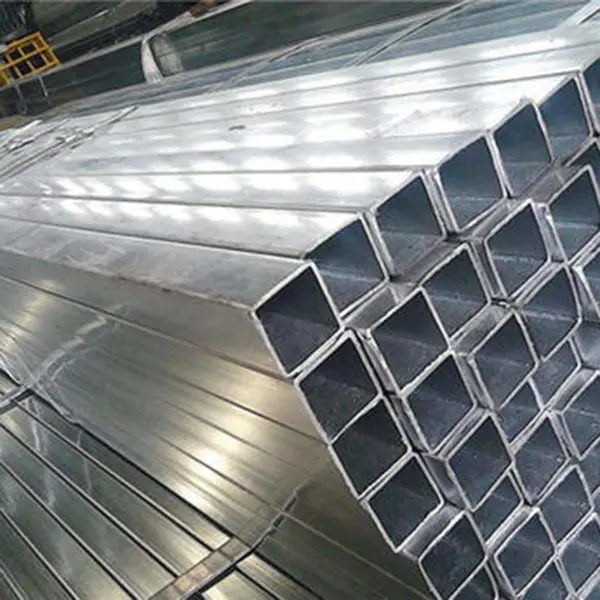
Seamless metal tubes are hollow cylindrical sections manufactured without a welded seam, distinguished by their uniform strength and ability to withstand high pressures and temperatures. Positioned centrally within the material supply chain, they serve as critical components in numerous industries including oil and gas, petrochemicals, automotive, aerospace, and power generation. Their superior performance compared to welded tubes, stemming from the lack of a weld joint, makes them ideal for applications demanding high integrity and reliability. Core performance characteristics include burst pressure, yield strength, corrosion resistance, and dimensional accuracy. This guide provides a comprehensive technical overview of seamless metal tube technology, encompassing material science, manufacturing processes, performance engineering, failure modes, and industry standards. A key industry pain point lies in ensuring consistent material properties across large diameter, high-strength tubes and managing the complexities of non-destructive testing to guarantee defect-free products.
Material Science & Manufacturing
Seamless tubes are commonly manufactured from carbon steel (ASTM A53, A106), alloy steel (ASTM A335), stainless steel (ASTM A312, A270), and nickel alloys (ASTM B163). The selection of material depends on the intended application, considering factors like operating temperature, pressure, corrosive environment, and mechanical loads. Carbon steel offers cost-effectiveness for moderate conditions, while alloy steels provide enhanced strength and toughness. Stainless steels excel in corrosion resistance. Nickel alloys are reserved for extreme environments. The primary manufacturing process is hot extrusion or hot piercing. Hot extrusion involves forcing a heated billet through a die to create a hollow tube. Hot piercing, also known as the Mannesmann process, utilizes a piercing plug to create the initial hollow within a rotating billet. Subsequent processes include reheating, stretching, reducing, and finishing operations to achieve the desired dimensions and mechanical properties. Key parameter control during manufacturing focuses on temperature uniformity, reduction ratios, die design, and cooling rates. Microstructural control is paramount; grain size refinement through controlled cooling enhances toughness and reduces susceptibility to stress corrosion cracking. Chemical composition must be precisely controlled to meet specified alloy requirements and prevent undesirable phases from forming.
Performance & Engineering
Performance analysis of seamless tubes centers around mechanical strength, pressure containment, and resistance to external loads. Force analysis involves calculations for hoop stress, longitudinal stress, and bending moments under internal pressure and axial loading. Burst pressure is a critical parameter, determined by the material’s yield strength, wall thickness, and diameter, governed by Barlow’s formula (P = 2St/D, where P is pressure, S is tensile strength, t is wall thickness, and D is diameter). Environmental resistance is assessed through corrosion testing, evaluating susceptibility to pitting, crevice corrosion, and galvanic corrosion. Compliance requirements vary based on industry standards (API 5L for pipelines, ASME B31.3 for process piping) and application-specific regulations. Finite Element Analysis (FEA) is frequently employed to model stress distribution under complex loading scenarios, optimizing tube geometry and material selection. Consideration must be given to fatigue life, particularly in cyclic loading applications. The material’s fracture toughness, assessed using Charpy V-notch impact testing, is crucial in preventing catastrophic failure. Furthermore, dimensional tolerances, including ovality, eccentricity, and straightness, are rigorously controlled to ensure proper fit-up and prevent stress concentrations.
Technical Specifications
| Material Grade | Outer Diameter (mm) | Wall Thickness (mm) | Yield Strength (MPa) |
|---|---|---|---|
| ASTM A53 Grade B | 21.3 | 2.6 | 250 |
| ASTM A106 Grade B | 114.3 | 6.4 | 345 |
| ASTM A335 P11 | 76.2 | 8.7 | 414 |
| ASTM A312 304/304L | 19.1 | 1.65 | 205 |
| ASTM B163 Nickel 200 | 38.1 | 2.3 | 207 |
| API 5L X70 | 121.9 | 7.1 | 485 |
Failure Mode & Maintenance
Common failure modes in seamless metal tubes include corrosion (uniform, pitting, crevice, galvanic), erosion, fatigue cracking, stress corrosion cracking (SCC), and ductile fracture. Corrosion is often initiated by defects in the passive layer or localized contamination. Erosion occurs due to high-velocity fluid flow, impacting the tube wall. Fatigue cracking is driven by cyclic loading, initiating at stress concentrators like dents or weld imperfections (though seamless tubes lack weld seams, defects from manufacturing can act as stress risers). SCC results from the combined action of tensile stress and a corrosive environment. Ductile fracture occurs under excessive tensile load, characterized by plastic deformation before rupture. Maintenance strategies include regular visual inspections, non-destructive testing (NDT) such as ultrasonic testing (UT), radiographic testing (RT), eddy current testing (ECT), and hydrostatic testing. Internal cleaning to remove deposits and prevent corrosion is also crucial. Protective coatings (epoxy, polyurethane) can be applied to enhance corrosion resistance. Cathodic protection is used in buried pipelines to mitigate corrosion. Preventive maintenance schedules should be based on operational conditions, material properties, and industry best practices. Root cause analysis of failures is essential to identify underlying issues and implement corrective actions.
Industry FAQ
Q: What are the primary advantages of seamless tubes over welded tubes in critical applications?
A: Seamless tubes offer superior mechanical strength and pressure containment due to the absence of a weld seam, which is a potential point of failure. They exhibit more uniform material properties, enhanced corrosion resistance, and improved fatigue life, making them ideal for high-pressure, high-temperature, and corrosive environments where reliability is paramount.
Q: How does material composition affect the corrosion resistance of seamless stainless steel tubes?
A: The chromium content is the primary factor determining stainless steel's corrosion resistance. Higher chromium levels (e.g., 316 stainless steel) provide enhanced resistance to pitting and crevice corrosion, especially in chloride-rich environments. Molybdenum additions further improve resistance to chloride stress corrosion cracking. The presence of carbon also influences corrosion behavior; lower carbon grades (e.g., 304L) are preferred for improved weldability and reduced susceptibility to sensitization.
Q: What NDT methods are commonly used to inspect seamless tubes for defects?
A: Ultrasonic testing (UT) is the most prevalent NDT method, used to detect internal flaws like cracks, inclusions, and laminations. Radiographic testing (RT) provides a visual image of the tube wall, revealing defects such as porosity and shrinkage cavities. Eddy current testing (ECT) is used to detect surface flaws and measure wall thickness. Hydrostatic testing verifies the tube’s ability to withstand pressure.
Q: How is the wall thickness of a seamless tube determined for a specific application?
A: Wall thickness is determined by several factors including the operating pressure, temperature, fluid properties, material yield strength, and safety factor. Calculations are typically based on industry codes and standards (e.g., ASME B31.3) that provide specific formulas and guidelines for determining the minimum required wall thickness to ensure structural integrity.
Q: What are the common causes of stress corrosion cracking in seamless tubes and how can it be mitigated?
A: Stress corrosion cracking (SCC) is typically caused by the combined action of tensile stress and a corrosive environment. Common contributors include residual stresses from manufacturing, sustained loads, and exposure to specific corrosive species (e.g., chlorides, sulfides). Mitigation strategies include stress relieving heat treatment, selecting materials resistant to SCC, controlling the corrosive environment (e.g., pH adjustment, inhibitor addition), and applying protective coatings.
Conclusion
Seamless metal tubes represent a critical component in numerous industrial applications, offering superior performance characteristics over welded alternatives due to their inherent structural integrity and uniform material properties. Careful consideration of material selection, manufacturing processes, and performance engineering principles is paramount in ensuring reliable operation and preventing premature failure. The understanding of potential failure modes and implementation of robust maintenance strategies are essential for extending service life and minimizing downtime.
Looking ahead, advancements in non-destructive testing techniques, coupled with the development of high-strength, corrosion-resistant alloys, will further enhance the capabilities of seamless tube technology. Continued adherence to stringent industry standards and best practices will remain vital in maintaining the safety and reliability of critical infrastructure dependent on these essential components.
