
Introduction
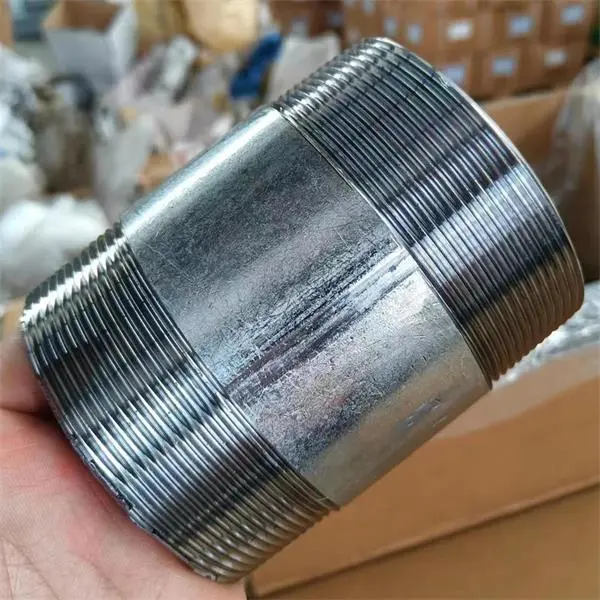
Seamless pipes and tubes are hollow cylindrical sections manufactured without a welded seam. This distinction is critical in applications demanding high pressure, temperature, and corrosion resistance, where weld seams represent potential points of failure. Positioned within the broader metallic product manufacturing chain, they serve as crucial components in industries ranging from oil and gas, petrochemicals, and power generation to aerospace, automotive, and construction. Their core performance characteristics—pressure rating, dimensional accuracy, chemical composition, and mechanical strength—are paramount and governed by stringent international standards. Unlike welded pipes, the seamless construction imparts superior uniformity and eliminates the risk of longitudinal weld-related defects, making them indispensable for critical infrastructure and high-integrity systems. The primary pain point in the industry stems from balancing cost-effectiveness with the demanding performance requirements, particularly in selecting the appropriate alloy composition and manufacturing process for specific application parameters. Furthermore, traceability and adherence to evolving industry regulations concerning material sourcing and non-destructive testing pose continuous challenges.
Material Science & Manufacturing
Seamless pipe and tube manufacturing begins with selecting appropriate raw materials, commonly carbon steel, alloy steel, stainless steel, and nickel alloys. The choice is dictated by the intended service environment. Carbon steel, with its relatively low cost, is suitable for less demanding applications. Alloy steels, incorporating elements like chromium, molybdenum, and vanadium, offer enhanced strength, toughness, and creep resistance at elevated temperatures. Stainless steels provide exceptional corrosion resistance due to the presence of chromium, forming a passive oxide layer. Nickel alloys exhibit superior resistance to highly corrosive environments and high temperatures. The primary manufacturing process is hot extrusion or rotary piercing. Hot extrusion involves forcing a heated billet through a die, reducing its diameter and creating a hollow section. Rotary piercing utilizes a mandrel and rotating rolls to pierce a solid billet, forming the tube. Key parameters in both processes include billet temperature (typically 1100-1300°C), extrusion/piercing speed, die/roll design, and lubrication. Maintaining precise temperature control is crucial to prevent grain growth and ensure optimal mechanical properties. Following the primary forming process, tubes undergo reheating, sizing (through drawing or expanding), and finishing operations like straightening, cutting, and heat treatment (annealing, normalizing, or quenching and tempering) to achieve the desired dimensions, tolerances, and mechanical properties. Chemical composition control, verified through spectroscopic analysis, is essential to guarantee adherence to specified standards. Non-destructive testing (NDT) – including ultrasonic testing, eddy current testing, and hydrostatic testing – is employed to detect internal and surface defects.
Performance & Engineering
The performance of seamless pipes and tubes is fundamentally governed by their ability to withstand internal pressure, external loads, and corrosive environments. Force analysis, utilizing principles of thin-walled pressure vessel theory (Lamé’s equations), determines the maximum allowable pressure based on pipe diameter, wall thickness, and material yield strength. A safety factor is applied to account for uncertainties in material properties, manufacturing tolerances, and operating conditions. Environmental resistance is evaluated through corrosion testing (immersion tests, salt spray tests, electrochemical tests) and accelerated aging studies. The selection of appropriate materials and protective coatings (e.g., epoxy coatings, galvanizing) is crucial to mitigate corrosion. Compliance requirements are dictated by industry-specific codes and standards, such as ASME B31.3 for process piping, API 5L for line pipe, and ASTM A106 for seamless carbon steel pipe. Functional implementation often involves complex system integration, including welding to other components, flange connections, and the use of specialized fittings. Stress concentration around welds and fittings must be carefully considered during design. Fatigue analysis is critical for applications subjected to cyclical loading. Creep resistance is paramount for high-temperature applications, dictating the need for creep-resistant alloys and optimized grain structures. Furthermore, the impact of thermal expansion and contraction must be accounted for in piping system design to prevent thermal stresses.
Technical Specifications
| Parameter | ASTM A53 Grade B (Carbon Steel) | ASTM A335 P11 (Alloy Steel) | ASTM A249 (Stainless Steel 304/304L) | ASTM A312 Grade 316 (Stainless Steel) |
|---|---|---|---|---|
| Yield Strength (MPa) | 240 | 276 | 205 | 290 |
| Tensile Strength (MPa) | 400 | 483 | 517 | 620 |
| Elongation (%) | 23 | 20 | 30 | 35 |
| Wall Thickness Range (mm) | 2-12 | 3-20 | 2-8 | 2-15 |
| Outside Diameter Range (mm) | 1/2 – 8 | 1/2 – 8 | 1/4 – 12 | 1/2 – 24 |
| Maximum Operating Pressure (MPa) | Dependent on dimensions & temperature | Dependent on dimensions & temperature | Dependent on dimensions & temperature | Dependent on dimensions & temperature |
Failure Mode & Maintenance
Seamless pipes and tubes are susceptible to several failure modes in service. Corrosion, both general and localized (pitting, crevice corrosion, stress corrosion cracking), is a prevalent concern, particularly in aggressive environments. Fatigue cracking can occur under cyclical loading, initiated by stress concentrators (e.g., welds, dents, corrosion pits). Creep rupture is a concern at high temperatures, leading to gradual deformation and eventual fracture. Erosion-corrosion occurs when the protective passive layer is removed by abrasive particles in a corrosive fluid. Hydrogen embrittlement can occur in high-strength steels exposed to hydrogen-containing environments. Delamination can occur in multi-layer tubes or those with coating defects. Oxidation at elevated temperatures can lead to scaling and material loss. Maintenance strategies include regular inspections using NDT methods (ultrasonic testing, radiography, eddy current testing, visual inspection) to detect cracks, corrosion, and erosion. Preventive maintenance involves applying protective coatings, implementing corrosion inhibitors, controlling fluid velocity to minimize erosion, and ensuring proper material selection for the service environment. Periodic hydrostatic testing verifies the integrity of the pipe or tube. In the event of a detected defect, repair options include welding (following approved procedures and quality control), sleeving, or replacement. Detailed record-keeping of inspection and maintenance activities is essential for tracking performance and predicting potential failures.
Industry FAQ
Q: What is the key difference between a seamless pipe and a welded pipe in terms of mechanical properties?
A: Seamless pipes generally exhibit superior mechanical properties compared to welded pipes, particularly in terms of impact toughness and resistance to crack propagation. The absence of a weld seam eliminates a potential weakness and allows for a more uniform grain structure, leading to enhanced performance under stress and pressure. Welded pipes, while cost-effective, inherently have a region of altered microstructure near the weld, potentially compromising their strength and ductility.
Q: How does the carbon equivalent (CE) influence the weldability of seamless steel pipes?
A: The carbon equivalent (CE) is a mathematical calculation used to estimate the hardenability of steel during welding. A higher CE indicates a greater susceptibility to weld cracking. Lower CE values generally correlate with better weldability. Seamless pipe manufacturers often specify a maximum CE value for materials intended for welding applications to ensure the integrity of the welded joints.
Q: What are the typical NDT methods used to ensure the quality of seamless pipes during manufacturing?
A: Common NDT methods include Ultrasonic Testing (UT) to detect internal flaws like inclusions and cracks, Eddy Current Testing (ET) to identify surface defects, Radiographic Testing (RT) using X-rays or gamma rays to visualize internal structures, and Hydrostatic Testing (HT) to assess the pipe's ability to withstand pressure. Visual Inspection is also a critical first step in quality control.
Q: How does the choice of heat treatment affect the performance of seamless alloy steel tubes?
A: Heat treatment plays a crucial role in tailoring the mechanical properties of alloy steel tubes. Annealing relieves internal stresses and improves ductility. Normalizing refines the grain structure and enhances strength. Quenching and tempering can significantly increase strength and toughness, but requires careful control to prevent cracking. The specific heat treatment process is selected based on the alloy composition and the desired performance characteristics.
Q: What are the considerations for selecting a seamless pipe material for a highly corrosive environment?
A: Material selection for corrosive environments requires careful consideration of the corrosion mechanism (e.g., pitting, crevice corrosion, stress corrosion cracking). Stainless steels (304, 316) offer excellent corrosion resistance, but may not be suitable for all environments. Nickel alloys (e.g., Inconel, Hastelloy) provide superior resistance to highly corrosive media. Coatings can also be applied to enhance corrosion protection, but their effectiveness depends on the coating type and application method. The fluid composition, temperature, and pressure must be considered when selecting the appropriate material.
Conclusion
Seamless pipes and tubes represent a critical enabling technology across diverse industries, characterized by their inherent structural integrity and reliability. The manufacturing process, deeply rooted in material science and precise parameter control, dictates the ultimate performance characteristics. Understanding the nuances of material selection, fabrication techniques, and potential failure modes is paramount for ensuring long-term operational safety and efficiency.
Looking ahead, advancements in alloy development, non-destructive testing methodologies, and predictive maintenance strategies will further enhance the performance and lifespan of seamless pipes and tubes. The growing demand for lightweight, high-strength materials in aerospace and automotive applications will drive innovation in specialized alloys and manufacturing processes. Furthermore, increasing emphasis on sustainability and environmental responsibility will necessitate the development of corrosion-resistant materials and coatings that minimize life cycle costs and environmental impact.
