
Introduction
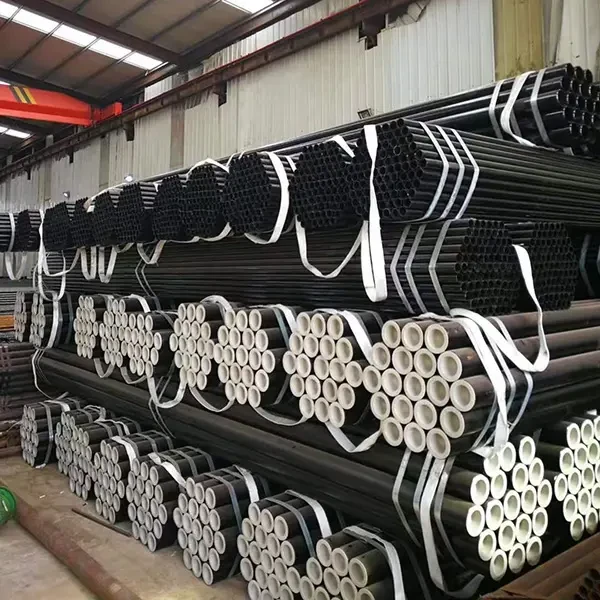
Seamless precision steel tube constitutes a critical component across numerous industrial applications, including hydraulic systems, automotive manufacturing, aerospace engineering, and oil & gas exploration. Defined by its consistent wall thickness, precise dimensions, and smooth internal bore, it differs fundamentally from welded steel tubing by eliminating the weld seam – a potential point of structural weakness. This guide provides an in-depth technical analysis of seamless precision steel tube, covering material science, manufacturing processes, performance characteristics, potential failure modes, and relevant industry standards. Its technical position within the value chain resides between raw steel billet production and the fabrication of finished components. Core performance characteristics hinge on dimensional accuracy, burst pressure resistance, surface finish, and chemical composition control, all of which dictate its suitability for high-pressure, high-tolerance applications.
Material Science & Manufacturing
The primary raw material for seamless precision steel tubes is carbon steel, alloy steel, or stainless steel, each possessing distinct properties tailored to specific applications. Carbon steel offers cost-effectiveness and good machinability, while alloy steels provide enhanced strength, toughness, and hardenability through the addition of elements like manganese, chromium, and molybdenum. Stainless steels, incorporating chromium, nickel, and molybdenum, deliver superior corrosion resistance. Manufacturing typically begins with hot working – piercing a solid steel billet using a rotary piercing process (Mannesmann process or similar). This creates a hollow shell, subsequently refined through processes like hot rolling, cold drawing, and annealing. Hot rolling reduces the diameter and wall thickness, while cold drawing imparts precise dimensional control and improved surface finish. Annealing relieves internal stresses induced during cold working, enhancing ductility. Key parameter control during manufacturing focuses on maintaining tight tolerances on diameter, wall thickness, ovality, and straightness. Chemical composition is rigorously monitored via spectroscopic analysis to ensure adherence to specified standards. Microstructural control, achieved through precise heat treatment cycles, is crucial for optimizing mechanical properties like yield strength, tensile strength, and elongation. The grain size and morphology directly influence the tube’s susceptibility to fatigue cracking and brittle fracture.
Performance & Engineering
The performance of seamless precision steel tubes is fundamentally governed by its ability to withstand internal pressure and external loads without failure. Burst pressure, determined through hydrostatic testing, is a critical performance metric, dictated by the tube's diameter, wall thickness, and material strength. Force analysis considers hoop stress (circumferential stress) and longitudinal stress resulting from internal pressure. Engineering designs must account for factors of safety to mitigate risks associated with pressure fluctuations, temperature variations, and corrosion. Environmental resistance is paramount; depending on the application, this may involve resistance to corrosive fluids, saltwater, or high-temperature oxidation. Compliance requirements often necessitate adherence to specific standards for pressure vessels, pipelines, and automotive components. Finite Element Analysis (FEA) is frequently employed to simulate stress distribution under various loading conditions, optimizing tube geometry and material selection. Corrosion prevention strategies, including the application of protective coatings (e.g., epoxy, galvanizing) or utilizing corrosion-resistant alloys, are essential in harsh environments. Fatigue analysis assesses the tube's ability to withstand cyclic loading, identifying potential crack initiation and propagation sites.
Technical Specifications
| Parameter | ASTM A53 Grade B | ASTM A335 P11 | DIN 2391 St37.0 | EN 10210-2 S235JR |
|---|---|---|---|---|
| Outer Diameter (mm) | 1/2" – 8" (12.7 – 203.2) | 1/2" – 4" (12.7 – 101.6) | 10.2 – 219.1 | 6 - 660 |
| Wall Thickness (mm) | Sch 40, Sch 80, Std | Schedule 40, 80 | 1.5 – 10 | 1.5 – 20 |
| Yield Strength (MPa) | 240 | 205 | 235 | 235 |
| Tensile Strength (MPa) | 310 | 345 | 360-440 | 360-510 |
| Elongation (%) | 20 | 22 | 18 | 16 |
| Chemical Composition (C max %) | 0.25 | 0.18 | 0.22 | 0.25 |
Failure Mode & Maintenance
Seamless precision steel tubes are susceptible to various failure modes, including fatigue cracking, corrosion-induced cracking (stress corrosion cracking, pitting corrosion), ductile fracture, and brittle fracture. Fatigue cracking typically initiates at surface defects or areas of high stress concentration, propagating gradually under cyclic loading. Corrosion-induced cracking occurs when a corrosive environment interacts with tensile stresses, weakening the material. Ductile fracture involves significant plastic deformation before failure, often resulting from excessive tensile stress. Brittle fracture, conversely, occurs with minimal plastic deformation, particularly at low temperatures. Regular inspection, utilizing non-destructive testing (NDT) methods like ultrasonic testing, radiographic testing, and eddy current testing, is crucial for detecting cracks and corrosion. Maintenance practices include applying protective coatings, implementing corrosion inhibitors, and periodic hydrostatic testing to verify structural integrity. Proper storage and handling are essential to prevent damage from impact, abrasion, and environmental exposure. Internal cleaning to remove debris and contaminants can also prevent corrosion and blockage. Documentation of inspection and maintenance records is critical for tracking tube performance and identifying potential issues before catastrophic failure occurs.
Industry FAQ
Q: What are the key differences between hot-finished seamless and cold-drawn seamless steel tubes, and when would you choose one over the other?
A: Hot-finished seamless tubes are produced at high temperatures, resulting in a coarser grain structure and lower dimensional accuracy. They are generally more cost-effective and suitable for applications where precision is not critical, such as structural components. Cold-drawn seamless tubes undergo a cold working process, resulting in tighter tolerances, improved surface finish, and enhanced mechanical properties. They are preferred for high-pressure applications, hydraulic systems, and precision engineering where dimensional accuracy and surface quality are paramount.
Q: How does the heat treatment process influence the mechanical properties of seamless steel tubes?
A: Heat treatment, including annealing, normalizing, and quenching & tempering, plays a vital role in controlling the microstructure and, consequently, the mechanical properties. Annealing reduces hardness and increases ductility, normalizing refines grain structure, and quenching & tempering enhances strength and toughness. The specific heat treatment cycle is tailored to the steel grade and desired properties.
Q: What are the common corrosion mechanisms affecting seamless steel tubes, and how can they be mitigated?
A: Common corrosion mechanisms include general corrosion, pitting corrosion, stress corrosion cracking, and galvanic corrosion. Mitigation strategies include applying protective coatings (epoxy, galvanizing), using corrosion-resistant alloys (stainless steel), employing cathodic protection, and implementing corrosion inhibitors in the fluid system.
Q: What non-destructive testing (NDT) methods are commonly used to inspect seamless steel tubes for defects?
A: Common NDT methods include ultrasonic testing (UT) for detecting internal flaws, radiographic testing (RT) for detecting volumetric defects, eddy current testing (ET) for detecting surface cracks, and liquid penetrant testing (PT) for detecting surface discontinuities. Each method has its strengths and limitations, and the choice depends on the type of defect being sought.
Q: What impact does wall thickness have on the burst pressure of a seamless steel tube?
A: Burst pressure is directly proportional to wall thickness. Increasing the wall thickness significantly increases the tube's ability to withstand internal pressure. The relationship is governed by the Barlow's formula: P = (2 S t) / D, where P is the burst pressure, S is the tensile strength, t is the wall thickness, and D is the outer diameter.
Conclusion
Seamless precision steel tubes represent a highly engineered product essential to a broad spectrum of industrial applications. Their superior performance, stemming from the absence of a weld seam and meticulous manufacturing controls, makes them ideal for demanding environments requiring high pressure, dimensional accuracy, and reliable long-term service. Understanding the interplay between material science, manufacturing processes, and potential failure modes is crucial for selecting the appropriate tube grade and implementing effective maintenance strategies.
Future advancements in steel metallurgy, coupled with increasingly sophisticated NDT techniques and advanced corrosion protection methods, will further enhance the performance and longevity of seamless precision steel tubes. Continued research and development focused on optimizing manufacturing processes and reducing material costs will ensure their continued relevance and competitiveness in a dynamic global market. The ongoing demand for lighter, stronger, and more durable materials will drive innovation in this field, leading to the development of new alloys and processing techniques.
