
Introduction
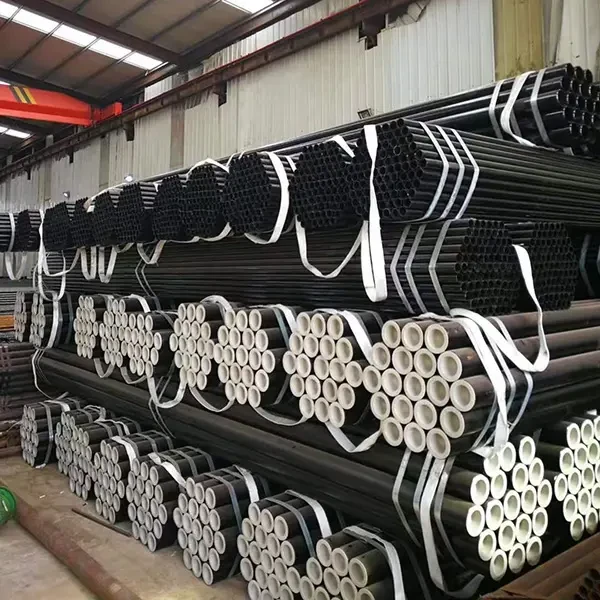
Seamless tube, a foundational component across numerous industrial sectors, is characterized by the absence of a weld seam. This is achieved through extrusion or piercing processes applied to solid billets. Positioned strategically within the materials supply chain, it serves as a critical intermediary between raw material production (steel, alloys, etc.) and the fabrication of complex systems – pipelines, structural components, heat exchangers, and hydraulic cylinders, to name a few. Its core performance characteristics revolve around pressure containment, fluid transport, and structural integrity under various operational stresses. Unlike welded tubes, the seamless construction eliminates a potential point of failure associated with weld quality, making it preferred for high-pressure, high-temperature, and corrosion-sensitive applications. The selection of seamless tube is thus driven by demanding engineering requirements, focusing heavily on material grade, dimensional accuracy, and adherence to stringent industry standards.
Material Science & Manufacturing
The predominant raw material for seamless tube production is carbon steel, though alloy steels (chromium-molybdenum, nickel-chromium-molybdenum) and stainless steels are also frequently employed, dictated by application-specific corrosion resistance and strength requirements. Carbon steel’s properties are significantly influenced by its carbon content, impacting hardness, weldability, and ductility. Alloy steels introduce elements to enhance specific characteristics like creep resistance at elevated temperatures or improved toughness in cryogenic environments. Stainless steels, containing chromium as a key alloying element, provide excellent corrosion resistance through the formation of a passive chromium oxide layer.
Manufacturing typically employs two primary processes: extrusion and piercing. Hot extrusion involves forcing a heated billet through a die, reducing its diameter and creating a hollow section. This process is suited for smaller diameter tubes and offers excellent dimensional control. Hot piercing, also known as the Mannesmann process, utilizes a rotating mandrel inserted into a heated billet. Rollers apply pressure, gradually expanding the billet into a hollow tube. Piercing is favored for larger diameter tubes and can achieve significant wall thickness variations. Critical parameters during manufacturing include temperature control – maintaining optimal plasticity without causing grain growth – lubrication to reduce friction and tool wear, and precise die/mandrel design to achieve desired dimensions and wall thickness uniformity. Post-processing steps often include normalizing, annealing, or quenching and tempering to refine the microstructure and achieve desired mechanical properties. Non-destructive testing (NDT) techniques such as ultrasonic testing (UT) and eddy current testing (ECT) are vital to detect defects such as inclusions, cracks, and wall thinning.
Performance & Engineering
The performance of seamless tube is governed by its ability to withstand internal and external pressures, axial loads, bending moments, and torsional stresses. Force analysis is central to determining appropriate wall thickness and material selection. Under internal pressure, hoop stress (circumferential stress) is a primary concern, calculated using the Barlow's formula: σ = (P D) / (2 t), where σ is hoop stress, P is internal pressure, D is the outer diameter, and t is the wall thickness. External pressure induces radial compression, potentially leading to collapse. Axial loads are considered in applications like structural supports, requiring evaluation of tensile and compressive strength. Bending moments and torsional stresses are prevalent in piping systems subject to dynamic loads or thermal expansion.
Environmental resistance is crucial, particularly concerning corrosion. The choice of material must consider the fluid being transported or the ambient environment. Factors such as pH, chloride concentration, temperature, and flow velocity impact corrosion rates. Electrochemical corrosion mechanisms (galvanic, pitting, crevice) require specific mitigation strategies – material selection (stainless steel, duplex stainless steel), coatings (epoxy, polyurethane), or cathodic protection. Compliance requirements are dictated by industry-specific standards. For example, ASME B31.3 covers power piping, ASME B31.1 addresses power boilers, and API 5L governs line pipe. These standards specify material properties, design calculations, manufacturing procedures, and inspection requirements to ensure safety and reliability. Furthermore, pressure vessel codes, such as ASME Section VIII Division 1, dictate allowable stresses and design rules for seamless tube utilized in pressure vessel construction.
Technical Specifications
| Material Grade | Outer Diameter (mm) | Wall Thickness (mm) | Yield Strength (MPa) |
|---|---|---|---|
| ASTM A53 Grade B | 21.3 | 2.6 | 250 |
| ASTM A106 Grade C | 114.3 | 6.4 | 345 |
| AISI 304/304L | 38.1 | 2.0 | 205 |
| AISI 316/316L | 76.2 | 3.4 | 240 |
| API 5L X42 | 168.3 | 7.1 | 355 |
| API 5L X70 | 219.1 | 8.7 | 485 |
Failure Mode & Maintenance
Seamless tube can experience various failure modes, dependent on operating conditions and material properties. Fatigue cracking arises from cyclic loading, initiating at stress concentrators like surface imperfections or weld points (if any subsequent welding is performed). Creep, prevalent at elevated temperatures, involves time-dependent deformation under sustained stress, leading to gradual diameter expansion and eventual rupture. Corrosion-related failures include pitting corrosion (localized attack), uniform corrosion (general surface degradation), and stress corrosion cracking (SCC) – a synergistic effect of tensile stress and corrosive environment. Erosion-corrosion occurs in high-velocity fluid systems, removing protective layers and accelerating corrosion rates. Hydrogen embrittlement, particularly in high-strength steels, involves diffusion of hydrogen into the metal lattice, reducing ductility and causing cracking.
Maintenance strategies focus on preventative measures and damage mitigation. Regular inspection using NDT methods (UT, ECT, radiography) is crucial to detect early signs of defects. Periodic hydrostatic testing verifies pressure integrity. Protective coatings and linings can mitigate corrosion. Flow-accelerated corrosion (FAC) monitoring is essential in power plants. Proper selection of materials compatible with the transported fluid and operating environment is paramount. In case of detected cracks, repair welding (following stringent procedures and quality control) or tube replacement may be necessary. Proper support design minimizes stress concentrations and prevents excessive vibration. For systems handling corrosive fluids, regular chemical cleaning and inhibitor injection are beneficial.
Industry FAQ
Q: What is the primary advantage of seamless tube over welded tube in high-pressure applications?
A: The absence of a weld seam in seamless tube eliminates a potential point of failure. Welds, even high-quality ones, inherently introduce some level of discontinuity and residual stress, reducing the tube’s overall pressure-bearing capacity and increasing susceptibility to crack propagation. Seamless tubes provide a more uniform material structure, enhancing reliability in critical applications.
Q: How does the carbon equivalent (CE) value influence the weldability of seamless steel tubes?
A: Carbon equivalent is a calculated value that estimates the overall hardenability of a steel. Higher CE values indicate a greater propensity for forming hard, brittle microstructures during welding, potentially leading to cracking. Lower CE values generally improve weldability, making it easier to achieve sound, ductile welds.
Q: What NDT methods are commonly used to inspect seamless tubes for subsurface defects?
A: Ultrasonic testing (UT) is the most widely used NDT method for detecting subsurface defects like inclusions, cracks, and voids. Eddy current testing (ECT) is effective for detecting surface cracks and near-surface defects. Radiographic testing (RT) provides a visual image of the internal structure but has limitations regarding defect detection sensitivity for certain materials and geometries.
Q: What is the impact of heat treatment on the mechanical properties of seamless tubes?
A: Heat treatment processes, such as normalizing, annealing, and quenching and tempering, significantly alter the microstructure and mechanical properties of seamless tubes. Normalizing refines the grain structure and improves machinability. Annealing reduces hardness and increases ductility. Quenching and tempering enhance strength and toughness. The specific heat treatment parameters are carefully controlled to achieve desired properties.
Q: How does the choice of material affect the resistance of seamless tubes to corrosion in a seawater environment?
A: Carbon steel exhibits poor corrosion resistance in seawater and is susceptible to rapid degradation. Alloy steels with increased chromium content provide improved resistance but can still experience localized corrosion. Stainless steels, particularly austenitic grades like 316/316L, offer excellent corrosion resistance due to the formation of a passive chromium oxide layer. Duplex stainless steels, combining austenitic and ferritic microstructures, provide even higher resistance to chloride-induced pitting and crevice corrosion.
Conclusion
Seamless tube represents a critical engineered product, its performance dictated by a complex interplay of material science, manufacturing processes, and engineering design principles. The elimination of the weld seam provides a substantial advantage in demanding applications requiring high pressure containment and structural integrity. Understanding the nuances of material selection, failure modes, and relevant industry standards is paramount for ensuring reliable and safe operation.
Future trends in seamless tube technology are focused on developing high-strength, lightweight alloys, enhancing corrosion resistance through advanced coatings, and implementing more sophisticated NDT techniques for improved defect detection. Furthermore, advancements in manufacturing processes aim to reduce production costs and improve dimensional accuracy. The continued refinement of these areas will solidify seamless tube's position as a cornerstone of modern industrial infrastructure.
