
Introduction
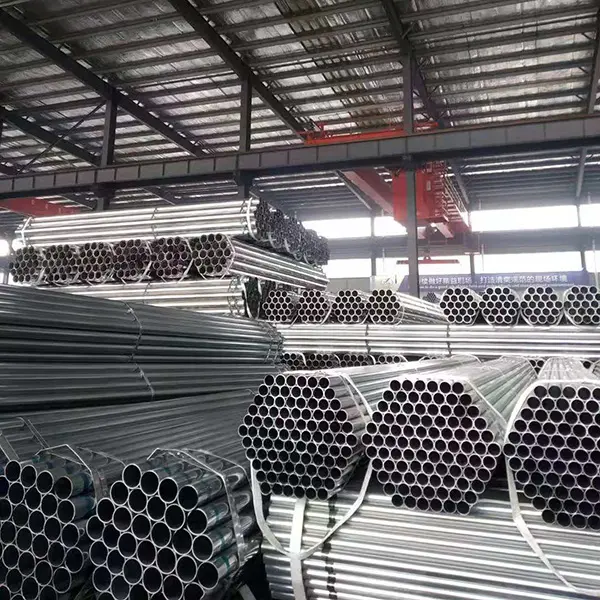
Spiral Welded Pipe (sim pipe) and Seamless Pipe are two fundamental forms of steel pipe utilized extensively across industries including oil & gas, water conveyance, construction, and power generation. Sim pipe is manufactured by rolling formed steel plate into a spiral shape and welding the seam longitudinally. Seamless pipe, conversely, is produced without a welded seam, typically through processes like extrusion or piercing. This distinction directly impacts the mechanical properties, pressure-bearing capabilities, and application suitability of each pipe type. While sim pipe generally offers cost-effectiveness for large-diameter, lower-pressure applications, seamless pipe provides superior strength and consistency, vital for critical, high-pressure systems. Understanding the nuanced differences in manufacturing, material science, performance characteristics, and potential failure modes is crucial for informed material selection and engineering design. This guide provides a comprehensive technical overview of both sim pipe and seamless pipe, encompassing material properties, manufacturing processes, performance analysis, failure mechanisms, and relevant industry standards.
Material Science & Manufacturing
Sim Pipe: The raw material for sim pipe is typically carbon steel (e.g., ASTM A53 Grade B, API 5L X42, X52), though alloy steels are used for specialized applications. The steel’s chemical composition directly influences weldability and corrosion resistance. Manufacturing begins with coil slitting and edge preparation. The steel plate is then formed into the desired pipe diameter using roll forming machines. A key parameter is the helix angle, which affects the spiral’s pitch and stress distribution. Submerged Arc Welding (SAW) is the most common welding process, utilizing a continuous weld bead deposited using a submerged arc. Critical control parameters include welding current, voltage, travel speed, and flux composition. Non-destructive testing (NDT), including ultrasonic testing (UT) and radiographic testing (RT), is performed to ensure weld integrity. The resulting pipe undergoes hydrostatic testing to verify its pressure-bearing capacity.Seamless Pipe: Seamless pipe typically starts with billet or bloom steel. The two primary manufacturing methods are mandrel piercing and extrusion. Mandrel piercing involves rotating a solid billet between two conical dies, while a mandrel is positioned inside to create the hollow form. Extrusion forces the heated billet through a die, shaping it into a pipe. Alloy composition and controlled heating/cooling cycles are critical to achieving the desired mechanical properties. Seamless pipe generally exhibits a finer grain structure than sim pipe, contributing to its enhanced strength and toughness. Hot finishing and cold drawing operations are frequently employed to refine dimensions and surface finish. Hydrostatic testing and NDT are also standard quality control measures.
Performance & Engineering
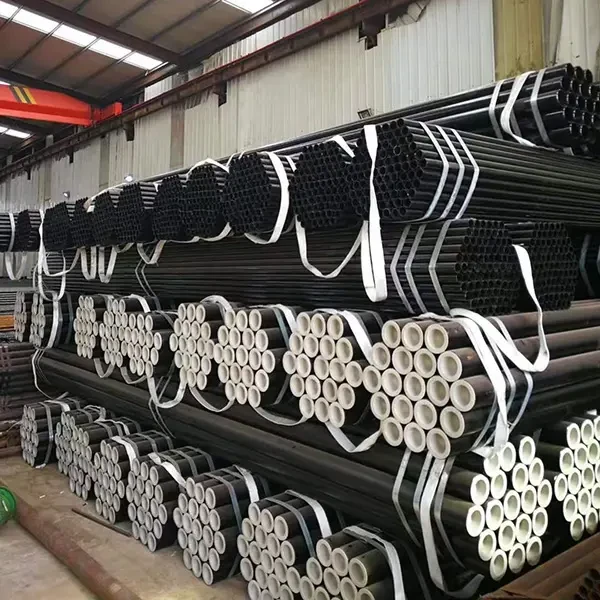
The performance of both sim pipe and seamless pipe is dictated by their mechanical properties and ability to withstand internal and external pressures, axial loads, and environmental stresses. Sim pipe, due to its helical weld seam, exhibits slightly lower burst strength and fatigue resistance compared to seamless pipe. The weld seam introduces a potential stress concentration point. Finite element analysis (FEA) is frequently used to model stress distribution within sim pipe, optimizing helix angle and weld parameters to mitigate stress concentrations. Seamless pipe, lacking a weld seam, provides more uniform stress distribution, making it preferable for critical applications like high-pressure pipelines and pressure vessels. Corrosion resistance is a vital consideration. Internal coatings (e.g., epoxy, polyethylene) and external coatings (e.g., fusion-bonded epoxy, polyurethane) are applied to mitigate corrosion in various environments. Cathodic protection is also used in buried pipeline applications. The design of piping systems must account for thermal expansion and contraction, utilizing expansion joints and flexible connections to prevent stress buildup. Compliance with industry standards such as ASME B31.3 (Process Piping) and API 5L (Line Pipe) is mandatory, dictating design factors, material specifications, and testing procedures.
Technical Specifications
| Parameter | Sim Pipe (Typical) | Seamless Pipe (Typical) | Units |
|---|---|---|---|
| Outside Diameter | 4.5 – 60 | 1/8 – 26 | inches |
| Wall Thickness | 0.125 – 1.0 | Sch 5s – Sch 160 | inches |
| Material | ASTM A53 Gr. B, API 5L X42 | ASTM A106 Gr. B, API 5L X70 | - |
| Yield Strength | 36,000 – 50,000 | 36,000 – 70,000 | psi |
| Tensile Strength | 58,000 – 70,000 | 60,000 – 80,000 | psi |
| Elongation | 18 – 25 | 20 – 28 | % |
Failure Mode & Maintenance
Sim Pipe: The primary failure modes in sim pipe are weld seam cracking, corrosion-induced pitting, and fatigue cracking at the weld toe. Weld defects (e.g., porosity, incomplete fusion) significantly reduce fatigue life. Corrosion under insulation (CUI) is a common issue in insulated pipelines. Stress corrosion cracking (SCC) can occur in specific corrosive environments. Maintenance includes regular visual inspection for corrosion and weld defects, NDT (UT, RT) to assess weld integrity, and protective coating maintenance. Seamless Pipe: Seamless pipe is susceptible to corrosion pitting, erosion, and cracking due to internal pressure or external loads. Fatigue cracking can occur due to cyclic loading. Galvanic corrosion can occur when dissimilar metals are in contact. Maintenance procedures involve regular inspection for corrosion, erosion, and cracks. Hydrostatic testing should be periodically performed to verify pressure-bearing capacity. Internal cleaning to remove scale and debris is also essential. Preventive maintenance programs should include corrosion monitoring and mitigation strategies. For both pipe types, proper storage and handling are vital to prevent damage and maintain material integrity. Damage during installation (e.g., denting, bending) can create stress concentrations and initiate failure.
Industry FAQ
Q: What are the key considerations when selecting between sim pipe and seamless pipe for a high-pressure gas transmission pipeline?
A: For high-pressure gas transmission, seamless pipe is generally preferred due to its superior strength, uniform stress distribution, and absence of a weld seam, minimizing the risk of catastrophic failure. While sim pipe can be used at lower pressures, the potential for weld seam failure necessitates more stringent inspection and monitoring protocols. The specific pressure rating, operating temperature, and regulatory requirements will dictate the optimal choice.
Q: How does the manufacturing process of sim pipe affect its corrosion resistance compared to seamless pipe?
A: The welding process in sim pipe can introduce residual stresses and microstructural changes in the heat-affected zone (HAZ), making it more susceptible to localized corrosion, particularly stress corrosion cracking. Seamless pipe, with its homogenous microstructure, generally exhibits better overall corrosion resistance. However, proper weld treatment and corrosion-resistant coatings can mitigate corrosion risks in sim pipe.
Q: What non-destructive testing (NDT) methods are critical for quality control of sim pipe weld seams?
A: Ultrasonic testing (UT) is the primary NDT method for detecting weld defects in sim pipe, including porosity, inclusions, and cracks. Radiographic testing (RT) provides a visual representation of the weld’s internal structure. Magnetic particle inspection (MPI) is used to detect surface and near-surface cracks. Liquid penetrant inspection (LPI) is also used for surface crack detection. Phased array ultrasonic testing (PAUT) provides enhanced imaging capabilities.
Q: What are the common causes of fatigue failure in sim pipe, and how can it be prevented?
A: Fatigue failure in sim pipe is often initiated at the weld toe due to stress concentrations. Cyclic loading, vibration, and misalignment can accelerate fatigue cracking. Prevention measures include optimizing weld geometry to minimize stress concentrations, shot peening to introduce compressive residual stresses, and selecting materials with high fatigue strength. Regular inspection for cracks is also crucial.
Q: What role does hydrostatic testing play in ensuring the integrity of both sim pipe and seamless pipe?
A: Hydrostatic testing involves pressurizing the pipe to a specified level, typically 1.5 times the maximum operating pressure, and holding it for a defined period. This test verifies the pipe’s ability to withstand pressure and detect leaks or structural weaknesses. It's a critical quality control step for both sim pipe and seamless pipe, although seamless pipe generally exhibits a higher hydrostatic test pressure capability.
Conclusion
The selection between sim pipe and seamless pipe necessitates a thorough understanding of their distinct manufacturing processes, material properties, and performance characteristics. Sim pipe offers a cost-effective solution for large-diameter, lower-pressure applications, while seamless pipe provides superior strength and reliability for critical, high-pressure systems. Careful consideration of potential failure modes, implementation of appropriate maintenance programs, and adherence to relevant industry standards are essential for ensuring the long-term integrity and safe operation of piping systems.
Ultimately, the optimal choice hinges on a comprehensive engineering analysis considering application-specific requirements, budgetary constraints, and risk tolerance. Advances in welding technologies and materials science continue to improve the performance of sim pipe, expanding its application range. However, seamless pipe remains the preferred option for applications demanding the highest levels of safety and reliability.
