

Introduction
Stainless steel seamless tubes are pressure piping components fabricated without a welding seam, offering superior strength and corrosion resistance compared to welded alternatives. Positioned within the industrial supply chain as a critical component in fluid transport systems, structural applications, and high-pressure environments, these tubes are essential across industries including oil & gas, petrochemical, power generation, and pharmaceuticals. Core performance characteristics center around maintaining pressure integrity, resisting corrosive media, and enduring high temperatures. The selection of appropriate stainless steel grades and precise manufacturing processes are paramount to achieving optimal performance and longevity, addressing critical industry needs for safety and reliability in demanding applications. A primary pain point in the industry stems from ensuring consistent material quality and traceability, coupled with adherence to stringent regulatory standards governing pressure vessel and piping systems. This guide provides an in-depth exploration of ss seamless tube technology, covering material science, manufacturing, performance, failure modes, and relevant industry standards.
Material Science & Manufacturing
The fundamental material for ss seamless tubes is typically an austenitic stainless steel, such as 304/304L, 316/316L, or duplex stainless steels like 2205. 304/304L offers excellent corrosion resistance in a wide range of environments, while 316/316L adds molybdenum for enhanced resistance to chloride corrosion. Duplex stainless steels provide a combination of high strength and superior resistance to stress corrosion cracking. Raw material selection involves careful consideration of chemical composition, ensuring compliance with ASTM A240 or equivalent international standards. The manufacturing process generally begins with the piercing of a solid billet of stainless steel using a rotary piercing process. This process involves heating the billet to a high temperature (typically 1100-1200°C) and applying significant pressure with rotating mandrels and dies to create a hollow tube. Key parameters controlled during piercing include billet temperature, rotational speed, piercing force, and mandrel lubrication. Subsequent hot rolling operations expand the tube diameter and reduce wall thickness. Critical control parameters here are rolling temperature, reduction rate, and cooling rate. Cold drawing is then performed to achieve precise dimensions and improved mechanical properties. Annealing, pickling, and passivation treatments follow to remove scale, restore ductility, and enhance corrosion resistance. Non-destructive testing (NDT), including hydrostatic testing, eddy current testing, and ultrasonic testing, is crucial for detecting defects and ensuring the integrity of the finished product. The chemical compatibility of the selected stainless steel with the intended fluid or environment is a key consideration, preventing localized corrosion and maintaining long-term performance. Microstructural control during heat treatment is vital to optimize mechanical properties such as yield strength, tensile strength, and elongation.
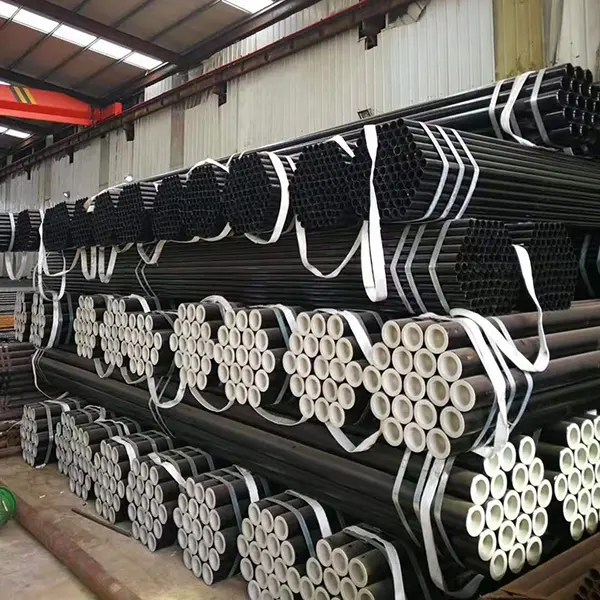
Performance & Engineering
Performance evaluation of ss seamless tubes necessitates a comprehensive understanding of their mechanical and physical properties under various operating conditions. Force analysis, particularly pressure containment calculations, is critical for determining the maximum allowable working pressure (MAWP) based on tube dimensions, material strength, and safety factors as defined by ASME B31.3 (Process Piping) or similar codes. Environmental resistance is another key aspect, with specific attention paid to corrosion rates in the intended service environment. Electrochemical corrosion testing, including potentiodynamic polarization and immersion tests, are commonly employed to assess corrosion resistance. Crevice corrosion, pitting corrosion, and stress corrosion cracking are potential failure mechanisms that must be considered, particularly in chloride-containing environments. The design must account for thermal expansion and contraction, especially in high-temperature applications, to prevent thermal stresses that could lead to fatigue failure. Compliance requirements vary by industry and geographic location. For example, pharmaceutical applications demand compliance with 3-A Sanitary Standards, ensuring hygienic design and ease of cleaning. Power generation applications require adherence to ASME Section I (Power Boilers) or Section VIII (Pressure Vessels). Finite element analysis (FEA) is often used to simulate stress distribution under various loading conditions, optimizing tube design and ensuring structural integrity. The tubes' resistance to fatigue, particularly under cyclic loading, is a critical engineering concern and often requires extensive testing and analysis.
Technical Specifications
| Parameter | 304/304L | 316/316L | Duplex 2205 |
|---|---|---|---|
| Yield Strength (MPa) | 205-275 | 205-275 | 400-550 |
| Tensile Strength (MPa) | 517-724 | 517-724 | 700-900 |
| Elongation (%) | 30-50 | 30-50 | 25-40 |
| Corrosion Resistance | Excellent (General) | Superior (Chloride) | Outstanding (Pitting, Crevice) |
| Operating Temperature (°C) | -196 to 870 | -196 to 870 | -50 to 350 |
| Wall Thickness Range (mm) | 0.5-20 | 0.5-20 | 1-25 |
Failure Mode & Maintenance
Ss seamless tubes can experience several failure modes during operation. Fatigue cracking, initiated by cyclic loading, is a common issue, particularly at points of stress concentration such as welds or bends. Pitting corrosion and crevice corrosion can occur in chloride-containing environments, leading to localized material loss and eventual failure. Stress corrosion cracking (SCC) is a particularly dangerous failure mode, often occurring in high-temperature, high-stress environments. Oxidation can also contribute to material degradation at elevated temperatures. Delamination, although less frequent in seamless tubes compared to welded counterparts, can occur due to imperfections in the material or manufacturing process. Failure analysis techniques, including fractography (examination of fracture surfaces) and metallographic analysis, are essential for determining the root cause of failure. Preventative maintenance strategies include regular visual inspections for signs of corrosion or cracking, non-destructive testing (NDT) to detect hidden defects, and periodic hydrostatic testing to verify pressure integrity. Proper cleaning and surface treatment can help prevent corrosion. For applications involving aggressive chemicals, material selection should be carefully considered, and corrosion inhibitors may be necessary. Implementing a robust inspection and maintenance program, coupled with adherence to relevant industry codes and standards, is crucial for ensuring the long-term reliability and safety of ss seamless tube systems. Selection of appropriate gaskets and fittings is also vital to prevent leaks and corrosion.
Industry FAQ
Q: What is the primary advantage of seamless tubes over welded tubes in high-pressure applications?
A: Seamless tubes offer a more uniform microstructure and lack a weld seam, eliminating a potential point of failure under high pressure. The absence of a weld reduces the risk of fatigue cracking, corrosion, and leakage, resulting in improved safety and reliability in critical applications.
Q: How does the molybdenum content in 316/316L stainless steel enhance corrosion resistance?
A: Molybdenum enhances the pitting corrosion resistance, particularly in chloride-containing environments. It forms a more stable passive film on the surface of the stainless steel, protecting it from corrosive attack. This is crucial for applications in marine environments or those handling saltwater.
Q: What are the typical non-destructive testing (NDT) methods used to ensure the quality of ss seamless tubes?
A: Common NDT methods include hydrostatic testing (to verify pressure integrity), eddy current testing (to detect surface and near-surface defects), radiographic testing (to detect internal flaws), and ultrasonic testing (to detect both surface and internal defects). These methods help identify imperfections without damaging the tube.
Q: What are the considerations when selecting a stainless steel grade for a specific fluid application?
A: The chemical compatibility of the stainless steel with the fluid is paramount. Factors to consider include the fluid's pH, chloride content, temperature, and flow velocity. Corrosion testing should be performed to evaluate the material's resistance to the specific fluid under operating conditions.
Q: How can stress corrosion cracking (SCC) be mitigated in ss seamless tube systems?
A: SCC can be mitigated through proper material selection (choosing alloys less susceptible to SCC), stress reduction (minimizing residual stresses through heat treatment), control of the corrosive environment (using corrosion inhibitors or controlling pH), and cathodic protection.
Conclusion
Ss seamless tubes represent a critical engineering component across diverse industries, offering exceptional strength, corrosion resistance, and reliability. The selection of appropriate materials, precise manufacturing processes, and rigorous quality control are vital for ensuring optimal performance and preventing premature failure. Understanding the potential failure modes and implementing effective maintenance strategies are essential for maximizing the lifespan and safety of these systems.
The ongoing advancements in stainless steel alloy development and manufacturing techniques continue to enhance the performance and broaden the application scope of ss seamless tubes. Future trends are likely to focus on developing new alloys with improved resistance to aggressive environments and reducing manufacturing costs through innovative processes. Adherence to evolving industry standards and regulations will remain critical for ensuring the safe and reliable operation of ss seamless tube systems.
