

Introduction
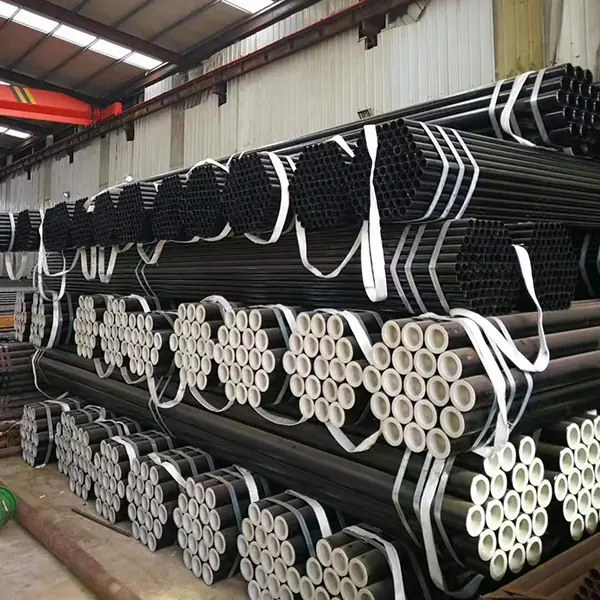
Stainless seamless pipe is a longitudinally welded pipe manufactured from a solid billet of stainless steel. It distinguishes itself from welded pipe through its absence of a welded seam, providing superior mechanical properties and corrosion resistance. Its position within the industrial chain is critical, acting as a fundamental component in fluid transfer systems across diverse industries including petrochemical, food processing, power generation, pharmaceutical, and oil & gas. Core performance characteristics include high tensile strength, excellent resistance to a broad spectrum of corrosive media, and the ability to withstand high pressures and temperatures. The demand for stainless seamless pipe is driven by increasing infrastructure projects, stringent regulatory requirements regarding material purity and safety, and the need for durable, long-lasting piping solutions in harsh operating environments. A key pain point in the industry is maintaining consistent material composition across large-diameter pipes and ensuring full traceability for critical applications.
Material Science & Manufacturing
The foundational material for stainless seamless pipe is various grades of stainless steel, primarily austenitic (304, 316, 321), ferritic (430), martensitic (410), and duplex (2205) stainless steels. Austenitic stainless steels, alloyed with chromium and nickel, exhibit exceptional corrosion resistance and weldability. Ferritic grades offer good ductility and resistance to stress corrosion cracking, albeit with lower corrosion resistance than austenitic counterparts. Martensitic grades, hardened by heat treatment, provide high strength but reduced corrosion resistance. Duplex stainless steels combine the benefits of austenitic and ferritic structures, achieving high strength and excellent corrosion resistance. Raw material properties – including carbon, chromium, nickel, molybdenum, and nitrogen content – dictate the final pipe’s characteristics.
Manufacturing typically involves the following steps: billet preparation (cutting to length and surface cleaning), hot piercing (using a rotary piercing process to create the hollow billet), hot extrusion or drawing (to achieve the desired diameter and wall thickness), heat treatment (to refine the grain structure and enhance mechanical properties), cold drawing (for tighter tolerances and improved surface finish), and finishing operations (including straightening, cutting to length, and end beveling). Key parameter control is paramount. During hot piercing, precise temperature control (typically 1100-1300°C) is vital to prevent cracking and ensure a smooth internal surface. Drawing speeds and reduction ratios during cold drawing significantly influence mechanical properties like yield strength and tensile strength. Heat treatment parameters, specifically annealing temperature and cooling rate, impact grain size and corrosion resistance. Non-destructive testing (NDT) methods such as ultrasonic testing (UT) and eddy current testing (ET) are employed throughout the process to detect defects.
Performance & Engineering
Performance of stainless seamless pipe is governed by several engineering principles. Force analysis, particularly pressure containment, relies on hoop stress calculations (using Barlow’s formula or Lame’s equations) to determine the maximum allowable internal pressure based on pipe diameter, wall thickness, and material yield strength. Environmental resistance is crucial; chloride-induced pitting corrosion, crevice corrosion, and stress corrosion cracking are significant concerns, particularly in marine and chemical processing environments. Selecting the appropriate stainless steel grade based on the specific corrosive medium is paramount. For high-temperature applications, oxidation resistance and creep strength become critical design considerations.
Compliance requirements are extensive. ASME B31.3 (Process Piping) and ASME Section VIII Division 1 (Pressure Vessels) dictate design, fabrication, inspection, and testing procedures. PED (Pressure Equipment Directive) compliance is mandatory for pipes intended for use in the European Union. ASTM standards (e.g., ASTM A312 for seamless stainless steel pipe) specify material composition, mechanical properties, and testing requirements. Functional implementation involves careful consideration of welding procedures, particularly for dissimilar metal joints, to prevent galvanic corrosion. Proper support design is also essential to prevent excessive stress from weight or thermal expansion. Finite Element Analysis (FEA) is frequently employed to simulate stress distribution and optimize pipe support configurations.
Technical Specifications
| Standard | Material Grade | Outer Diameter (mm) | Wall Thickness (mm) | Yield Strength (MPa) | Tensile Strength (MPa) |
|---|---|---|---|---|---|
| ASTM A312 | 304/304L | 10.2 | 2.0 | 205 | 517 |
| ASTM A312 | 316/316L | 219.1 | 3.0 | 248 | 586 |
| EN 10299 | 1.4301 (304) | 38.1 | 1.5 | 210 | 520 |
| EN 10299 | 1.4401 (316) | 114.3 | 2.3 | 250 | 600 |
| GB/T 19924 | 0Cr18Ni9 (304) | 108 | 4.0 | 200 | 520 |
| GB/T 19924 | 0Cr17Ni12Mo2 (316) | 76.2 | 2.5 | 230 | 580 |
Failure Mode & Maintenance
Stainless seamless pipe, while robust, is susceptible to several failure modes. Fatigue cracking can occur under cyclic loading, particularly at stress concentrators such as welds or sharp bends. Pitting corrosion, localized corrosion, and crevice corrosion are common in chloride-containing environments, initiating at surface imperfections. Stress corrosion cracking (SCC) can occur in the presence of tensile stress and specific corrosive agents. Galvanic corrosion can arise when stainless steel is coupled with dissimilar metals in an electrolyte. Oxidation at high temperatures can lead to scaling and material loss. Hydrogen embrittlement can occur in high-pressure hydrogen environments, reducing ductility and increasing susceptibility to cracking.
Preventive maintenance is crucial. Regular inspection for corrosion, cracks, and erosion is essential. Non-destructive testing (NDT) techniques like visual inspection, liquid penetrant testing (PT), magnetic particle inspection (MPI), and ultrasonic testing (UT) should be employed. Cleaning to remove corrosive contaminants and surface deposits is vital. Proper insulation can prevent condensation and reduce the risk of corrosion. For high-temperature applications, periodic furnace inspections and alloy selection suited for the specific temperature are necessary. In cases of detected cracks, repairs using qualified welding procedures are essential. Regular hydrostatic testing verifies the integrity of the pipe system.
Industry FAQ
Q: What are the key differences between 304 and 316 stainless steel seamless pipe in terms of corrosion resistance?
A: 316 stainless steel contains molybdenum, which significantly enhances its resistance to pitting and crevice corrosion, particularly in chloride-rich environments like seawater. 304 stainless steel offers excellent general corrosion resistance, but is less resistant to chlorides. Therefore, 316 is preferred for marine applications, chemical processing, and other environments where chloride exposure is significant.
Q: How does wall thickness impact the pressure rating of a stainless seamless pipe?
A: Pressure rating is directly proportional to wall thickness. Increasing wall thickness increases the pipe’s ability to withstand internal pressure. This relationship is mathematically defined by the Barlow’s formula and is critical for ensuring safe operation. Thicker-walled pipes are necessary for higher-pressure applications.
Q: What is the impact of heat treatment on the mechanical properties of stainless seamless pipe?
A: Heat treatment, specifically annealing, is crucial for relieving residual stresses introduced during manufacturing and refining the grain structure. Proper annealing improves ductility, toughness, and corrosion resistance. Incorrect heat treatment can lead to reduced mechanical properties and increased susceptibility to cracking.
Q: What NDT methods are commonly used to inspect stainless seamless pipe for defects?
A: Ultrasonic Testing (UT) is the most common NDT method used to detect internal flaws like cracks, inclusions, and porosity. Radiographic testing (RT) is also used, though less frequently due to cost and safety concerns. Liquid Penetrant Testing (PT) is used to detect surface cracks. Eddy Current Testing (ET) can detect surface and near-surface defects, as well as material variations.
Q: What is the significance of traceability for stainless seamless pipe used in critical applications?
A: Traceability ensures that the material’s origin, manufacturing process, and testing history can be fully documented. This is crucial for quality control, failure analysis, and regulatory compliance, particularly in industries like pharmaceutical, aerospace, and nuclear where material integrity is paramount. Full traceability enables quick identification of potential issues and facilitates root cause analysis in the event of a failure.
Conclusion
Stainless seamless pipe represents a critical component across numerous industries, offering a compelling combination of mechanical strength, corrosion resistance, and long-term durability. The selection of appropriate material grades, precise manufacturing control, and adherence to rigorous industry standards are paramount to ensure optimal performance and prevent premature failure. Understanding the specific operational environment, including corrosive media, temperature, and pressure, is essential for engineering robust and reliable piping systems.
Future developments in stainless seamless pipe technology are likely to focus on advanced alloy compositions for enhanced corrosion resistance in increasingly harsh environments, improved manufacturing processes for tighter tolerances and reduced costs, and the integration of smart sensors for real-time monitoring of pipe integrity. Continued adherence to international standards and a commitment to quality control will be vital to maintaining the reliability and safety of these essential components.
