
Introduction
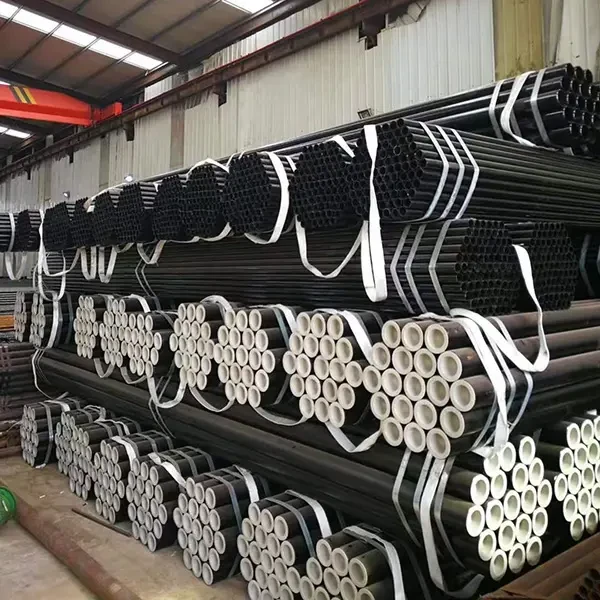
One-inch metal pipe, a foundational component in numerous industrial and commercial applications, is a hollow cylindrical conduit utilized for the conveyance of fluids, gases, and solid particulate matter. Its technical position within the broader infrastructure chain is critical, functioning as a fundamental element in plumbing, process piping, structural support, and transportation systems. Typically manufactured from carbon steel, stainless steel, or alloy steels, the core performance characteristics of 1-inch metal pipe revolve around its pressure containment capability, resistance to corrosion and erosion, and adherence to stringent dimensional tolerances. A key challenge within the industry is balancing cost-effectiveness with the required mechanical properties and long-term durability, particularly in corrosive or high-stress environments. This guide will provide an in-depth analysis of the material science, manufacturing processes, performance parameters, failure modes, and maintenance practices associated with 1-inch metal pipe, adhering to relevant international standards.
Material Science & Manufacturing
The predominant material for 1-inch metal pipe is carbon steel (ASTM A53 Grade B, API 5L X42 are common specifications). Carbon steel offers a balance of strength, weldability, and cost. Stainless steel (304/304L, 316/316L) is selected for applications demanding superior corrosion resistance. Alloy steels (e.g., chrome-molybdenum) are utilized in high-temperature, high-pressure scenarios. The key physical properties influencing performance include yield strength (typically 250-550 MPa for carbon steel), tensile strength (400-700 MPa), elongation (15-25%), and hardness (Brinell hardness 120-200 BHN). Chemical composition is crucial – carbon content influences weldability and strength; chromium enhances corrosion resistance; molybdenum improves high-temperature strength. Manufacturing typically involves seamless or welded construction. Seamless pipe is produced via piercing a solid billet of steel, offering higher pressure ratings and uniform mechanical properties. Welded pipe, manufactured by electric resistance welding (ERW) or submerged arc welding (SAW), is more cost-effective. Critical manufacturing parameters include controlled cooling rates post-welding to minimize residual stresses, precise dimensional control during drawing or forming, and thorough non-destructive testing (NDT) such as ultrasonic testing (UT) and radiographic testing (RT) to detect flaws. Surface preparation – pickling and passivation – is vital for corrosion resistance, particularly in stainless steel pipes. Heat treatment processes, like normalizing and annealing, are used to refine grain structure and improve ductility.

Performance & Engineering
Performance analysis of 1-inch metal pipe centers on its ability to withstand internal pressure, external loads, and environmental stressors. The Barlow's formula (S = (PD)/(2t)) dictates the allowable stress (S) based on internal pressure (P), pipe diameter (D), and wall thickness (t). Force analysis considers hoop stress (tangential stress in the pipe wall) and longitudinal stress. Finite Element Analysis (FEA) is often employed to model complex loading scenarios, including bending moments, torsional forces, and thermal expansion. Environmental resistance encompasses corrosion (uniform, pitting, galvanic, crevice), erosion (caused by abrasive particles in the fluid stream), and oxidation (at elevated temperatures). Compliance requirements vary by application. For potable water systems, NSF/ANSI 61 certification is essential. For oil and gas pipelines, API 5L and ASME B31.8 govern material selection, design, fabrication, and inspection. Cathodic protection (sacrificial anodes or impressed current) and protective coatings (epoxy, polyurethane) are widely used to mitigate corrosion. Thermal expansion and contraction must be accounted for in piping layouts through expansion loops or joints to prevent stress concentrations. Fatigue analysis is crucial for applications involving cyclic loading, assessing the pipe’s resistance to crack initiation and propagation.
Technical Specifications
| Parameter | Carbon Steel (ASTM A53 Grade B) | Stainless Steel 304/304L | Stainless Steel 316/316L | API 5L X42 |
|---|---|---|---|---|
| Outside Diameter (OD) | 1.125 inches (28.6 mm) | 1.125 inches (28.6 mm) | 1.125 inches (28.6 mm) | 1.125 inches (28.6 mm) |
| Wall Thickness (Schedule 40) | 0.154 inches (3.9 mm) | 0.154 inches (3.9 mm) | 0.154 inches (3.9 mm) | 0.154 inches (3.9 mm) |
| Yield Strength (Min) | 36,000 psi (248 MPa) | 30,000 psi (207 MPa) | 30,000 psi (207 MPa) | 34,500 psi (238 MPa) |
| Tensile Strength (Min) | 60,000 psi (414 MPa) | 75,000 psi (517 MPa) | 75,000 psi (517 MPa) | 65,000 psi (448 MPa) |
| Elongation (Min) | 20% | 30% | 30% | 21% |
| Corrosion Rate (in mm/year) – Seawater | 0.05-0.2 | <0.01 | <0.01 | 0.05-0.15 |
Failure Mode & Maintenance
Common failure modes in 1-inch metal pipe include corrosion-induced failures (pitting, uniform corrosion, stress corrosion cracking), fatigue cracking (due to cyclic loading), erosion (particularly in abrasive fluid applications), weld defects (porosity, lack of fusion, cracks), and mechanical damage (dents, gouges). Fatigue cracking initiates at stress concentrators (welds, dents) and propagates under cyclic stress. Corrosion occurs due to electrochemical reactions between the pipe material and the surrounding environment. Erosion removes material from the pipe wall due to the impact of abrasive particles. Regular inspection is crucial for preventing catastrophic failures. Non-destructive testing (NDT) methods such as visual inspection, ultrasonic testing (UT), radiographic testing (RT), and eddy current testing (ECT) are used to detect flaws. Maintenance practices include protective coatings (painting, epoxy lining), cathodic protection, internal cleaning to remove debris and scale, and periodic hydrostatic testing to verify pressure integrity. Repair options include welding (for minor cracks or pinholes), pipe sleeves (for larger defects), or complete pipe replacement. Proper joint design and installation are essential to minimize stress concentrations and prevent leakage. Regular torque checks on bolted connections are also vital.
Industry FAQ
Q: What is the impact of wall thickness on the pressure rating of a 1-inch pipe?
A: Wall thickness is inversely proportional to the hoop stress, and therefore directly affects the pressure rating. A thicker wall can withstand higher internal pressures, as defined by Barlow's formula. Reducing wall thickness compromises pressure containment and increases the risk of burst failure.
Q: How does the choice of material affect corrosion resistance in a saltwater environment?
A: Carbon steel is highly susceptible to corrosion in saltwater. Stainless steel alloys (304/304L, 316/316L) exhibit significantly superior corrosion resistance due to the formation of a passive chromium oxide layer. 316/316L offers even better resistance due to the addition of molybdenum, making it more resistant to pitting corrosion in chloride-rich environments.
Q: What are the critical considerations when welding 1-inch metal pipe?
A: Preheat temperatures, weld filler metal selection, shielding gas composition, and post-weld heat treatment are crucial. Controlling the heat input minimizes residual stresses and prevents cracking. Proper joint preparation and welder qualification are essential to ensure weld integrity. Maintaining appropriate interpass temperatures is also critical.
Q: How often should hydrostatic testing be performed on a 1-inch metal pipe system?
A: The frequency of hydrostatic testing depends on the application and regulatory requirements. Typically, it is recommended annually for critical systems (e.g., high-pressure pipelines) and every 3-5 years for less critical applications. Following any significant repair or modification, hydrostatic testing is mandatory.
Q: What are the advantages of seamless pipe over welded pipe?
A: Seamless pipe offers superior uniformity in mechanical properties and is free from weld defects. It generally has a higher pressure rating and better resistance to fatigue cracking. However, welded pipe is typically more cost-effective for larger diameters and longer lengths.
Conclusion
The selection, installation, and maintenance of 1-inch metal pipe require a comprehensive understanding of material science, manufacturing processes, and performance characteristics. Carbon steel remains a cost-effective option for many applications, but stainless steel and alloy steels are essential where corrosion resistance or high-temperature strength are paramount. Proper design, fabrication, and inspection, coupled with adherence to relevant industry standards, are critical for ensuring long-term reliability and preventing catastrophic failures.
Future trends in this sector include the development of advanced corrosion-resistant coatings, improved NDT techniques for early flaw detection, and the increasing use of digital twin technology for predictive maintenance. The ongoing optimization of welding processes and the adoption of sustainable materials will also play a significant role in enhancing the performance and longevity of 1-inch metal pipe systems.
