
Introduction
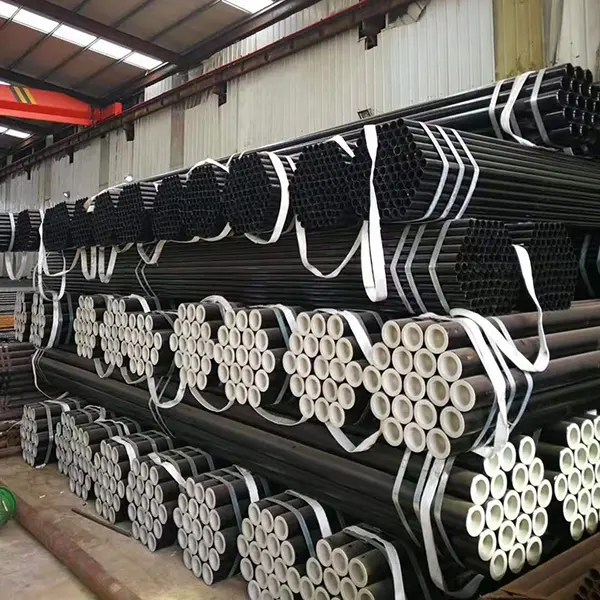
12-inch diameter steel pipe is a foundational component in numerous industrial applications, including oil and gas transmission, water conveyance, structural support, and process piping. Its widespread adoption is attributed to its high strength-to-weight ratio, durability, and cost-effectiveness. Within the industry chain, it represents a critical fabricated product, typically manufactured from steel plate or seamless billets and subjected to various forming, welding, and finishing processes. Core performance characteristics hinge on factors such as yield strength, tensile strength, corrosion resistance, dimensional accuracy, and pressure-bearing capacity. The selection of appropriate steel grade and manufacturing method is paramount to ensuring the pipe's suitability for its intended service, addressing key industry pain points related to long-term reliability, safety, and regulatory compliance.
Material Science & Manufacturing
The dominant material for 12-inch diameter steel pipe is carbon steel, specifically grades like ASTM A53 Grade B, API 5L X42, X52, and X60. These grades vary in their chemical composition, impacting their mechanical properties. Carbon content generally ranges from 0.05% to 0.30%, with manganese, silicon, and sulfur present in controlled quantities. Lower carbon content enhances weldability but reduces strength. Manufacturing typically involves two primary methods: seamless and welded. Seamless pipe is produced by piercing a solid billet of steel, eliminating the weld seam and providing superior strength and resistance to fatigue cracking. Welded pipe is manufactured by rolling steel plate into a cylindrical shape and longitudinally welding the seam. Submerged Arc Welding (SAW), Electric Resistance Welding (ERW), and High-Frequency Induction Welding (HFIW) are common welding processes. Critical parameters during manufacturing include precise temperature control during rolling and welding to ensure proper grain structure and minimize residual stresses. Post-weld heat treatment (PWHT) is often employed to relieve stresses and improve ductility. Dimensional tolerances are governed by API 5L and ASTM A53 specifications, impacting fit-up and system integrity. Chemical compatibility with the transported fluid or gas is also a significant consideration, necessitating appropriate internal coatings or liner selection to prevent corrosion.
Performance & Engineering
The performance of 12-inch diameter steel pipe is fundamentally governed by its ability to withstand internal and external pressures, axial loads, bending moments, and environmental stresses. Force analysis, employing techniques like finite element analysis (FEA), is crucial for determining appropriate wall thickness and material selection to ensure structural integrity. Consideration must be given to hydrostatic test pressures, operating pressures, and potential surge pressures. Environmental resistance is a major concern, particularly in corrosive environments. Factors such as pH, chloride concentration, and oxygen content influence corrosion rates. External coatings like epoxy, polyurethane, or polyethylene, coupled with cathodic protection, are frequently employed to mitigate corrosion. Compliance requirements vary depending on the application and geographical location. For oil and gas pipelines, adherence to API 5L, ASME B31.8, and DOT regulations is essential. For water conveyance, AWWA standards are prevalent. Functional implementation considerations include proper pipe support design to prevent overstressing, expansion loops to accommodate thermal expansion and contraction, and appropriate valve and fitting selection to maintain system efficiency and prevent leakage. Fatigue analysis is critical for applications involving cyclic loading, such as offshore pipelines subjected to wave action.
Technical Specifications
| Parameter | ASTM A53 Grade B | API 5L X42 | API 5L X60 |
|---|---|---|---|
| Outside Diameter (inch) | 12 | 12 | 12 |
| Wall Thickness (inch) | Schedule 40 (0.237) | 0.375 | 0.375 |
| Minimum Yield Strength (psi) | 36,000 | 42,000 | 60,000 |
| Minimum Tensile Strength (psi) | 58,000 | 65,000 | 80,000 |
| Elongation (%) | 23 | 21 | 19 |
| Charpy V-Notch Impact Energy (ft-lbs @ -20°F) | 20 | 20 | 20 |
Failure Mode & Maintenance
Common failure modes for 12-inch diameter steel pipe include corrosion (uniform, pitting, galvanic, and stress corrosion cracking), fatigue cracking (due to cyclic loading), weld defects (porosity, slag inclusions, incomplete fusion), denting and ovalization (from external impact), and erosion (from abrasive fluids). Failure analysis often involves visual inspection, non-destructive testing (NDT) such as ultrasonic testing (UT), radiographic testing (RT), and magnetic particle inspection (MPI), and destructive testing like tensile testing and metallographic examination. Maintenance strategies include regular inspection programs, application of protective coatings, cathodic protection, internal cleaning to remove deposits, and repair of minor defects through welding or patching. Proactive maintenance is crucial for preventing catastrophic failures. Corrosion inhibitors can be added to transported fluids to reduce corrosion rates. For pipelines operating in harsh environments, periodic hydrostatic testing is recommended to verify structural integrity. Proper support design and installation are essential to prevent overstressing and denting. Detailed record-keeping of inspection and maintenance activities is vital for tracking the pipe's condition and predicting future performance. The establishment of a Fitness-For-Service (FFS) assessment program allows for continued operation of pipes with minor defects, provided they meet specific acceptance criteria.
Industry FAQ
Q: What is the primary difference between seamless and welded pipe, and how does it affect cost?
A: Seamless pipe is manufactured without a weld seam, offering superior strength and resistance to fatigue cracking. Welded pipe, while generally more economical to produce, has a weld seam that can be a potential point of weakness. Seamless pipe typically costs 15-30% more than welded pipe due to the more complex manufacturing process.
Q: How does the API 5L specification define the different grades (X42, X52, X60) of steel pipe?
A: The "X" designation in API 5L refers to the minimum yield strength of the steel in thousands of psi. Therefore, X42 has a minimum yield strength of 42,000 psi, X52 has 52,000 psi, and X60 has 60,000 psi. Higher grades offer increased strength but may have reduced weldability and require more stringent manufacturing controls.
Q: What role does cathodic protection play in mitigating corrosion in buried pipelines?
A: Cathodic protection (CP) utilizes electrochemical principles to reduce the corrosion rate of buried pipelines. It involves making the pipeline the cathode in an electrochemical cell, which shifts the corrosion potential and suppresses the corrosion process. CP systems typically use sacrificial anodes or impressed current systems.
Q: What are the key considerations when selecting a coating for a steel pipeline transporting sour gas (containing H2S)?
A: When transporting sour gas, the coating must be resistant to hydrogen sulfide (H2S) attack, preventing blistering, cracking, and loss of adhesion. Epoxy coatings modified with sulfide resistance additives, or specialized polyurethane coatings, are often employed. Careful surface preparation and application are crucial for optimal performance.
Q: How often should hydrostatic testing be performed on existing pipelines to assess their integrity?
A: The frequency of hydrostatic testing depends on factors such as pipeline age, operating pressure, fluid transported, and regulatory requirements. Typically, hydrostatic testing is performed every 5-10 years, or after any significant alteration or repair. In-line inspection (ILI) tools, also known as "smart pigs," can be used to detect defects between hydrostatic tests, extending inspection intervals.
Conclusion
12-inch diameter steel pipe remains a cornerstone of modern infrastructure, delivering essential fluids and gases across diverse industries. Its performance and longevity are intrinsically linked to careful material selection, rigorous manufacturing processes, and diligent maintenance practices. Understanding the interplay between material science, engineering principles, and regulatory compliance is vital for ensuring safe and reliable operation. The choice between seamless and welded construction, the specific steel grade, and the application of appropriate corrosion mitigation strategies all contribute to the overall integrity and lifespan of the pipeline system.
Future trends in steel pipe technology focus on the development of high-strength, low-alloy (HSLA) steels with enhanced corrosion resistance, the implementation of advanced NDT techniques for improved defect detection, and the adoption of digital twins for predictive maintenance and risk assessment. Continued innovation in coating technologies and cathodic protection systems will further extend the service life of steel pipelines, minimizing environmental impact and maximizing operational efficiency. A holistic approach to pipeline management, encompassing design, construction, operation, and maintenance, is crucial for maximizing the return on investment and ensuring long-term sustainability.
