
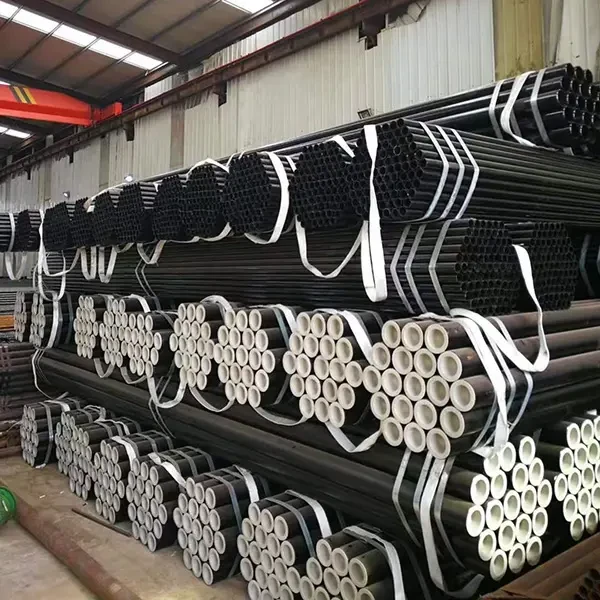
Introduction
12mm steel pipe represents a foundational component within numerous industrial applications, primarily serving as a conduit for fluids and gases, and a structural element in various systems. Positioned within the broader steel product chain – beginning with iron ore extraction, followed by steelmaking (Basic Oxygen Furnace or Electric Arc Furnace processes), hot rolling, cold drawing, and finally, finishing – its 12mm outer diameter defines its specific suitability for medium-pressure applications, typically up to 150 PSI depending on wall thickness and steel grade. Core performance characteristics revolve around its pressure-bearing capacity, resistance to corrosion (dependent on alloy composition), weldability, and dimensional accuracy. This guide provides a comprehensive technical overview of 12mm steel pipe, addressing material science, manufacturing processes, performance engineering, potential failure modes, and relevant industry standards. Its use is widespread across industries including plumbing, fire suppression systems, oil & gas (low-pressure lines), and mechanical engineering. A key industry pain point revolves around ensuring consistent weld integrity and mitigating corrosion, particularly in demanding environments.
Material Science & Manufacturing
The predominant material for 12mm steel pipe is carbon steel (ASTM A53 Grade B is common), though alloy steels like ASTM A36, and stainless steels (304/316) are also utilized depending on the application’s requirements. Carbon steel’s composition consists primarily of iron, with up to 2.1% carbon by weight, along with manganese, silicon, and trace amounts of phosphorus and sulfur. Higher carbon content increases hardness and strength but reduces ductility. Manufacturing typically begins with hot rolling of steel billets into seamless pipes via processes like rotary piercing or mandrel rolling. Seamless pipes offer superior pressure resistance. Alternatively, welded pipes are produced by forming steel strips into cylindrical shapes and then welding the seam – using Electric Resistance Welding (ERW) or Submerged Arc Welding (SAW). ERW is cost-effective for smaller diameters, while SAW provides higher strength for larger diameters and thicker walls. Key parameters controlled during manufacturing include temperature (during rolling and welding), reduction ratio (degree of diameter reduction), cooling rate (affecting microstructure), and welding current/voltage. Post-manufacturing processes include normalizing (to refine grain structure), pickling (to remove scale), and oiling (to prevent corrosion during storage). The resulting microstructure significantly influences mechanical properties; a fine-grained structure is desirable for maximizing toughness and ductility. Chemical composition is critically controlled to meet specified standards, ensuring consistent performance and weldability.

Performance & Engineering
Performance of 12mm steel pipe is dictated by its ability to withstand internal pressure, external loads, and environmental stressors. Internal pressure is assessed using Barlow's formula (P = 2St/D, where P = pressure, S = tensile strength, t = wall thickness, D = diameter). This calculation highlights the crucial relationship between wall thickness and pressure rating. Force analysis involves considering bending moments, shear forces, and axial loads, particularly in structural applications. Finite Element Analysis (FEA) is often employed to simulate stress distribution under complex loading conditions. Environmental resistance is paramount; corrosion is a primary concern. Carbon steel is susceptible to rust in humid environments, necessitating protective coatings (galvanizing, epoxy coatings) or the use of corrosion-resistant alloys like stainless steel. Compliance requirements are governed by industry-specific standards, such as ASME B31.3 for process piping, API 5L for pipeline transportation, and EN 10255 for non-alloy steel tubes. Functional implementation often involves welding the pipe to fittings (elbows, tees, flanges) using Shielded Metal Arc Welding (SMAW), Gas Metal Arc Welding (GMAW), or Gas Tungsten Arc Welding (GTAW). Proper welding technique and filler metal selection are critical to maintaining structural integrity and preventing weld defects.
Technical Specifications
| Parameter | ASTM A53 Grade B | ASTM A36 | SS 304/316 | EN 10255 (S235JR) |
|---|---|---|---|---|
| Outer Diameter (mm) | 12 ± 0.3 | 12 ± 0.3 | 12 ± 0.3 | 12 ± 0.3 |
| Wall Thickness (mm) | 2.0 – 4.0 | 2.0 – 6.0 | 2.0 – 5.0 | 2.0 – 4.0 |
| Yield Strength (MPa) | 250 | 250 | 205 | 235 |
| Tensile Strength (MPa) | 370 | 400 | 515 | 360 |
| Elongation (%) | 20 | 20 | 30 | 21 |
| Corrosion Resistance | Low (requires coating) | Low (requires coating) | High | Low (requires coating) |
Failure Mode & Maintenance
Common failure modes for 12mm steel pipe include corrosion (leading to pitting and perforation), fatigue cracking (due to cyclical loading), weld defects (porosity, lack of fusion, cracking), and denting/deformation (from external impact). Corrosion is exacerbated by the presence of chlorides, sulfides, and acidic environments. Fatigue cracking initiates at stress concentrators (welds, dents) and propagates under repeated loading. Weld defects compromise the pipe’s pressure-bearing capacity and can lead to catastrophic failure. Microstructural defects, such as inclusions, can also initiate cracks. Failure analysis techniques include visual inspection, non-destructive testing (NDT) – ultrasonic testing, radiographic testing, magnetic particle inspection – and metallographic examination of fractured surfaces. Preventative maintenance involves regular inspection for corrosion and damage, application of protective coatings, and implementation of a cathodic protection system in corrosive environments. Periodic hydrostatic testing verifies the pipe’s pressure integrity. For welded pipes, regular weld inspections and re-certification are crucial. Proper grounding can prevent galvanic corrosion. Damaged sections should be repaired using qualified welding procedures, ensuring full penetration and proper heat treatment. Replacement is necessary for severely corroded or damaged pipes.
Industry FAQ
Q: What is the impact of sulfur content on the weldability of 12mm steel pipe?
A: Higher sulfur content (above 0.035%) reduces weldability by forming iron sulfide (FeS) inclusions in the weld metal, which can cause hot cracking during solidification. Lower sulfur content (<0.020%) is preferred for critical applications requiring high weld integrity. Specific welding procedures and filler metals may be required to mitigate the effects of higher sulfur content.
Q: How does annealing affect the mechanical properties of cold-drawn 12mm steel pipe?
A: Cold drawing increases strength and hardness but reduces ductility. Annealing (heating to a specific temperature and slow cooling) restores ductility and toughness by relieving internal stresses and refining the grain structure. However, it also reduces yield and tensile strength. The optimal annealing temperature depends on the steel grade and desired mechanical properties.
Q: What are the primary considerations when selecting a coating for corrosion protection of 12mm steel pipe in a saltwater environment?
A: In saltwater environments, galvanizing (zinc coating) provides sacrificial protection, corroding preferentially to the steel. Epoxy coatings offer a barrier against moisture and chlorides but are susceptible to damage. Duplex systems (epoxy primer + polyurethane topcoat) provide enhanced durability and corrosion resistance. Cathodic protection (sacrificial anodes or impressed current) is often used in conjunction with coatings for maximum protection.
Q: What NDT methods are most effective for detecting subsurface defects in welded 12mm steel pipe?
A: Ultrasonic testing (UT) is highly effective for detecting subsurface defects such as porosity, inclusions, and cracks in welds. Radiographic testing (RT) provides a visual image of the weld’s internal structure but has limitations with thickness and material composition. Magnetic particle inspection (MPI) is suitable for detecting surface and near-surface defects in ferromagnetic materials.
Q: What is the significance of the Charpy V-notch impact test for 12mm steel pipe intended for low-temperature applications?
A: The Charpy V-notch impact test measures the energy absorbed by a notched specimen during fracture. It assesses the material’s toughness and resistance to brittle failure at low temperatures. Low-temperature applications require materials with high impact toughness to prevent catastrophic failure due to brittle fracture.
Conclusion
12mm steel pipe serves as a critical component across numerous industries, with its performance dictated by a complex interplay of material science, manufacturing precision, and operational environment. The selection of appropriate steel grade, manufacturing process, and protective measures are paramount to ensuring long-term reliability and preventing failures stemming from corrosion, fatigue, or weld defects. Understanding the core technical parameters – yield strength, tensile strength, wall thickness, and corrosion resistance – is crucial for engineers and procurement professionals.
Future advancements in steel pipe technology will likely focus on developing high-strength, low-alloy (HSLA) steels with improved corrosion resistance, exploring advanced coating technologies (e.g., self-healing coatings), and implementing predictive maintenance strategies based on sensor data and machine learning algorithms. Continued adherence to rigorous quality control standards and industry best practices remains essential for maintaining the integrity and safety of 12mm steel pipe systems.
