
Introduction
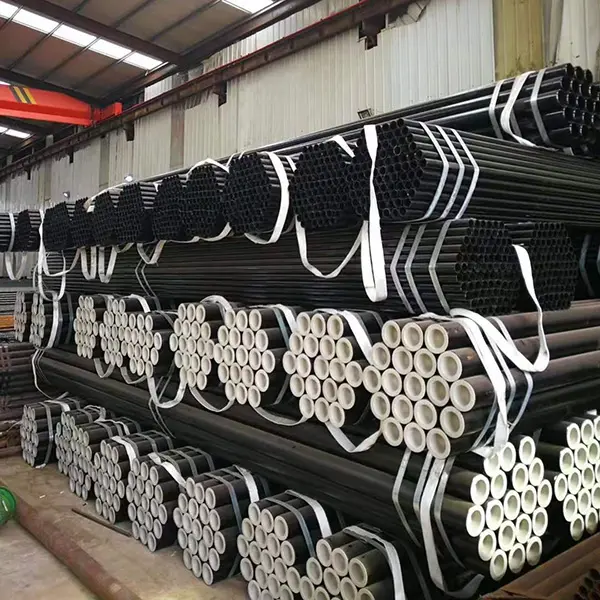
Type 304/304L stainless steel pipe is a widely utilized austenitic stainless steel in industrial piping systems. Its primary applications encompass fluid transport, structural support, and process lines across diverse sectors including chemical processing, food & beverage, pharmaceutical, oil & gas, and water treatment. Positioned within the material supply chain as a semi-finished product, it’s derived from stainless steel billet through processes like extrusion and drawing. Core performance characteristics include excellent corrosion resistance due to its chromium content (typically 18-20%), good weldability, and ductility. However, its susceptibility to chloride-induced pitting corrosion and stress corrosion cracking requires careful material selection and system design. The ‘L’ grade (304L) offers reduced carbon content to minimize carbide precipitation during welding, further enhancing corrosion resistance in welded joints. This guide provides an in-depth technical analysis of 304/304L stainless steel pipe, covering material science, manufacturing, performance, potential failure modes, and relevant industry standards.
Material Science & Manufacturing
304/304L stainless steel is an iron-based alloy containing approximately 18-20% chromium, 8-10.5% nickel, and less than 0.08% carbon (for 304L, carbon content is typically ≤0.03%). Chromium is the key element responsible for corrosion resistance, forming a passive chromium oxide layer on the surface. Nickel enhances ductility, toughness, and stabilizes the austenitic structure. The manufacturing process begins with melting and refining of raw materials, followed by hot rolling into billets. These billets are then subjected to piercing to create seamless pipe, or strip is welded longitudinally to form welded pipe. Key parameters in manufacturing include temperature control during hot rolling to achieve desired grain size and mechanical properties, and precise control of welding parameters (heat input, shielding gas composition) to ensure complete fusion and minimal distortion. For seamless pipe, the Mannesmann process (mandrel milling) or extrusion are common methods. Drawing operations are employed to achieve the final dimensions and wall thickness. Surface finishing, such as pickling and passivation, removes scale and enhances the protective chromium oxide layer. Material traceability is crucial, with each pipe typically marked with heat number, size, and grade.
Performance & Engineering
The mechanical performance of 304/304L stainless steel pipe is dictated by its composition and processing. Yield strength typically ranges from 205-290 MPa, tensile strength from 517-724 MPa, and elongation from 30-60%. These values are significantly influenced by cold working, with reduced ductility but increased strength. Engineering applications require consideration of internal pressure, external loads, temperature, and fluid compatibility. Hydrostatic testing is a standard quality control measure to verify the pipe's ability to withstand internal pressure. Stress analysis, using Finite Element Analysis (FEA), is often employed to evaluate the structural integrity of piping systems under complex loading conditions. Corrosion resistance is paramount; chloride ions pose a significant threat, leading to pitting and crevice corrosion. Maintaining a passive chromium oxide layer is crucial; this can be compromised by low oxygen levels, reducing conditions, or the presence of chlorides. Electropolishing can improve corrosion resistance by removing surface imperfections. Consideration must be given to thermal expansion; stainless steel has a higher coefficient of thermal expansion than carbon steel, requiring expansion loops or flexible joints in piping systems.
Technical Specifications
| Specification | 304 Stainless Steel | 304L Stainless Steel | ASTM A312 |
|---|---|---|---|
| Carbon (max, %) | 0.08 | 0.03 | ≤0.08 (depending on grade) |
| Chromium (18-20%) | 18-20 | 18-20 | 18-20 |
| Nickel (8-10.5%) | 8-10.5 | 8-10.5 | 8-10.5 |
| Tensile Strength (MPa) | 517-724 | 517-724 | ≥517 |
| Yield Strength (MPa) | 205-290 | 205-290 | ≥205 |
| Elongation (%) | 30-60 | 30-60 | ≥20 |
Failure Mode & Maintenance
Common failure modes in 304/304L stainless steel pipe include pitting corrosion (localized corrosion initiated by chloride ions), crevice corrosion (occurring in shielded areas), stress corrosion cracking (SCC) particularly in chloride-containing environments, and general corrosion (uniform metal loss). Fatigue cracking can occur under cyclic loading. Erosion corrosion can happen with high velocity fluid flow containing suspended particles. Weld defects (incomplete fusion, porosity, cracking) are also potential failure points. Maintenance strategies involve regular inspection for corrosion, cracks, and leaks. Non-destructive testing (NDT) methods, such as visual inspection, liquid penetrant testing, radiographic testing, and ultrasonic testing, are used for detecting defects. Passivation treatments can restore the protective chromium oxide layer. Cleaning procedures should avoid abrasive materials that can damage the passive layer. For systems exposed to chlorides, regular flushing and monitoring of chloride levels are recommended. Selection of appropriate welding consumables and adherence to proper welding procedures are vital to avoid weld-related failures. In cases of SCC, reducing chloride concentration or using alternative materials may be necessary.
Industry FAQ
Q: What is the difference between 304 and 304L stainless steel pipe in terms of weldability?
A: 304L has a lower carbon content than 304. This reduced carbon content minimizes the formation of chromium carbides during welding, which can deplete chromium from the weld zone and lead to reduced corrosion resistance. Consequently, 304L generally exhibits superior weldability and is preferred for applications involving significant welding, especially where post-weld heat treatment is not feasible or desired.
Q: How does temperature affect the corrosion resistance of 304/304L stainless steel pipe?
A: Generally, increasing temperature can decrease the corrosion resistance of stainless steel in certain environments. While 304/304L exhibit excellent corrosion resistance at ambient temperatures, at elevated temperatures, sensitization can occur, leading to intergranular corrosion. This is where chromium carbides precipitate at grain boundaries, depleting chromium in those areas. The ‘L’ grade mitigates this, but it’s still a consideration above approximately 427°C (800°F).
Q: What specific environments should be avoided when using 304/304L stainless steel pipe?
A: Environments with high chloride concentrations, especially those that are stagnant or have low oxygen levels, are particularly problematic. Sulfuric acid, hydrochloric acid, and hydrofluoric acid can also cause rapid corrosion. Avoid environments with strong reducing agents, as these can disrupt the passive chromium oxide layer.
Q: What is the typical wall thickness range for 304/304L stainless steel pipe, and how is it selected?
A: Typical wall thicknesses range from Schedule 5S (2.3mm) to Schedule 80 (6.35mm), with heavier schedules available for higher pressure applications. Wall thickness selection depends on design pressure, temperature, fluid velocity, and corrosion allowance. Higher pressures and temperatures necessitate thicker walls. A corrosion allowance is added to account for anticipated metal loss over the pipe’s service life.
Q: How can I verify the authenticity and grade of 304/304L stainless steel pipe upon delivery?
A: Verify that the pipe is marked with the manufacturer’s name, size, schedule, and heat number. Request a Material Test Report (MTR) from the supplier, which provides detailed chemical composition and mechanical property test results. Positive Material Identification (PMI) testing using a handheld X-ray fluorescence (XRF) analyzer can confirm the alloy composition. Visual inspection for surface defects is also recommended.
Conclusion
304/304L stainless steel pipe remains a cornerstone material in numerous industrial applications due to its balanced properties of corrosion resistance, strength, and weldability. However, successful implementation demands a thorough understanding of its limitations, particularly concerning chloride-induced corrosion and potential sensitization at elevated temperatures. Careful material selection, proper design practices, and diligent maintenance are crucial for ensuring long-term reliability and preventing premature failure.
Future advancements in stainless steel technology may focus on developing alloys with enhanced resistance to specific corrosive environments, improved weldability, and reduced costs. Furthermore, ongoing research into non-destructive testing methods will facilitate more accurate and efficient inspection of piping systems, contributing to improved safety and operational efficiency across various industries.
