
Introduction
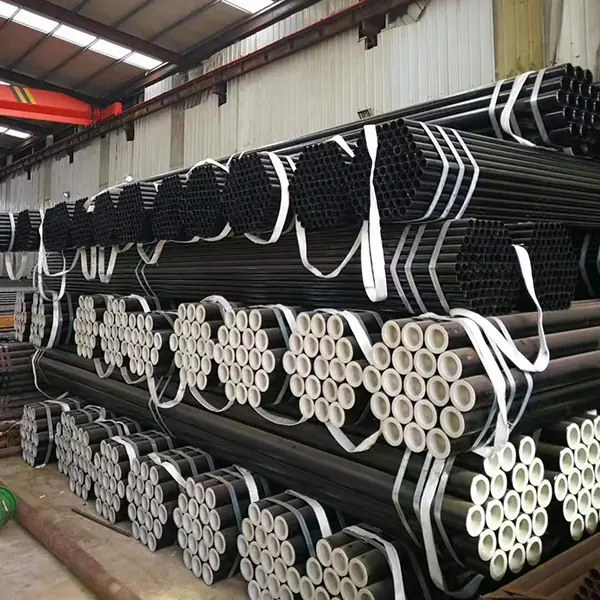
3/4 inch steel pipe, designated by its nominal pipe size (NPS) of 0.75 inches, is a foundational component across numerous industrial applications, encompassing fluid transport, structural support, and mechanical systems. This specification refers to the internal diameter of the pipe, though the actual internal diameter varies based on the pipe’s wall thickness and schedule. It’s commonly produced from carbon steel, though alloy steels are employed for specialized requirements involving corrosion resistance or high-temperature/pressure service. Its technical position within the industry chain lies between raw steel production (billet, bloom, or slab) and downstream fabrication, including welding, threading, and coating. Core performance characteristics center around pressure containment, flow rate, structural integrity, and resistance to internal and external corrosion. The selection of 3/4" steel pipe versus alternative materials (PVC, copper, stainless steel) hinges on a cost-benefit analysis considering operating temperature, fluid compatibility, pressure ratings, and longevity requirements. A critical pain point for procurement managers is ensuring consistent dimensional accuracy, particularly wall thickness, to avoid exceeding pressure limitations or compromising weld integrity. Another significant challenge is verifying material traceability and adherence to relevant industry standards to mitigate the risk of catastrophic failure.
Material Science & Manufacturing
The primary raw material for 3/4 inch steel pipe is carbon steel, typically ASTM A53 Grade B or API 5L X42. These steels predominantly consist of iron with controlled amounts of carbon (typically 0.05-0.30% by weight) influencing hardness and weldability. Manganese (around 1.0%) improves strength and deoxidizes the steel during processing. Silicon (0.10-0.30%) further contributes to deoxidation and enhances strength. Phosphorus and sulfur are deliberately kept low (typically below 0.04% and 0.035% respectively) to improve ductility and prevent brittle fracture. Manufacturing typically involves seamless or welded processes. Seamless pipe is produced by piercing a solid billet of steel and drawing it through a series of dies to achieve the desired diameter and wall thickness. This process yields a superior strength profile due to the absence of a weld seam. Welded pipe is manufactured by rolling steel plate into a cylindrical shape and welding the seam longitudinally. Electric Resistance Welding (ERW) and Submerged Arc Welding (SAW) are common methods. Critical manufacturing parameters include: rolling temperature (maintained within specific ranges to control grain structure), welding current and voltage (optimizing penetration and minimizing defects), cooling rate (influencing microstructure and residual stresses), and hydrostatic testing pressure (verifying leak tightness and burst strength). Non-Destructive Examination (NDE) techniques like ultrasonic testing (UT) and radiographic testing (RT) are employed to detect defects such as laminations, inclusions, and weld imperfections. Wall thickness control is vital; deviations impact pressure handling capabilities and corrosion rates.
Performance & Engineering
Performance of 3/4 inch steel pipe is dictated by several engineering factors. Hydrostatic pressure testing, as per ASTM A106 or API 5L, validates the pipe’s ability to withstand internal pressure without failure. The hoop stress (σh = PD/2t, where P = pressure, D = outer diameter, t = wall thickness) is a primary design consideration. Fatigue analysis is crucial for applications involving cyclic loading, such as in hydraulic systems or vibrating machinery. The S-N curve (stress amplitude vs. number of cycles to failure) determines the permissible stress range for a given lifespan. Environmental resistance is paramount, particularly in corrosive environments. The choice of coating (e.g., epoxy, galvanization) or material alloy (e.g., chromium-molybdenum steel for enhanced corrosion resistance) is dictated by the specific chemical exposure. Compliance requirements vary based on industry and application. For example, oil and gas pipelines must adhere to DOT regulations (Department of Transportation) regarding material specifications, welding procedures, and inspection protocols. Steam piping requires compliance with ASME Boiler and Pressure Vessel Code Section I. Force analysis considers not only internal pressure but also external loads such as bending moments, axial tension/compression, and thermal expansion/contraction. Thermal expansion (α ≈ 12 x 10-6 /°C for carbon steel) necessitates expansion loops or flexible connectors to prevent stress buildup. Seismic considerations may also require specialized bracing and support systems.
Technical Specifications
| Parameter | ASTM A53 Grade B | API 5L X42 | ASTM A106 Grade B |
|---|---|---|---|
| Nominal Pipe Size (NPS) | 0.75 inch | 0.75 inch | 0.75 inch |
| Outside Diameter (OD) | 1.050 inch | 1.050 inch | 1.050 inch |
| Minimum Wall Thickness (Schedule 40) | 0.154 inch | 0.154 inch | 0.154 inch |
| Yield Strength (Minimum) | 36,000 psi | 42,000 psi | 36,000 psi |
| Tensile Strength (Minimum) | 60,000 psi | 70,000 psi | 60,000 psi |
| Hydrostatic Test Pressure (Minimum) | 2,000 psi | 2,250 psi | 2,000 psi |
Failure Mode & Maintenance
Common failure modes for 3/4 inch steel pipe include corrosion (uniform, pitting, galvanic, and stress corrosion cracking), fatigue cracking (due to cyclic loading), denting or mechanical damage (from external impacts), and weld defects (porosity, incomplete fusion, cracking). Corrosion is accelerated by the presence of moisture, chlorides, and other corrosive agents. Fatigue cracking initiates at stress concentrators, such as weld toes or dents. Weld defects compromise the structural integrity of the pipe. Maintenance strategies include regular inspection (visual, ultrasonic, radiographic), protective coating application (epoxy, polyurethane, galvanization), cathodic protection (sacrificial anodes or impressed current systems), and internal cleaning (to remove debris and scale). For corrosion, proper surface preparation before coating application is critical. Ultrasonic testing can detect wall thinning due to corrosion or erosion. Radiographic testing identifies weld defects. Preventative maintenance schedules should be based on the operating environment and the criticality of the application. If cracks are detected, immediate repair or replacement is necessary. Replacement welding must adhere to qualified welding procedures and be followed by thorough NDE. Proper storage of steel pipe is also crucial; it should be protected from moisture and direct contact with the ground to prevent surface corrosion.
Industry FAQ
Q: What is the difference between Schedule 40 and Schedule 80 pipe, and how does it impact pressure rating?
A: Schedule 40 and Schedule 80 refer to the nominal wall thickness of the pipe. Schedule 80 pipe has a thicker wall than Schedule 40 pipe, resulting in a higher pressure rating for the same diameter. The increased wall thickness provides greater strength and resistance to deformation under pressure. The pressure rating is directly proportional to the wall thickness, as defined by the hoop stress equation (P = 2σt/D). A thicker wall (t) allows for a higher pressure (P) before exceeding the allowable stress (σ).
Q: How does the carbon equivalent (CE) influence the weldability of 3/4 inch steel pipe?
A: Carbon Equivalent (CE) is a calculated value representing the combined effect of various alloying elements (carbon, manganese, chromium, molybdenum, etc.) on the hardenability of the steel. Higher CE values indicate greater hardenability and, consequently, a lower weldability. High CE steels are more prone to cracking during welding due to the formation of brittle martensite in the heat-affected zone (HAZ). Lower CE steels are generally easier to weld without preheating or post-weld heat treatment.
Q: What are the primary concerns regarding corrosion under insulation (CUI) in steam piping utilizing 3/4 inch steel pipe?
A: Corrosion Under Insulation (CUI) is a significant threat in steam piping. Moisture trapped beneath the insulation creates an environment conducive to corrosion, even if the external surface appears dry. The elevated temperatures in steam systems accelerate the corrosion rate. CUI is particularly problematic with carbon steel pipe due to its susceptibility to corrosion in the presence of moisture and chlorides. Regular inspection, proper insulation management (waterproofing), and the use of corrosion-resistant coatings are essential to mitigate CUI.
Q: How do different coating types (epoxy, galvanization, polyurethane) compare in terms of corrosion protection for 3/4 inch steel pipe?
A: Epoxy coatings provide excellent adhesion and resistance to chemicals but can be susceptible to UV degradation. Galvanization (zinc coating) offers sacrificial protection, corroding preferentially to the steel, but the zinc layer can be damaged mechanically. Polyurethane coatings offer good abrasion resistance, flexibility, and UV resistance, making them suitable for harsh environments. The best coating choice depends on the specific application and exposure conditions. Often, a multi-layer system combining different coatings provides optimal protection.
Q: What is the significance of material traceability (mill test reports - MTRs) when procuring 3/4 inch steel pipe?
A: Material traceability, confirmed through Mill Test Reports (MTRs), is critically important for ensuring that the pipe meets specified material requirements and quality standards. MTRs provide documentation of the steel’s chemical composition, mechanical properties, and manufacturing process. Traceability allows verification that the pipe originated from a reputable manufacturer and conforms to relevant industry standards (ASTM, API). Lack of traceability can expose the purchaser to significant risk, including potential failures and regulatory non-compliance.
Conclusion
3/4 inch steel pipe remains a ubiquitous and essential material in a wide range of industrial applications due to its robust mechanical properties, cost-effectiveness, and established manufacturing processes. However, successful implementation requires a comprehensive understanding of material science, manufacturing controls, performance characteristics, and potential failure modes. Accurate selection of steel grade, wall thickness (schedule), and protective coatings is paramount to ensuring long-term reliability and minimizing the risk of premature failure.
Moving forward, advancements in corrosion-resistant alloys, improved coating technologies, and enhanced non-destructive testing methods will further enhance the performance and longevity of 3/4 inch steel pipe systems. Continued adherence to stringent quality control measures and industry standards is crucial for maintaining the integrity and safety of critical infrastructure dependent on this versatile material.
