

Introduction
5/16 inch steel tubing, designated by its nominal outer diameter, is a ubiquitous component across diverse industrial applications. Positioned within the steel product chain, it represents a semi-finished good derived from hot-rolled or cold-drawn steel stock. Its core performance characteristics – strength, weldability, dimensional accuracy, and surface finish – dictate its suitability for structural supports, fluid conveyance, precision mechanisms, and fabrication projects. The selection of the appropriate steel grade for 5/16” tubing is critical, impacting corrosion resistance, yield strength, and overall longevity. This guide provides a comprehensive technical analysis of 5/16” steel tubing, encompassing material science, manufacturing processes, performance considerations, failure modes, and relevant industry standards, targeting procurement managers, design engineers, and manufacturing professionals.
Material Science & Manufacturing
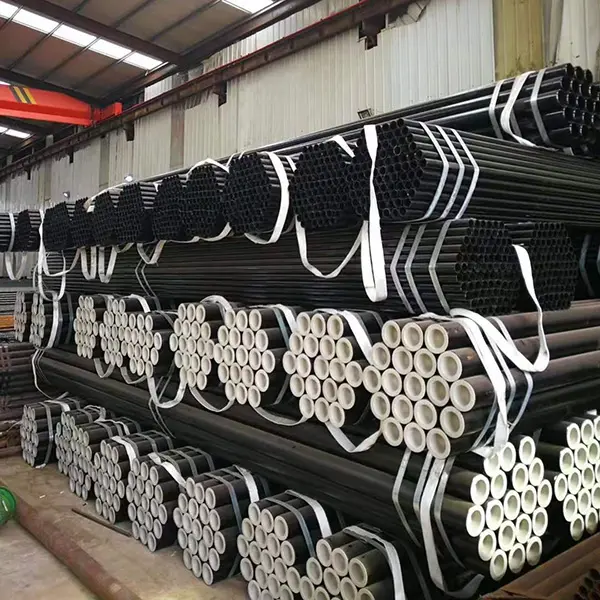
5/16” steel tubing is predominantly manufactured from carbon steel grades such as 1018, 1020, and higher strength alloys like 4140 or alloy steel 1144. 1018 steel, a low carbon steel, is characterized by its excellent weldability and formability, while 4140 alloy steel offers significantly enhanced tensile and yield strength, suitable for high-stress applications. The raw material, typically hot-rolled steel strip or billet, undergoes a cold-drawing process to achieve the desired 5/16” outer diameter and wall thickness. Cold drawing increases the steel’s strength and improves dimensional tolerances. Crucially, the reduction in area during cold drawing introduces residual stresses. Stress relieving heat treatment (typically annealing) is often employed to mitigate these stresses and improve ductility. Wall thickness is a critical parameter, impacting burst pressure and bending resistance. Manufacturing tolerances are governed by standards like ASTM A53 and ASTM A500, specifying acceptable variations in outer diameter, wall thickness, and straightness. Surface finish is often enhanced through pickling or passivation to improve corrosion resistance and provide a clean surface for subsequent processing (e.g., painting, coating). The chemical composition of the steel influences its weldability. Higher carbon content necessitates preheating and post-weld heat treatment to prevent cracking.
Performance & Engineering
The performance of 5/16” steel tubing in structural applications is primarily governed by its bending moment resistance, torsional rigidity, and axial load capacity. Bending moment resistance is calculated based on the section modulus and the steel's yield strength. Torsional rigidity depends on the tube’s outer diameter, wall thickness, and shear modulus of the steel. Axial load capacity is determined by the cross-sectional area and the steel’s tensile strength. Corrosion is a significant performance limitation. The rate of corrosion depends on the steel grade, the environment (humidity, salinity, presence of corrosive agents), and any protective coatings applied. Galvanizing, painting, or epoxy coating are common methods for enhancing corrosion resistance. When used in fluid conveyance, the tubing must withstand the internal pressure and external loads without failure. Burst pressure calculations must account for the wall thickness, outer diameter, and the steel’s tensile strength, with a suitable safety factor. Compliance requirements vary by application. For pressure vessels, ASME Boiler and Pressure Vessel Code Section IX dictates welding procedures and qualification requirements. For structural applications, building codes (IBC, Eurocodes) specify load requirements and material specifications. Fatigue analysis is critical for applications involving cyclical loading. The number of cycles to failure depends on the stress amplitude, mean stress, and the steel’s fatigue strength.
Technical Specifications
| Steel Grade | Outer Diameter (in) | Wall Thickness (in) | Yield Strength (psi) |
|---|---|---|---|
| 1018 Carbon Steel | 5/16 (0.3125) | 0.035 | 36,000 |
| 1020 Carbon Steel | 5/16 (0.3125) | 0.049 | 40,000 |
| 4140 Alloy Steel | 5/16 (0.3125) | 0.065 | 70,000 |
| 1144 Alloy Steel | 5/16 (0.3125) | 0.083 | 85,000 |
| ASTM A53 Grade B | 5/16 (0.3125) | 0.050 | 36,000 |
| ASTM A500 Grade C | 5/16 (0.3125) | 0.065 | 50,000 |
Failure Mode & Maintenance
Common failure modes in 5/16” steel tubing include corrosion-induced pitting and perforation, fatigue cracking due to cyclical loading, yielding under excessive load, and weld defects. Corrosion typically initiates at surface imperfections or weld seams. Fatigue cracking often originates at stress concentrators (e.g., dents, scratches, weld toes). Yielding occurs when the applied stress exceeds the steel’s yield strength, resulting in permanent deformation. Weld defects such as porosity, inclusions, and lack of fusion can significantly reduce the tubing’s strength and ductility. To mitigate failure, regular inspection is crucial. Visual inspection can identify signs of corrosion, dents, and cracks. Non-destructive testing (NDT) methods such as ultrasonic testing (UT) and radiographic testing (RT) can detect internal flaws and measure wall thickness. Protective coatings should be maintained and reapplied as needed. For applications involving cyclical loading, stress analysis should be performed to ensure that the applied stresses remain below the steel’s fatigue limit. Proper welding procedures and qualified welders are essential to prevent weld defects. Regular cleaning to remove contaminants and debris can help prevent corrosion. If corrosion is detected, the affected area should be cleaned, treated with a corrosion inhibitor, and recoated.
Industry FAQ
Q: What is the primary difference between 1018 and 4140 steel tubing in terms of application suitability?
A: 1018 steel tubing offers excellent weldability and is ideal for applications where forming and ease of fabrication are paramount, such as non-structural supports or low-pressure fluid lines. 4140 steel tubing, due to its significantly higher yield and tensile strength, is preferable for applications demanding high strength-to-weight ratios and resistance to stress, such as structural components in machinery or high-pressure hydraulic systems.
Q: How does wall thickness affect the burst pressure of 5/16" steel tubing?
A: Burst pressure is directly proportional to the wall thickness and inversely proportional to the outer diameter. Increasing the wall thickness significantly increases the tubing’s ability to withstand internal pressure. A thicker wall provides more material to resist hoop stress. However, increasing wall thickness also increases the weight and cost.
Q: What NDT methods are recommended for detecting subsurface defects in welded 5/16" steel tubing?
A: Ultrasonic testing (UT) and Radiographic testing (RT) are the most commonly employed NDT methods. UT uses sound waves to detect internal flaws, while RT utilizes X-rays or gamma rays to create an image of the weld’s internal structure. RT is particularly effective at detecting volumetric defects, while UT is more sensitive to planar defects.
Q: What corrosion protection methods are most effective for 5/16" steel tubing used in marine environments?
A: In marine environments, a combination of corrosion protection methods is typically required. Hot-dip galvanizing provides a sacrificial zinc coating that protects the steel from corrosion. Epoxy coating offers an additional barrier layer. Cathodic protection, involving the use of sacrificial anodes or impressed current, can further mitigate corrosion by preventing oxidation.
Q: What are the critical considerations when specifying 5/16" steel tubing for a hydraulic system?
A: Critical considerations include the operating pressure, fluid type, temperature range, and the presence of any corrosive additives in the hydraulic fluid. The tubing must be able to withstand the maximum operating pressure with a suitable safety factor. The steel grade must be compatible with the hydraulic fluid to prevent corrosion or degradation. The tubing must also maintain its mechanical properties at the operating temperature.
Conclusion
5/16” steel tubing represents a versatile and cost-effective material solution for a broad spectrum of industrial applications. Its performance characteristics are intimately linked to the selected steel grade, manufacturing process, and applied protective measures. Understanding the interplay between material science, engineering principles, and relevant industry standards is paramount to ensuring long-term reliability and preventing premature failure.
Careful consideration of potential failure modes, coupled with proactive inspection and maintenance practices, will maximize the service life of 5/16” steel tubing installations. Future trends point towards the increased adoption of high-strength, low-alloy (HSLA) steels and advanced coating technologies to further enhance the performance and durability of this critical industrial component.
