
Introduction
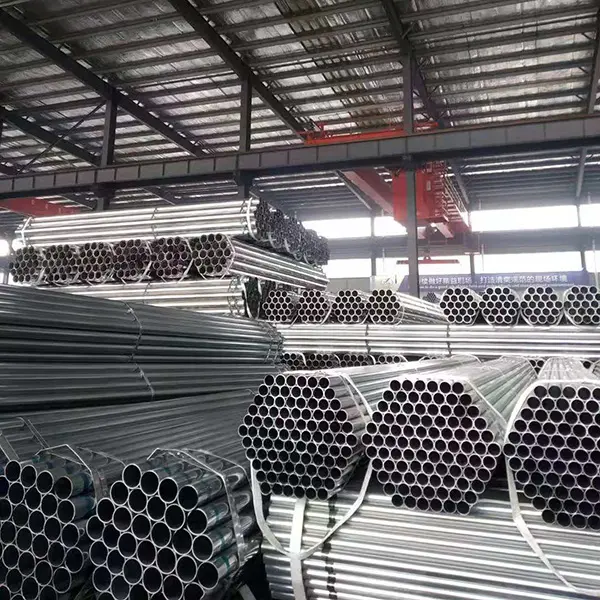
Round tubular steel, encompassing welded and seamless constructions, represents a foundational material in modern engineering and manufacturing. Positioned within the broader steel industry supply chain, it serves as a critical intermediary product, transforming raw steel into application-ready components. This guide provides a comprehensive technical overview of round tubular steel, detailing its material properties, manufacturing processes, performance characteristics, potential failure modes, and relevant industry standards. Core performance metrics center around dimensional accuracy, mechanical strength (yield and tensile strength, impact resistance), weldability, and corrosion resistance. A primary industry pain point lies in consistently achieving these parameters while managing cost, particularly regarding raw material fluctuations and increasingly stringent environmental regulations concerning steel production and finishing processes. Understanding these nuances is paramount for procurement, design, and quality control within diverse sectors including automotive, construction, agriculture, and furniture manufacturing.
Material Science & Manufacturing
Round tubular steel is typically manufactured from carbon steels, alloy steels (containing elements like chromium, molybdenum, nickel), and stainless steels (with a minimum of 10.5% chromium). Common grades include ASTM A53 Grade B (carbon steel), ASTM A36 (structural steel), and various stainless steel alloys like 304/304L and 316/316L. The raw material, in the form of steel billets or coils, undergoes a series of processes. For seamless tubes, processes like mandrel piercing or extrusion are employed, shaping the steel into a hollow cylinder without welding. Welded tubes are produced by forming flat steel strips into a cylindrical shape and then welding the seam – using Electric Resistance Welding (ERW), Laser Welding, or Submerged Arc Welding (SAW). Key parameters during manufacturing include temperature control during heating and cooling to manage grain size and microstructure, welding parameters (current, voltage, speed, shielding gas composition) to ensure weld integrity, and dimensional control through continuous monitoring and adjustment of forming rollers. Material properties are directly impacted by the chemical composition. Higher carbon content increases hardness and strength but reduces weldability. Alloy additions like chromium enhance corrosion resistance while molybdenum increases strength and creep resistance at elevated temperatures. Post-manufacturing processes such as heat treatment (annealing, normalizing, quenching, and tempering) are crucial for achieving desired mechanical properties. Surface finishing, including galvanizing, painting, or powder coating, provides further corrosion protection.
Performance & Engineering
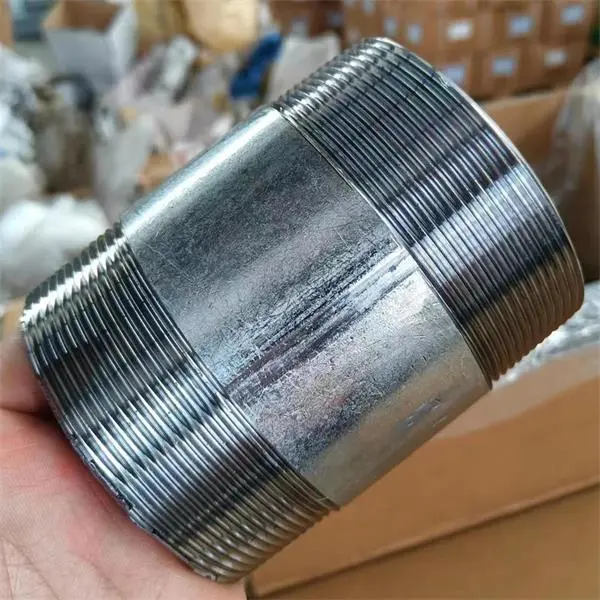
The performance of round tubular steel is critically evaluated through several engineering analyses. Force analysis, particularly bending moment resistance and torsional stiffness, determines its suitability for structural applications. Buckling analysis, considering both local and global buckling, is essential for thin-walled tubes under compressive loads. Environmental resistance is a key factor; corrosion, especially in chloride-rich environments, necessitates careful material selection (stainless steel or protective coatings) and cathodic protection systems where applicable. Compliance requirements vary by industry and application. In automotive applications, stringent crash testing and fatigue life requirements dictate material selection and manufacturing processes. In construction, adherence to building codes (IBC, Eurocode) governs load-bearing capacities and welding standards. Functional implementation often involves joining techniques such as welding, brazing, or mechanical fastening. Welding introduces residual stresses and potential distortion, requiring post-weld heat treatment and careful quality control. The wall thickness of the tube significantly influences its strength and stiffness. Thin-walled tubes offer weight savings but are more susceptible to buckling. The diameter-to-wall thickness ratio (D/t) is a critical design parameter. Finite Element Analysis (FEA) is widely used to simulate stress distributions and predict failure modes under various loading conditions.
Technical Specifications
| Parameter | ASTM A53 Grade B (Typical) | ASTM A36 (Typical) | 304/304L Stainless Steel (Typical) | Units |
|---|---|---|---|---|
| Yield Strength | 250 | 250 | 205 | MPa |
| Tensile Strength | 450 | 400 | 550 | MPa |
| Elongation (2 inch gauge) | 22 | 20 | 30 | % |
| Wall Thickness | Variable (e.g., 0.125, 0.188, 0.25) | Variable (e.g., 0.25, 0.375) | Variable (e.g., 0.063, 0.083) | inches |
| Outer Diameter | Variable (e.g., 0.5, 0.75, 1.0) | Variable (e.g., 1.0, 1.25, 1.5) | Variable (e.g., 0.5, 0.75, 1.0) | inches |
| Corrosion Rate (in 3.5% NaCl) | 0.05-0.1 | 0.05-0.1 | <0.01 | mm/year |
Failure Mode & Maintenance
Round tubular steel is susceptible to several failure modes in practical applications. Fatigue cracking, initiated by cyclical loading, is common in dynamic applications like vehicle chassis or structural supports. Corrosion, particularly pitting and crevice corrosion in stainless steel, can lead to material degradation and loss of structural integrity. Weld defects, including porosity, inclusions, and incomplete fusion, can compromise weld strength and initiate crack propagation. Denting or localized yielding can occur under impact loads. Oxidation at high temperatures can lead to scaling and material loss. Delamination, specifically in coated tubes, arises from poor adhesion between the coating and the substrate. Maintenance solutions include regular inspection for signs of corrosion or cracking, protective coatings application (painting, galvanizing, epoxy coatings), periodic non-destructive testing (NDT) methods like ultrasonic testing or radiographic inspection, and proper welding procedures with qualified welders. For fatigue-critical components, stress relief techniques (heat treatment or shot peening) can enhance fatigue life. Preventive maintenance schedules should be established based on operating conditions and expected service life. Addressing minor corrosion promptly prevents escalation to more severe damage. Proper storage to minimize exposure to corrosive elements is also essential.
Industry FAQ
Q: What is the difference between seamless and welded round tubular steel in terms of mechanical properties and typical applications?
A: Seamless tubes generally exhibit superior strength and pressure-bearing capacity compared to welded tubes due to the absence of a weld seam, which can represent a potential weakness. They are often preferred for high-pressure applications (e.g., hydraulic cylinders, oil and gas pipelines) and critical structural components. Welded tubes are typically more cost-effective and are suitable for a wider range of applications where high pressure or extreme stress is not a primary concern, such as furniture frames, handrails, and general structural supports.
Q: How does the choice of steel grade (e.g., A53, A36, 304) impact corrosion resistance and weldability?
A: A53 Grade B is a carbon steel with limited corrosion resistance and requires protective coatings. A36, also a carbon steel, has similar corrosion characteristics. 304/304L stainless steel provides significantly higher corrosion resistance due to its chromium content, making it suitable for corrosive environments. Regarding weldability, carbon steels (A53, A36) are relatively easy to weld but require preheating and post-weld heat treatment to prevent cracking. Stainless steels are also weldable, but require careful control of welding parameters and shielding gas to prevent sensitization and maintain corrosion resistance.
Q: What is the significance of the D/t ratio in round tubular steel design?
A: The D/t ratio (diameter-to-wall thickness) is a critical parameter for assessing buckling resistance. Higher D/t ratios indicate a thinner wall relative to the diameter, making the tube more susceptible to buckling under compressive loads. Design codes specify maximum allowable D/t ratios for different applications to ensure structural stability. Lower D/t ratios provide greater buckling resistance but increase weight and cost.
Q: What non-destructive testing (NDT) methods are commonly used to inspect round tubular steel for defects?
A: Common NDT methods include ultrasonic testing (UT) for detecting internal flaws like cracks and porosity, magnetic particle inspection (MPI) for detecting surface and near-surface defects in ferromagnetic materials, liquid penetrant inspection (LPI) for detecting surface cracks, and radiographic testing (RT) using X-rays or gamma rays for detecting internal defects. Eddy current testing (ECT) is also used for surface and near-surface flaw detection and material thickness measurement.
Q: What are the typical surface treatments used for round tubular steel to enhance corrosion protection and aesthetics?
A: Common surface treatments include galvanizing (zinc coating) for excellent corrosion resistance, painting with epoxy or polyurethane coatings, powder coating for durable and aesthetically pleasing finishes, and chromating for providing a protective layer and improving paint adhesion. The choice of treatment depends on the severity of the corrosive environment and the desired aesthetic appearance.
Conclusion
Round tubular steel remains a ubiquitous and essential material across numerous industries due to its versatile mechanical properties, relatively low cost, and ease of manufacturing. A thorough understanding of its material science, manufacturing processes, and performance characteristics is crucial for effective design, procurement, and application. Addressing potential failure modes through diligent inspection, proper maintenance, and appropriate material selection is paramount for ensuring long-term structural integrity and operational reliability.
Future advancements in steel alloy development, welding techniques (e.g., friction stir welding), and surface coating technologies will further enhance the performance and durability of round tubular steel. Increased focus on sustainable manufacturing practices, including the use of recycled steel and energy-efficient processes, will also drive innovation in this sector. Continued research into predictive failure analysis and advanced NDT methods will enable more proactive maintenance strategies and reduce the risk of catastrophic failures.
