

Introduction
Steel tube sections represent a fundamental structural element across a diverse range of industries, including construction, automotive, energy, and manufacturing. These hollow structural sections (HSS), encompassing circular, square, and rectangular profiles, are distinguished by their high strength-to-weight ratio and efficient material utilization. Their technical position within the material supply chain falls between raw steel production (typically from iron ore via basic oxygen or electric arc furnaces) and final fabricated structures. Core performance characteristics center on load-bearing capacity – tensile, compressive, and bending – resistance to buckling, weldability, and corrosion resistance. Understanding these characteristics is critical for engineers and procurement specialists seeking optimized solutions for demanding applications. The prevalent pain point in the industry revolves around ensuring consistent material quality, minimizing weld defects, accurately predicting long-term performance in corrosive environments, and adherence to stringent safety regulations.
Material Science & Manufacturing
The primary raw material for steel tube sections is carbon steel, often incorporating alloying elements such as manganese, silicon, chromium, and molybdenum to enhance specific properties. Carbon content dictates hardness and weldability; higher carbon content increases strength but reduces ductility and increases the risk of cracking during welding. Manganese improves strength and toughness, silicon enhances strength and deoxidizes the steel, chromium contributes to corrosion resistance (especially in stainless steel tubes), and molybdenum increases high-temperature strength. Manufacturing typically involves several processes. First, steel billets or blooms are heated and pierced to create a hollow tube. This is frequently done using the Mannesmann process (rotary piercing) or the electric resistance welding (ERW) process. ERW involves forming a seam by passing a high electric current through the edges of a flat steel strip. Seamless tubes, produced via rotary piercing, offer superior strength and are preferred for high-pressure applications. Subsequent processes include sizing (achieving precise dimensions), straightening, cutting to length, and finishing (galvanizing, painting, or coating). Parameter control is paramount. Temperature control during heating and piercing influences grain structure and mechanical properties. Welding parameters (current, voltage, speed) dictate seam quality. Cooling rates affect hardness and residual stress. Chemical composition verification through spectroscopic analysis is essential to confirm adherence to specified standards. Non-destructive testing (NDT) methods, such as ultrasonic testing and radiographic testing, are employed to detect internal and surface defects.
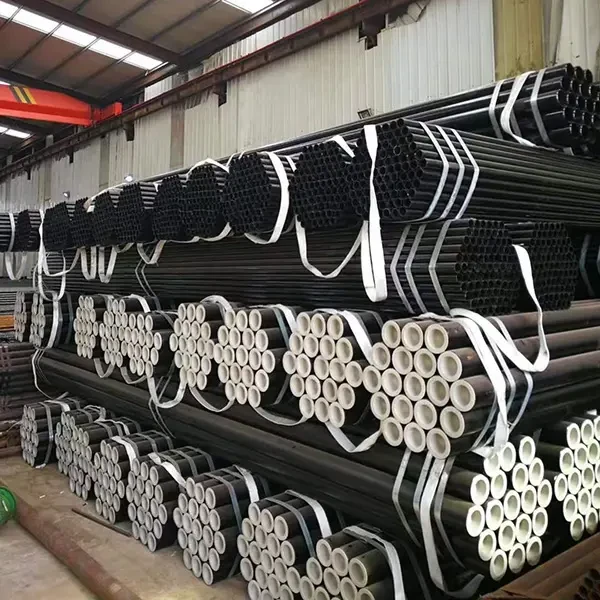
Performance & Engineering
Performance analysis of steel tube sections is heavily reliant on structural mechanics principles. Force analysis involves calculating stresses and strains under various loading conditions – axial tension, compression, bending, shear, and torsion. Buckling is a critical consideration, especially for long, slender tubes subjected to compressive loads. Euler’s buckling formula provides a theoretical basis for predicting the critical buckling load, but real-world scenarios require consideration of imperfections and residual stresses. Environmental resistance is another key performance attribute. Exposure to corrosive environments (marine atmospheres, industrial pollutants, chemical exposure) can lead to corrosion, compromising structural integrity. Galvanizing (zinc coating), painting, and epoxy coatings are common methods to mitigate corrosion. Material selection plays a significant role; stainless steel tubes offer superior corrosion resistance but at a higher cost. Compliance requirements depend on the application and geographical location. Building codes (e.g., IBC, Eurocode) specify minimum material properties, weld quality standards, and design safety factors. Transportation applications adhere to standards set by organizations like ASTM and SAE. Functional implementation details include connection design – welding, bolting, and adhesive bonding. Weld design must account for stress concentrations and fatigue loading. Bolted connections require proper tightening torque and gasket selection to ensure leak-proof joints.
Technical Specifications
| Grade | Yield Strength (MPa) | Tensile Strength (MPa) | Wall Thickness (mm) |
|---|---|---|---|
| A53 Grade B | 250 | 370 | 2.77 - 12.7 |
| A500 Grade C | 345 | 450 | 2.77 - 6.35 |
| ASTM A36 | 250 | 400 | 3.2 - 19.05 |
| EN 10210 S235JR | 235 | 360-530 | 2 - 16 |
| EN 10210 S355JR | 355 | 490-630 | 2 - 20 |
| ASTM A572 Grade 50 | 345 | 450 | 2.77 - 19.05 |
Failure Mode & Maintenance
Failure modes in steel tube sections are diverse and application-dependent. Fatigue cracking, resulting from repeated loading cycles, is a common concern, particularly in structures subjected to dynamic loads. Corrosion, as previously mentioned, weakens the material and initiates pitting or general corrosion. Weld defects – porosity, slag inclusions, and lack of fusion – can significantly reduce the load-carrying capacity of welded joints. Buckling, as discussed, leads to catastrophic failure under compressive loads. Dent damage, caused by impact, can create stress concentrations and compromise structural integrity. Creep, the time-dependent deformation under sustained stress, is relevant at elevated temperatures. Maintenance strategies include regular visual inspections to identify corrosion, cracks, or dents. Non-destructive testing (ultrasonic testing, radiographic testing, magnetic particle inspection) can detect hidden defects. Protective coatings should be periodically inspected and reapplied as needed. Weld joints should be examined for cracks and corrosion. In critical applications, stress monitoring using strain gauges can provide early warning of potential failure. Repair techniques include weld repair (for weld defects), patching (for dents), and corrosion treatment (removal of rust and application of protective coatings). Proper drainage is essential to prevent water accumulation and accelerate corrosion.
Industry FAQ
Q: What is the difference between seamless and welded steel tubes, and when should each be used?
A: Seamless tubes are manufactured without a weld seam, offering higher strength and better resistance to pressure and corrosion. They are ideal for high-pressure applications like hydraulic cylinders and critical structural components. Welded tubes, typically produced using ERW, are generally more cost-effective. They are suitable for less demanding applications where strength requirements are lower, such as scaffolding or general structural supports. The choice depends on the specific load, pressure, and corrosive environment.
Q: How does the carbon content in steel affect its weldability?
A: Higher carbon content generally reduces weldability. It increases the hardness and susceptibility to cracking during welding. Lower carbon steels are easier to weld and require less preheating and post-weld heat treatment. Specific welding procedures must be employed for higher carbon steels to minimize the risk of cracking, often including preheating, controlled cooling, and appropriate filler metals.
Q: What are the common methods used to prevent corrosion in steel tube sections?
A: Common methods include galvanizing (zinc coating), painting with corrosion-resistant paints, applying epoxy coatings, and using sacrificial anodes. Material selection (e.g., using stainless steel) also offers enhanced corrosion resistance. Regular inspection and maintenance of protective coatings are crucial for long-term corrosion prevention.
Q: What is the significance of the yield strength and tensile strength of a steel tube section?
A: Yield strength represents the stress at which the material begins to deform permanently. Tensile strength is the maximum stress the material can withstand before fracturing. These properties are critical for structural design, as they determine the load-bearing capacity and safety factor of the tube section. Engineers use these values to ensure the tube will not yield or fracture under anticipated loads.
Q: What non-destructive testing (NDT) methods are commonly used to inspect steel tube sections?
A: Commonly used NDT methods include ultrasonic testing (UT) for detecting internal defects, radiographic testing (RT) for identifying flaws throughout the material, magnetic particle inspection (MPI) for detecting surface and near-surface cracks in ferromagnetic materials, and liquid penetrant testing (PT) for revealing surface cracks. Each method has its strengths and limitations, and the choice depends on the specific defect being sought and the material type.
Conclusion
Steel tube sections remain a cornerstone material in numerous engineering applications due to their strength, versatility, and cost-effectiveness. A thorough understanding of the material science, manufacturing processes, performance characteristics, and potential failure modes is paramount for engineers and procurement professionals. The appropriate selection of steel grade, manufacturing method, and protective measures is critical to ensuring structural integrity, long-term durability, and adherence to relevant industry standards.
Future trends point towards the increased adoption of high-strength, low-alloy (HSLA) steels and advanced coatings to further enhance performance and corrosion resistance. Advancements in non-destructive testing techniques will enable more accurate and reliable defect detection. The integration of digital modeling and simulation tools will facilitate optimized designs and predictive maintenance strategies, contributing to improved safety and efficiency in the use of steel tube sections.
