
Introduction
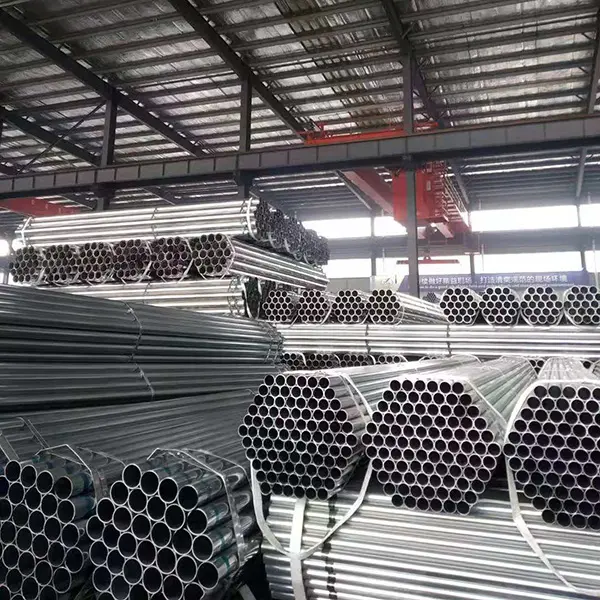
Tubular products, encompassing seamless and welded pipes and tubes, represent a fundamental component across diverse industrial sectors including oil and gas, construction, automotive, and aerospace. These products are defined by their hollow cylindrical cross-section and are characterized by dimensions specified by outside diameter (OD) and wall thickness. Unlike pipes, which are typically sized by nominal diameter, tubes are generally manufactured to precise dimensions and tighter tolerances. Their function extends beyond simple conveyance, often serving as critical structural elements, heat exchangers, or hydraulic conduits. The selection of appropriate tubular products hinges on a complex interplay of material properties, manufacturing process, intended application, and adherence to stringent industry standards, presenting a consistent challenge for procurement and engineering teams. Understanding the nuances of these parameters is crucial for ensuring system integrity, operational efficiency, and long-term cost-effectiveness.
Material Science & Manufacturing
The raw materials employed in tubular product manufacturing predominantly consist of carbon steel, alloy steel, stainless steel, and non-ferrous alloys like aluminum, titanium, and copper. Carbon steel, due to its cost-effectiveness and sufficient mechanical properties for many applications, is the most widely used. Alloy steels, incorporating elements like chromium, molybdenum, and vanadium, are utilized for enhanced strength, toughness, and corrosion resistance. Stainless steels, with a minimum chromium content of 10.5%, provide superior corrosion protection. Manufacturing processes fall broadly into two categories: seamless and welded. Seamless tube production typically involves extrusion or piercing of a solid billet, resulting in a product with uniform mechanical properties and enhanced pressure-bearing capacity. Welded tube manufacturing utilizes rolled and formed steel sheets that are subsequently welded longitudinally, often employing electric resistance welding (ERW) or submerged arc welding (SAW). Critical parameters during manufacturing include controlled cooling rates to manage microstructure (grain size and phase transformation), precise welding parameters (current, voltage, travel speed) to minimize defects like porosity and incomplete fusion, and rigorous non-destructive testing (NDT) such as ultrasonic testing and radiographic inspection to verify weld integrity. The heat-affected zone (HAZ) created during welding represents a region of altered material properties and requires careful monitoring and control. Material composition directly impacts weldability; certain alloys require pre-heating and post-weld heat treatment to prevent cracking. Surface finishing processes, like pickling and passivation, are employed to remove scale and enhance corrosion resistance.

Performance & Engineering
The performance of tubular products is dictated by factors including mechanical strength (yield strength, tensile strength, elongation), pressure rating, corrosion resistance, and fatigue life. Force analysis, often utilizing finite element analysis (FEA), is critical for determining the structural integrity of tubular components under various loading conditions, including internal pressure, bending moments, and axial loads. Environmental resistance is paramount, particularly in corrosive environments. Material selection must consider the specific corrosive agents present (acids, chlorides, sulfides) and the operating temperature. Compliance with industry codes and standards, such as ASME B31.3 for process piping and API 5L for line pipe, is mandatory. These codes specify design factors, allowable stresses, and inspection requirements. Functional implementation often necessitates specific surface treatments or coatings to enhance performance. For instance, internal coatings may be applied to reduce friction or prevent corrosion. The behavior of tubular products under cyclic loading is characterized by S-N curves (stress vs. number of cycles to failure). Fatigue cracking can initiate at stress concentrations, such as weld seams or surface defects, and propagate over time. Proper design, material selection, and manufacturing practices are essential for maximizing fatigue life. Thermal expansion and contraction must also be accounted for in system design to prevent stress build-up and potential failure. Consideration must also be given to the product’s susceptibility to galvanic corrosion when dissimilar metals are joined.
Technical Specifications
| Material Grade | Outside Diameter (mm) | Wall Thickness (mm) | Yield Strength (MPa) |
|---|---|---|---|
| ASTM A53 Grade B | 21.3 | 2.6 | 250 |
| ASTM A106 Grade B | 50.8 | 6.35 | 275 |
| 304/304L Stainless Steel | 19.05 | 1.65 | 205 |
| X42 (API 5L) | 114.3 | 8.0 | 345 |
| Aluminum 6061-T6 | 38.1 | 3.175 | 276 |
| Titanium Grade 2 | 25.4 | 2.0 | 276 |
Failure Mode & Maintenance
Common failure modes in tubular products include corrosion (uniform, pitting, galvanic, stress corrosion cracking), erosion, fatigue cracking, denting, and wall thinning. Corrosion is often the primary driver of failure, particularly in aggressive environments. Pitting corrosion, localized attack, can lead to rapid penetration of the tube wall. Stress corrosion cracking occurs due to the combined action of tensile stress and a corrosive environment. Fatigue cracking initiates at stress concentrations and propagates under cyclic loading. Erosion, caused by the impact of abrasive particles, results in material removal. Denting, caused by external mechanical damage, reduces the tube’s buckling resistance. Wall thinning, resulting from corrosion or erosion, reduces the pressure-bearing capacity. Preventive maintenance programs are essential for mitigating these failure modes. These programs typically include regular inspections using NDT methods (ultrasonic testing, radiographic inspection, eddy current testing), coating repairs, and corrosion monitoring. Cathodic protection, utilizing sacrificial anodes or impressed current systems, can effectively control corrosion. Internal cleaning and pigging operations remove deposits and prevent corrosion under insulation. Periodic hydrostatic testing verifies the integrity of the tube and identifies leaks. When failures occur, thorough failure analysis is crucial for identifying the root cause and implementing corrective actions to prevent recurrence. This includes metallographic examination, fracture surface analysis, and chemical analysis.
Industry FAQ
Q: What are the key differences between seamless and welded tubes in terms of mechanical properties and application suitability?
A: Seamless tubes generally exhibit superior mechanical properties, particularly in terms of burst strength and fatigue resistance, due to the absence of a weld seam. This makes them preferred for critical applications like high-pressure pipelines and boiler tubes. Welded tubes, being more cost-effective to manufacture, are commonly used in less demanding applications such as structural components and low-pressure fluid transport. The weld seam, while inspected rigorously, represents a potential point of weakness, and the heat-affected zone can exhibit altered mechanical properties.
Q: How does material selection impact the corrosion resistance of tubular products in a sour gas environment (containing H2S)?
A: Sour gas environments are highly corrosive due to the presence of hydrogen sulfide (H2S). Material selection is critical to prevent sulfide stress cracking (SSC). Low-alloy steels with controlled chemical composition, specifically designed for sour service (e.g., NACE MR0175/ISO 15156 compliant materials), are required. These materials contain elements that mitigate H2S embrittlement. Corrosion inhibitors are often used in conjunction with appropriate material selection.
Q: What non-destructive testing (NDT) methods are commonly employed to ensure the integrity of welded tubular products?
A: Radiographic testing (RT) and ultrasonic testing (UT) are the most commonly employed NDT methods for welded tubes. RT provides a visual image of the weld, revealing defects like porosity, cracks, and incomplete fusion. UT utilizes sound waves to detect internal flaws and measure wall thickness. Other NDT methods include magnetic particle inspection (MPI) for surface defects and eddy current testing (ECT) for detecting near-surface flaws.
Q: What is the significance of heat treatment in the manufacturing of high-strength alloy steel tubes?
A: Heat treatment is crucial for achieving the desired microstructure and mechanical properties in high-strength alloy steel tubes. Processes like quenching and tempering are used to control grain size, phase transformation, and hardness. Proper heat treatment enhances strength, toughness, and weldability. Improper heat treatment can lead to brittleness or reduced corrosion resistance.
Q: How do industry standards like API 5L and ASME B31.3 influence the design and manufacturing of tubular products?
A: API 5L specifies requirements for line pipe used in the oil and gas industry, covering material specifications, manufacturing processes, and testing requirements. ASME B31.3 provides guidelines for the design, fabrication, and inspection of process piping systems. These standards dictate design factors, allowable stresses, welding procedures, and inspection intervals, ensuring the safe and reliable operation of tubular systems.
Conclusion
The selection and application of tubular products necessitate a comprehensive understanding of material science, manufacturing processes, performance characteristics, and industry standards. Failure to consider these factors can lead to premature failure, costly repairs, and potential safety hazards. Advancements in material technology, such as the development of high-alloy steels and corrosion-resistant coatings, continue to expand the capabilities and lifespan of tubular components. Maintaining a robust preventative maintenance program, incorporating regular inspections and appropriate mitigation strategies, is crucial for ensuring long-term reliability.
Future trends in tubular technology include the development of lightweight, high-strength materials for aerospace applications, the implementation of advanced NDT techniques for improved defect detection, and the increased use of digital twins for predictive maintenance and performance optimization. Continued research and development efforts are focused on enhancing corrosion resistance, improving weldability, and reducing manufacturing costs, thereby driving innovation and expanding the applications of tubular products across diverse industries.
