

Introduction
2-inch galvanized steel pipe, 20ft in length, is a foundational component in numerous industrial, commercial, and residential applications. Defined by its steel substrate coated with a zinc layer, this piping provides a balance of mechanical strength and corrosion resistance. Within the fluid conveyance industry chain, it serves as a crucial intermediary between source and end-use, particularly for water, gas, and other non-aggressive fluids. Core performance characteristics center around its pressure rating, dimensional accuracy, and longevity in various environmental conditions. However, the performance is highly dependent on zinc coating thickness and quality, as well as the specific environmental exposure to which the pipe is subjected. Understanding these factors is critical for ensuring reliable, long-term system operation. The selection of galvanized pipe often represents a cost-effective solution, balancing initial investment with expected service life; however, alternative materials such as stainless steel or plastic are increasingly considered for specialized applications requiring superior corrosion resistance or lighter weight.
Material Science & Manufacturing
The primary raw material is low carbon steel, typically ASTM A53 Grade B, exhibiting a tensile strength ranging from 36,000 to 52,000 psi, and a yield strength of approximately 30,000 psi. The steel's composition includes iron, carbon (less than 0.30%), manganese, phosphorus, and sulfur, with controlled levels to optimize weldability and formability. The galvanization process, typically hot-dip galvanizing per ASTM A153, involves immersing the steel pipe in a molten zinc bath (98% pure zinc) at a temperature of approximately 840°F (449°C). This metallurgical reaction forms a series of zinc-iron alloy layers, creating a robust barrier against corrosion. Critical manufacturing parameters include precise temperature control during the galvanizing process to ensure adequate zinc coating thickness and uniformity. The average zinc coating thickness for standard galvanized pipe is typically 0.0024 inches (61 micrometers). Pipe manufacturing begins with steel strip forming and welding (typically Electric Resistance Welding - ERW), followed by dimensional checks and threading if required. Quality control focuses on weld integrity, dimensional accuracy (diameter, wall thickness, straightness), and zinc coating adherence and thickness, utilizing techniques like ultrasonic testing, eddy current testing, and coating thickness gauges. The zinc coating's crystalline structure (eta, zeta, and gamma phases) directly impacts its corrosion protection capabilities. Potential defects during manufacturing include incomplete zinc coverage, uneven coating thickness, and weld flaws.
Performance & Engineering
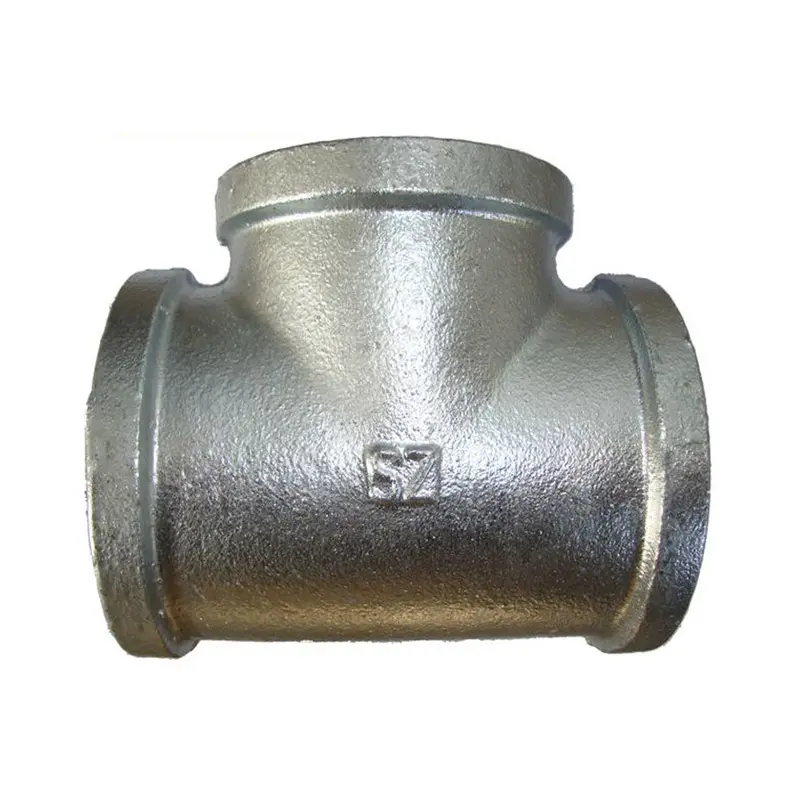
The performance of 2-inch galvanized pipe is heavily influenced by its ability to withstand internal pressure and external loads. Force analysis, governed by Barlow's formula (S = (P D) / (2 t), where S is hoop stress, P is internal pressure, D is outside diameter, and t is wall thickness), dictates the maximum permissible operating pressure. Standard Schedule 40 pipe, commonly used, offers a significantly higher pressure rating than Schedule 20 pipe for the same diameter. Environmental resistance is paramount; galvanized coatings protect against atmospheric corrosion, but performance degrades in highly acidic or alkaline environments. Galvanic corrosion can occur when galvanized steel is coupled with dissimilar metals in the presence of an electrolyte. Compliance requirements, dependent on the application, include adherence to plumbing codes (e.g., UPC, IPC), pressure vessel standards (e.g., ASME B31.1), and potentially environmental regulations regarding lead content in potable water systems (though modern galvanizing processes minimize lead contamination). Threaded connections, if used, are particularly susceptible to leakage and require proper sealing compounds and tightening torque. The pipe’s structural integrity is also affected by temperature fluctuations, causing expansion and contraction, which must be accounted for in system design through expansion loops or flexible couplings.
Technical Specifications
| Parameter | Specification (Typical) | Testing Method | Tolerance |
|---|---|---|---|
| Nominal Pipe Size | 2 inches (50.8 mm) | Measurement with Calipers | ±0.01 inch |
| Schedule | 40 | Visual Inspection | N/A |
| Wall Thickness | 0.154 inch (3.91 mm) | Ultrasonic Thickness Measurement | ±0.005 inch |
| Outside Diameter | 2.375 inch (60.3 mm) | Measurement with Calipers | ±0.005 inch |
| Zinc Coating Thickness | 0.0024 inch (61 µm) | Magnetic Thickness Gauge (ASTM A780) | ±0.0004 inch |
| Tensile Strength (Steel) | 36,000 - 52,000 psi | ASTM A53 | ± 3,000 psi |
Failure Mode & Maintenance
Common failure modes in 2-inch galvanized pipe include corrosion (rusting of exposed steel), pitting corrosion due to localized coating defects, thread erosion from repeated assembly/disassembly, and mechanical damage from impact or over-tightening. Fatigue cracking can occur under cyclical pressure loading, particularly at welds. Delamination of the zinc coating, often caused by poor surface preparation during galvanizing, reduces corrosion protection. White rust (zinc corrosion product) formation indicates exposure to moisture and accelerates coating degradation. Maintenance involves regular visual inspections for signs of corrosion, particularly at joints and exposed areas. Minor surface corrosion can be treated with zinc-rich primers and paints. Leaking threads should be re-sealed with appropriate PTFE tape or pipe dope. For significant corrosion or damage, pipe replacement is often the most cost-effective solution. Periodic cleaning to remove dirt and debris helps prevent localized corrosion. Avoiding direct contact with dissimilar metals and ensuring proper grounding can mitigate galvanic corrosion. Regular pressure testing can identify potential leaks before they escalate into significant failures. Internal scaling can reduce flow capacity and contribute to corrosion; occasional pigging or flushing may be necessary.
Industry FAQ
Q: What is the expected service life of 2-inch galvanized pipe in a typical potable water application?
A: The service life varies significantly based on water quality (pH, dissolved oxygen, chloride content) and environmental exposure. Under ideal conditions (neutral pH, low chloride levels, minimal temperature fluctuations), a lifespan of 40-60 years is achievable. However, in aggressive water environments, corrosion can significantly reduce this to 20-30 years or less.
Q: How does the zinc coating protect the steel substrate?
A: The zinc coating provides corrosion protection through two primary mechanisms: barrier protection and sacrificial (galvanic) protection. Barrier protection physically isolates the steel from corrosive elements. Sacrificial protection occurs because zinc is more electrochemically active than steel; it corrodes preferentially, protecting the steel even if the coating is scratched or damaged.
Q: Is galvanized pipe suitable for use with acidic or alkaline fluids?
A: Generally, no. Galvanized pipe is not recommended for prolonged exposure to fluids with a pH outside the range of 6.0 to 8.0. Acids accelerate zinc corrosion, while strong alkalis can dissolve the zinc coating, exposing the steel. Stainless steel or specialized plastic piping is preferred for such applications.
Q: What are the advantages and disadvantages of threaded versus welded connections for galvanized pipe?
A: Threaded connections are easier to install and disassemble, making them suitable for repairs and modifications. However, they are more prone to leakage and require regular maintenance. Welded connections provide a more secure and leak-proof joint but require skilled welding technicians and are less flexible for future alterations.
Q: How can I identify potential issues with the galvanization process during procurement?
A: Inspect the surface for uniformity of the coating, absence of bare spots, and a consistent metallic sheen. Check for blisters or flaking, which indicate poor adhesion. Request a mill certificate verifying the zinc coating thickness and adherence to ASTM A153 standards. Look for evidence of "white rust" which indicates rapid corrosion and poor quality control during the manufacturing process.
Conclusion
2-inch galvanized steel pipe, 20ft, remains a widely utilized piping solution due to its cost-effectiveness and adequate corrosion resistance for many applications. Its performance relies heavily on the quality of the galvanization process, adherence to relevant industry standards (ASTM, ASME), and proper installation and maintenance practices. Understanding the potential failure modes – primarily corrosion and mechanical damage – is crucial for proactive maintenance and ensuring long-term reliability.
However, emerging environmental concerns regarding lead content (although minimized in modern galvanizing) and the increasing availability of alternative materials, such as stainless steel and engineered plastics, are driving a shift towards more specialized piping solutions for demanding applications. Future trends will likely focus on improved galvanization techniques, enhanced coating durability, and the development of environmentally friendly corrosion inhibitors to extend the service life and minimize the environmental impact of galvanized steel piping systems.
