

Introduction
21 2 galvanized pipe, designated as Schedule 40, is a carbon steel pipe internally coated with a zinc layer to provide corrosion resistance. It is a ubiquitous material in plumbing, structural applications, and fluid transport systems. Positioned within the industrial chain, it represents a downstream product of steel manufacturing, undergoing further processing of galvanization. Its core performance characteristics revolve around its pressure-bearing capacity, tensile strength, and, crucially, its resistance to corrosion in varying environmental conditions. This guide provides an in-depth technical analysis of 21 2 galvanized pipe, covering material science, manufacturing processes, performance engineering, failure modes, and relevant industry standards. A critical pain point in utilizing galvanized pipe lies in accurately predicting its long-term corrosion resistance, particularly in aggressive environments, and understanding the potential for white rust formation and hydrogen embrittlement. Furthermore, ensuring compliance with evolving regulatory standards relating to lead content in potable water systems remains a significant concern.
Material Science & Manufacturing
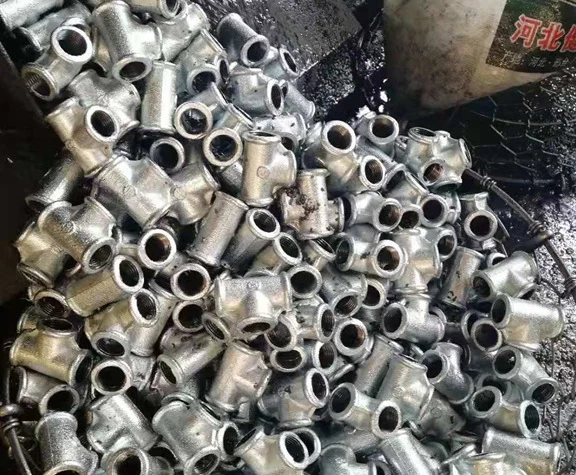
The base material for 21 2 galvanized pipe is typically carbon steel conforming to ASTM A53 Grade B. This steel consists primarily of iron, with carbon content ranging from 0.05% to 0.25% by weight, along with manganese, silicon, and trace amounts of phosphorus and sulfur. The mechanical properties of the steel – yield strength (approximately 36,000 psi), tensile strength (approximately 58,000 psi), and elongation – are crucial for withstanding internal pressure and external loads. The galvanization process itself is a form of corrosion protection based on the principle of sacrificial anodic protection. Zinc is more electrochemically active than steel; therefore, it corrodes preferentially, protecting the underlying steel. The most common galvanization method is hot-dip galvanizing, involving immersing the steel pipe in a bath of molten zinc (typically 98% pure) at approximately 840°F (450°C). Key parameters controlled during the galvanization process include bath temperature, immersion time, and the cooling rate. Surface preparation is paramount, involving pickling (acid cleaning) to remove mill scale and rust, followed by fluxing to promote zinc adhesion. The resulting zinc coating thickness typically ranges from 0.002 to 0.006 inches (0.05 to 0.15 mm). The microstructure of the galvanized layer consists of distinct metallurgical phases: Zeta (Zn75Al25), Eta (Zn88Al12), and Gamma (Zn90Al10), each exhibiting different hardness and corrosion resistance characteristics. The uniformity and adherence of these phases are directly related to the quality of the galvanization process.
Performance & Engineering
The performance of 21 2 galvanized pipe is critically dependent on its ability to withstand internal pressure and external loads, as well as resist corrosion. The hydrostatic pressure rating, determined by the pipe’s diameter, wall thickness (Schedule 40), and material strength, is a fundamental engineering consideration. Burst pressure calculations, employing Barlow’s formula (P = 2St/D, where P is pressure, S is tensile strength, t is wall thickness, and D is diameter), are essential for ensuring safe operation. Environmental resistance is a key performance metric. While galvanization provides substantial corrosion protection, the rate of zinc corrosion varies with environmental factors such as humidity, salinity, and the presence of pollutants (e.g., sulfur dioxide). In marine environments, the corrosion rate is significantly accelerated. Galvanic corrosion can also occur when galvanized pipe is connected to dissimilar metals (e.g., copper) in the presence of an electrolyte. This phenomenon requires the use of dielectric unions to prevent accelerated corrosion of the zinc coating. Compliance requirements are dictated by various codes and standards, including those related to potable water systems (e.g., NSF/ANSI 61) and structural applications (e.g., building codes). The chemical compatibility of galvanized pipe with transported fluids is also important; certain chemicals (e.g., strong acids, alkalis) can accelerate corrosion or lead to zinc dissolution. Finite element analysis (FEA) is often used to model stress distribution in the pipe under various loading conditions, optimizing design and predicting potential failure points.
Technical Specifications
| Nominal Pipe Size (inches) | Schedule | Outside Diameter (inches) | Wall Thickness (inches) |
|---|---|---|---|
| 21 2 | 40 | 2.375 | 0.154 |
| Yield Strength (psi) | Tensile Strength (psi) | Minimum Zinc Coating Thickness (inches) | Hydrostatic Test Pressure (psi) |
| 36,000 | 58,000 | 0.002 | 480 |
| Corrosion Rate (mm/year - Marine) | Corrosion Rate (mm/year - Rural) | Zinc Purity (%) | Operating Temperature Range (°F) |
| 0.1-0.5 | 0.01-0.1 | 98 | -40 to 250 |
| ASTM Standard | NSF/ANSI 61 Certification | ISO 1461 | Weight per foot (lbs) |
Failure Mode & Maintenance
Common failure modes of 21 2 galvanized pipe include corrosion (particularly localized corrosion such as pitting and crevice corrosion), fatigue cracking (due to cyclic loading), and mechanical damage (e.g., dents, gouges). White rust (zinc carbonate) formation is a frequent occurrence, especially in humid environments, and while not immediately catastrophic, it indicates zinc corrosion and reduces the protective coating thickness. Hydrogen embrittlement, a more severe form of degradation, can occur when the zinc coating is exposed to acidic conditions, leading to the absorption of hydrogen into the steel, causing cracking and loss of ductility. Delamination of the zinc coating, caused by poor surface preparation or inadequate galvanization parameters, exposes the underlying steel to corrosion. Oxidation of the zinc coating over long periods also reduces its effectiveness. Maintenance strategies include regular visual inspections to identify corrosion or damage. For minor corrosion, wire brushing and repainting with a zinc-rich primer can provide temporary protection. For significant corrosion or damage, pipe replacement is often the most practical solution. Cathodic protection, utilizing sacrificial anodes, can be employed in underground applications to mitigate corrosion. Proper grounding and bonding are essential to prevent galvanic corrosion. Periodic testing of the zinc coating thickness using non-destructive methods (e.g., magnetic thickness gauges) can provide an indication of remaining corrosion protection.
Industry FAQ
Q: What is the expected service life of 21 2 galvanized pipe in a typical potable water distribution system?
A: The service life varies significantly depending on water chemistry, flow rate, and environmental conditions. Typically, 20-50 years can be expected in moderate climates with non-aggressive water, but this can be reduced to 10-20 years in highly corrosive environments. Regular monitoring of water quality and zinc coating thickness is crucial.
Q: Is 21 2 galvanized pipe suitable for transporting natural gas?
A: While it was historically used for natural gas distribution, its use is now largely discouraged due to concerns about hydrogen embrittlement and potential leaks. Modern polyethylene (PE) or steel pipelines are preferred for natural gas applications.
Q: How does the zinc coating affect the weldability of galvanized pipe?
A: The zinc coating must be completely removed before welding to prevent zinc fumes, which are hazardous to health, and to ensure a sound weld. Proper ventilation and personal protective equipment are essential. Welding galvanized steel requires specific procedures to avoid porosity and cracking.
Q: What are the potential health concerns associated with lead contamination in galvanized pipe?
A: Historically, lead was used in the galvanization process as a flux. Modern galvanized pipe is manufactured to minimize lead content, but older systems may still contain leaded solder or leaded galvanized fittings. Testing for lead levels is recommended, especially in potable water systems.
Q: What is the difference between Schedule 40 and Schedule 80 galvanized pipe?
A: Schedule 80 pipe has a thicker wall thickness than Schedule 40 pipe, resulting in a higher pressure rating and greater mechanical strength. Schedule 80 is typically used in applications requiring higher pressure or greater resistance to impact.
Conclusion
21 2 galvanized pipe remains a cost-effective and widely used material in numerous industrial applications. However, its long-term performance is fundamentally tied to understanding the complexities of corrosion science and the intricacies of the galvanization process. Proper material selection, careful attention to manufacturing quality, and diligent maintenance practices are crucial for maximizing its service life and ensuring reliable operation.
Future advancements in corrosion-resistant coatings, such as enhanced zinc alloys and organic coatings applied over galvanization, promise to extend the lifespan of steel pipelines. Continued research into hydrogen embrittlement mechanisms and the development of mitigation strategies are also vital. The increasing emphasis on sustainable infrastructure and reducing environmental impact will likely drive further innovation in materials and protective technologies for galvanized steel.