

Introduction
Seamless pipe, manufactured without a welded seam, represents a critical component across numerous industries including oil and gas, petrochemicals, power generation, and structural engineering. Its inherent structural integrity and ability to withstand high pressure and temperature conditions distinguish it from welded alternatives. This technical guide provides an in-depth examination of seamless pipe, encompassing material science, manufacturing processes, performance characteristics, failure modes, and relevant industry standards. The primary advantage of seamless pipe lies in its uniform structure, eliminating the potential weak points associated with weld seams, making it ideal for critical applications where safety and reliability are paramount. This guide will address common procurement challenges, focusing on alloy selection, dimensional tolerances, and non-destructive testing requirements.
Material Science & Manufacturing
The production of seamless pipe typically begins with high-quality steel billets. Common materials include carbon steel (ASTM A53, API 5L Grades B, X42, X52), alloy steel (ASTM A335 Grades P11, P22, P91), and stainless steel (ASTM A312, 304/304L, 316/316L). The initial stage involves heating the billet to its plastic deformation temperature. Two primary manufacturing methods dominate: hot piercing and extrusion. Hot piercing, utilizing the Mannesmann process, involves rotating the heated billet while simultaneously forcing a mandrel through its center, creating a hollow shell. Extrusion, conversely, pushes the heated billet through a die, forming the desired pipe diameter and wall thickness. Critical process parameters include billet temperature, mandrel speed (piercing), die design (extrusion), and reduction ratio. Controlling these parameters directly influences the pipe’s mechanical properties, dimensional accuracy, and surface finish. Chemical composition is rigorously monitored throughout the process to ensure compliance with specified standards. Grain refinement techniques, such as controlled cooling rates, are employed to enhance toughness and ductility. Subsequent processes include normalizing, quenching and tempering (for alloy steels), pickling, and hydrostatic testing to verify structural integrity.
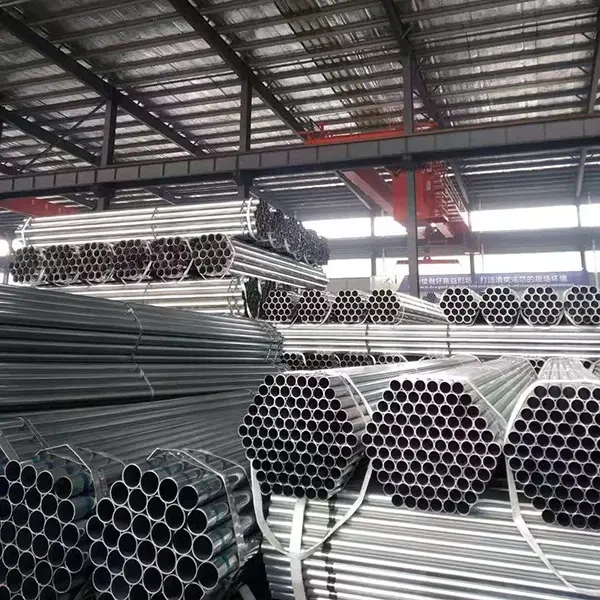
Performance & Engineering
The performance of seamless pipe is dictated by its ability to withstand internal pressure, external loads, and corrosive environments. Internal pressure resistance is calculated using the Barlow’s formula (P = 2St/D), where P is pressure, S is tensile strength, t is wall thickness, and D is outside diameter. Stress analysis, incorporating finite element analysis (FEA), is crucial for complex loading scenarios, such as bending, torsion, and combined stresses. External loads are addressed by evaluating the pipe’s buckling resistance, governed by parameters like diameter-to-thickness ratio (D/t). Corrosion resistance is dependent on the material’s alloy composition and the presence of protective coatings. For applications involving sour service (H2S), materials conforming to NACE MR0175/ISO 15156 are essential. High-temperature applications necessitate the use of creep-resistant alloys, such as P91, to mitigate deformation under sustained stress. Furthermore, seismic considerations require adherence to pipeline design codes (ASME B31.3, EN 13480) which mandate specific seismic analysis and support configurations. Fatigue life assessment is paramount in cyclical loading environments, necessitating consideration of stress concentration factors and material fatigue properties (S-N curves).
Technical Specifications
| Parameter | ASTM A53 Grade B | API 5L X42 | ASTM A335 P11 | ASTM A312 304/304L |
|---|---|---|---|---|
| Outside Diameter (inch) | 0.5 – 48 | 6 – 48 | 0.375 – 16 | 0.375 – 4 |
| Wall Thickness (inch) | 0.065 – 0.5 | 0.095 – 1.0 | 0.065 – 0.5 | 0.035 – 0.25 |
| Yield Strength (psi) | 36,000 | 42,000 | 30,000 | 30,000 |
| Tensile Strength (psi) | 60,000 | 65,000 | 65,000 | 70,000 |
| Elongation (%) | 23 | 21 | 20 | 30 |
| Maximum Operating Temperature (°F) | 300 | 300 | 850 | 850 |
Failure Mode & Maintenance
Seamless pipe can experience several failure modes, including corrosion (uniform, pitting, galvanic, erosion), fatigue cracking (due to cyclic loading), stress corrosion cracking (SCC – particularly in chloride environments), and creep rupture (at elevated temperatures). Corrosion is often mitigated through the application of coatings (epoxy, polyethylene) or cathodic protection. Fatigue cracking is addressed by reducing stress concentrations (smooth radii, proper welding procedures) and improving material fatigue resistance. SCC necessitates alloy selection based on the specific corrosive environment and potentially stress relieving heat treatments. Creep rupture is managed through alloy selection, temperature control, and regular inspections. Non-destructive testing (NDT) methods, such as ultrasonic testing (UT), radiographic testing (RT), and magnetic particle inspection (MPI), are crucial for detecting defects. Maintenance procedures include visual inspections, periodic hydrostatic testing, and internal cleaning to remove debris and scale. A robust corrosion monitoring program is essential for proactively identifying and addressing corrosion issues before they lead to catastrophic failure. Regular pressure testing and leak surveys are also critical components of a preventative maintenance program.
Industry FAQ
Q: What are the key differences between API 5L and ASTM A53 seamless pipe?
A: API 5L is specifically designed for pipeline applications and emphasizes weldability and toughness for field welding. It has stricter requirements for chemical composition and mechanical properties related to pipeline construction. ASTM A53 is a more general-purpose specification often used for structural and pressure applications, but generally has lower requirements for toughness and weldability compared to API 5L.
Q: How does wall thickness affect the pressure rating of seamless pipe?
A: Wall thickness is directly proportional to pressure rating. Increasing wall thickness allows the pipe to withstand higher internal pressures, as described by Barlow’s formula. However, increasing wall thickness also increases weight and cost. A careful balance must be struck based on the application’s pressure requirements and economic constraints.
Q: What is the significance of NACE MR0175/ISO 15156 for sour service applications?
A: NACE MR0175/ISO 15156 specifies the materials requirements for components used in oil and gas production and refining environments containing hydrogen sulfide (H2S). These standards are critical to prevent sulfide stress cracking (SSC) and ensure the safe operation of pipelines and equipment in sour service conditions.
Q: What non-destructive testing (NDT) methods are commonly used to inspect seamless pipe?
A: Ultrasonic testing (UT) is the most widely used NDT method for detecting internal flaws such as laminations, inclusions, and cracks. Radiographic testing (RT) provides a visual image of the pipe’s internal structure. Magnetic particle inspection (MPI) is used to detect surface and near-surface defects in ferromagnetic materials. Liquid penetrant testing (PT) is used to detect surface defects in all materials.
Q: What are the implications of choosing a higher yield strength material for seamless pipe?
A: Higher yield strength materials allow for thinner wall thicknesses for a given pressure rating, reducing weight and cost. However, they generally exhibit lower ductility and may be more susceptible to brittle fracture. Careful consideration must be given to the application’s operating temperature and loading conditions to ensure adequate toughness and prevent premature failure.
Conclusion
Seamless pipe represents a foundational element in numerous critical industrial applications. Its inherent structural advantages, stemming from the absence of weld seams, provide enhanced reliability and safety, particularly in high-pressure and high-temperature environments. Successful implementation requires a comprehensive understanding of material science, manufacturing processes, performance characteristics, and potential failure modes. Proper material selection, adherence to relevant industry standards, and rigorous quality control are paramount to ensuring long-term operational integrity.
Future advancements in seamless pipe technology will likely focus on developing new alloys with enhanced corrosion resistance, improved high-temperature strength, and increased toughness. Furthermore, the integration of advanced manufacturing techniques, such as additive manufacturing, may enable the production of complex pipe geometries and customized solutions tailored to specific application requirements. Continuous monitoring and predictive maintenance strategies, leveraging sensor technology and data analytics, will play an increasingly important role in optimizing the lifespan and performance of seamless pipe infrastructure.
