
Introduction
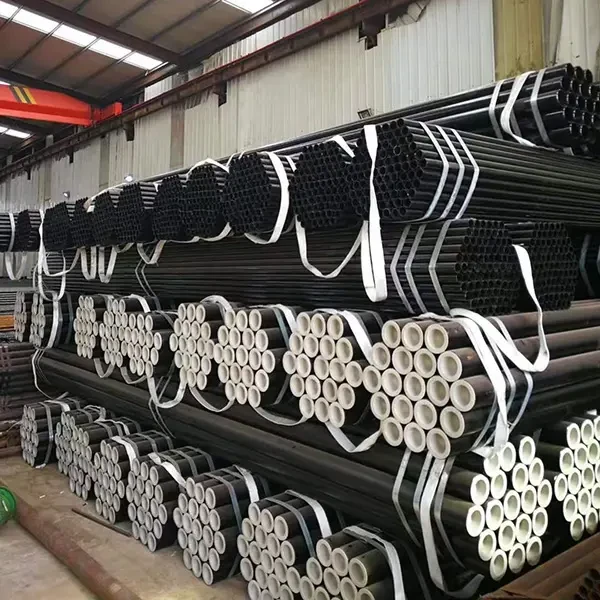
Black square tubing, commonly fabricated from carbon steel, is a hollow structural section characterized by its square cross-section and black finish resulting from a mild corrosion protection treatment. It occupies a critical position within the structural materials supply chain, serving as a fundamental building block in diverse applications ranging from architectural frameworks and industrial scaffolding to automotive components and agricultural machinery. The core performance attributes of black square tubing are defined by its strength-to-weight ratio, weldability, dimensional accuracy, and cost-effectiveness. Its widespread adoption stems from its ease of fabrication, allowing for efficient and reliable construction across various industries. The "black" finish, typically a mill scale or light oil coating, provides minimal rust protection during storage and transportation but necessitates further finishing for long-term corrosion resistance in many applications. Understanding its material composition, manufacturing nuances, and performance limitations is paramount for engineers and procurement professionals seeking optimal structural integrity and project longevity.
Material Science & Manufacturing
Black square tubing is predominantly manufactured from carbon steel, specifically grades such as ASTM A500 Grade B, characterized by a chemical composition primarily consisting of iron (Fe) with varying percentages of carbon (C), manganese (Mn), phosphorus (P), and sulfur (S). The carbon content typically ranges from 0.15% to 0.30%, influencing the steel's hardness, strength, and weldability. Manganese acts as a deoxidizer during steelmaking and enhances strength, while phosphorus and sulfur are present as impurities that can affect ductility and weld quality. The manufacturing process usually begins with hot-rolled steel coils, which are then formed into square tubes using cold-forming or hot-extrusion techniques. Cold forming involves passing the steel through a series of dies to achieve the desired square shape, increasing strength through work hardening. Hot extrusion, conversely, uses elevated temperatures to facilitate the shaping process, resulting in lower residual stresses but potentially lower dimensional accuracy. Following forming, the tubes undergo welding – typically Electric Resistance Welding (ERW) – where edges are fused together using electric current and pressure. Quality control is critical, encompassing dimensional checks, non-destructive testing (NDT) such as ultrasonic testing to detect weld defects, and hydrostatic testing to verify pressure integrity. Surface treatment involves applying a light oil coating or leaving the natural mill scale for temporary corrosion protection. Parameter control during welding, including current, voltage, and welding speed, directly impacts weld strength and ductility, influencing the overall structural performance of the tubing.
Performance & Engineering
The structural performance of black square tubing is governed by its section modulus (S), moment of inertia (I), and yield strength (σy). These parameters dictate the tube’s resistance to bending and buckling under load. A larger section modulus indicates a greater capacity to resist bending moments. The wall thickness and outer dimensions are critical factors affecting these properties. Engineering calculations must account for load distribution, support conditions, and potential stress concentrations, particularly at weld seams and connection points. Environmental resistance is a significant consideration. Carbon steel is susceptible to corrosion in humid environments, especially in the presence of chlorides. Therefore, for outdoor applications or corrosive environments, galvanization, painting, or powder coating is essential to prevent rust and maintain structural integrity. Compliance with industry standards, such as those established by the American Institute of Steel Construction (AISC) and the American Welding Society (AWS), is crucial to ensure structural safety and reliability. Force analysis typically employs finite element analysis (FEA) to simulate stress distributions under various loading scenarios, identifying potential failure points and optimizing structural design. Furthermore, consideration must be given to fatigue loading, especially in dynamic applications where repeated stress cycles can lead to crack initiation and propagation.
Technical Specifications
| Parameter | ASTM A500 Grade B | ASTM A53 Grade B | EN 10210-1 S235JR | Typical Tolerance |
|---|---|---|---|---|
| Yield Strength (MPa) | 250 | 250 | 235 | ± 10 MPa |
| Tensile Strength (MPa) | 450 | 450 | 360 | ± 30 MPa |
| Wall Thickness (mm) | 1.2 - 6.35 | 1.2 - 12.7 | 1.5 - 8.0 | ± 0.1 mm |
| Outer Dimension (mm) | 12.7 - 203.2 | 10.2 - 323.9 | 10 - 300 | ± 0.5 mm |
| Elongation (%) | 23 | 23 | 20 | N/A |
| Chemical Composition (Max % C) | 0.25 | 0.25 | 0.22 | N/A |
Failure Mode & Maintenance
Black square tubing is susceptible to several failure modes. Corrosion is a primary concern, leading to localized pitting and eventual weakening of the section. This is accelerated in environments with high humidity, salt spray, or acidic exposure. Fatigue cracking can occur under cyclic loading, initiating at stress concentrations such as weld defects or sharp corners, and propagating over time. Buckling is a potential failure mode, particularly for long, slender tubes subjected to compressive loads. Weld defects, including porosity, inclusions, and incomplete fusion, significantly reduce the tube’s strength and ductility. Impact loading can cause localized deformation or fracture, especially at low temperatures. Maintenance strategies focus on preventative measures. Regular inspection for corrosion is crucial, with removal of rust and application of protective coatings. Welds should be visually inspected for defects and periodically non-destructively tested. For heavily loaded applications, periodic stress analysis and monitoring for signs of deformation are recommended. If corrosion is detected, abrasive cleaning followed by a primer and topcoat application is advisable. Damaged sections should be repaired or replaced to maintain structural integrity. Proper storage in a dry environment can mitigate corrosion during periods of non-use.
Industry FAQ
Q: What is the primary difference between ASTM A500 and ASTM A53 black square tubing, and how does this impact application selection?
A: ASTM A500 is specifically designed for welded and seamless structural tubing, offering tighter tolerances and more stringent quality control, particularly regarding weld strength and ductility. ASTM A53, while also weldable, is a more general-purpose steel standard with wider tolerances and is often used for non-structural applications or where dimensional precision is less critical. For load-bearing structural applications, ASTM A500 is generally preferred due to its superior mechanical properties and reliability. The higher cost of A500 is justified when structural integrity is paramount.
Q: How does the wall thickness affect the buckling resistance of black square tubing?
A: Buckling resistance is directly proportional to the square of the wall thickness. Increasing the wall thickness significantly enhances the tube’s ability to withstand compressive loads without undergoing buckling. This relationship is fundamental in structural design calculations. A small increase in wall thickness results in a substantial improvement in buckling capacity, making it a key parameter in applications subject to significant compressive forces.
Q: What surface treatments are commonly applied to black square tubing to enhance corrosion resistance?
A: Common surface treatments include galvanizing (hot-dip or electrogalvanizing), painting with corrosion-resistant primers and topcoats, powder coating, and oiling. Galvanizing provides a sacrificial zinc coating that protects the underlying steel. Painting and powder coating create a barrier between the steel and the environment. Oiling offers temporary protection during storage and transportation but is not a long-term solution.
Q: What non-destructive testing (NDT) methods are typically employed to assess the quality of welds in black square tubing?
A: Ultrasonic testing (UT) is the most common NDT method for weld inspection, detecting subsurface defects such as porosity, inclusions, and cracks. Radiographic testing (RT), using X-rays or gamma rays, provides a visual image of the weld’s internal structure. Magnetic particle testing (MT) is effective for detecting surface and near-surface cracks. Liquid penetrant testing (PT) can also identify surface defects. Visual inspection is always performed as an initial assessment.
Q: What considerations should be made when welding black square tubing to ensure optimal joint strength and minimize distortion?
A: Preheating the steel can reduce the risk of cracking, particularly for thicker sections. Proper weld procedure specification (WPS) including appropriate filler metal selection and welding parameters is crucial. Use of clamping and fixturing to minimize distortion during welding is vital. Controlled cooling after welding reduces residual stresses. Post-weld heat treatment (PWHT) can further relieve stresses and improve weld properties. Always ensure the welding process is qualified to the relevant standards (e.g., AWS D1.1).
Conclusion
Black square tubing remains a cornerstone material in numerous industries due to its advantageous combination of strength, weldability, and cost-effectiveness. However, its susceptibility to corrosion and potential failure modes necessitates careful consideration of material selection, manufacturing processes, and maintenance strategies. A thorough understanding of the governing technical specifications, including standards like ASTM A500 and EN 10210, is paramount for ensuring structural integrity and long-term performance.
Looking ahead, advancements in high-strength low-alloy (HSLA) steel grades and improved coating technologies will further enhance the performance and durability of black square tubing. Focusing on optimized welding procedures and robust quality control measures will remain critical for mitigating failure risks. The continued demand for lightweight and durable structural materials will drive innovation in black square tubing manufacturing and application, solidifying its role in diverse engineering projects.
