
Introduction
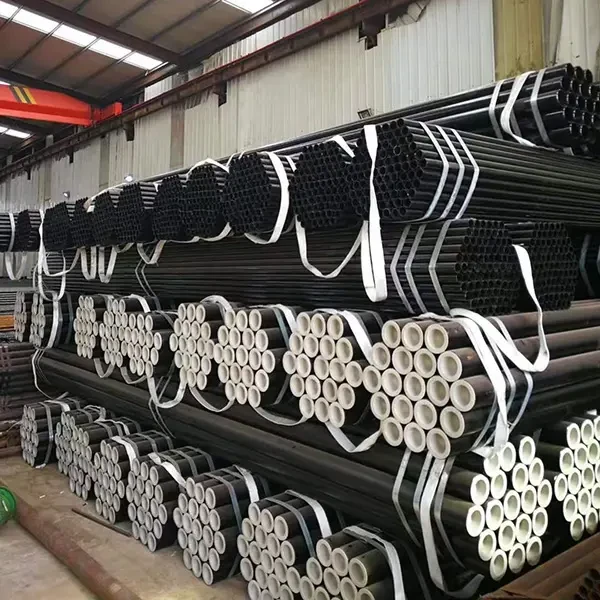
Builders square tubing, commonly referred to as hollow structural sections (HSS), represents a fundamental component within the building and construction industry. Positioned as a semi-finished product, it serves as the primary material for structural frameworks, support systems, and aesthetic architectural elements. Its technical positioning resides between raw material steel production (e.g., hot-rolled coil) and finished construction components like beams and columns. Core performance characteristics center around its strength-to-weight ratio, weldability, dimensional accuracy, and suitability for various coating systems. Unlike solid steel sections, square tubing offers uniform properties in multiple directions, making it highly versatile for complex loading scenarios. A critical pain point in the industry revolves around ensuring consistent wall thickness and material composition to meet stringent structural engineering demands and mitigate risks of premature failure, coupled with the challenge of corrosion resistance in diverse environmental conditions.
Material Science & Manufacturing
Builders square tubing is predominantly manufactured from carbon steel, specifically grades such as ASTM A500 Grade B (common in North America) or EN 10210 S235/S355 (European standards). The raw material typically begins as hot-rolled steel coil. The manufacturing process generally involves several key stages: forming, welding, heat treatment, and finishing. Forming is often achieved through cold-forming, where the steel coil is passed through a series of rollers to create the square or rectangular shape. This process work-hardens the steel, increasing its yield strength. However, it also introduces residual stresses. Welding, typically employing Electric Resistance Welding (ERW) or High-Frequency Induction Welding (HFIW), joins the edges of the formed steel. ERW utilizes electrical resistance to generate heat, while HFIW uses electromagnetic induction. The choice of welding process impacts weld seam quality and mechanical properties. Following welding, a heat treatment process, such as normalizing or stress relieving, is often employed to reduce residual stresses and improve ductility. Finally, finishing operations include descaling, pickling, and the application of protective coatings (galvanizing, painting, powder coating) to enhance corrosion resistance. Key parameter control during manufacturing focuses on maintaining precise dimensional tolerances (wall thickness, outer dimensions), controlling weld seam integrity (penetration, porosity, and absence of defects), and ensuring consistent mechanical properties through careful alloy selection and heat treatment cycles. Chemical composition, specifically carbon equivalent (CE), is crucial for weldability and toughness.
Performance & Engineering
The structural performance of builders square tubing is governed by its section modulus (S), moment of inertia (I), and yield strength (σy). These parameters dictate its resistance to bending, shear, and axial loads. Force analysis typically involves Finite Element Analysis (FEA) to model stress distribution under various loading conditions. Environmental resistance is a major consideration. Corrosion, particularly in coastal environments or when exposed to de-icing salts, can significantly reduce the service life of the tubing. Galvanizing, through hot-dip galvanization or electro-galvanizing, provides a sacrificial layer of zinc, protecting the underlying steel. The thickness of the galvanizing layer directly correlates to the level of corrosion protection. Compliance requirements vary depending on the application and geographic location. Building codes (e.g., IBC in the US, Eurocode 3 in Europe) specify minimum material specifications, welding requirements, and load-bearing capacities. The use of square tubing in structural applications necessitates careful consideration of buckling phenomena, particularly for slender members. Local buckling of the walls can occur before overall structural failure. Design engineers employ slenderness ratios and effective width calculations to account for buckling effects. Furthermore, connection design – how the tubing is joined to other structural elements – is critical, typically involving welding, bolting, or a combination thereof. Weld qualification and inspection are essential to ensure joint integrity and prevent premature failure.
Technical Specifications
| Parameter | ASTM A500 Grade B | EN 10210 S235 | EN 10210 S355 | Typical Wall Thickness Range |
|---|---|---|---|---|
| Yield Strength (MPa) | 250 | 235 | 355 | 1.2mm – 6.35mm |
| Tensile Strength (MPa) | 450 | 360 | 510 | N/A |
| Elongation (%) | 23 | 21 | 21 | N/A |
| Carbon Equivalent (CE) | ≤ 0.25 | ≤ 0.22 | ≤ 0.25 | N/A |
| Minimum Galvanizing Thickness (µm) | 55 | 55 | 55 | N/A |
| Typical Outside Dimension (mm) | 50x50, 75x75, 100x100 | 50x50, 75x75, 100x100 | 50x50, 75x75, 100x100 | N/A |
Failure Mode & Maintenance
Builders square tubing is susceptible to several failure modes in practical applications. Corrosion is a primary concern, leading to section loss and reduced load-bearing capacity. Fatigue cracking can occur under cyclic loading, initiating at weld defects or stress concentrations. The weld seam itself represents a critical point for fatigue failure. Local buckling of the walls, as previously mentioned, can lead to instability and collapse. Delamination, particularly in coated tubing, can result from inadequate surface preparation or coating adhesion. Oxidation, especially at elevated temperatures, can degrade the steel's mechanical properties. Maintenance strategies include regular visual inspections for signs of corrosion or damage. Protective coatings should be periodically inspected and repaired. In corrosive environments, sacrificial anodes can be used to provide additional cathodic protection. For structural applications, non-destructive testing (NDT) methods such as ultrasonic testing or radiographic inspection can be employed to detect internal defects. Proper welding procedures, including preheating and post-weld heat treatment, are crucial to minimize weld defects and improve fatigue resistance. Furthermore, regular cleaning to remove debris and contaminants can prevent localized corrosion.
Industry FAQ
Q: What is the impact of the steel’s carbon content on its weldability when using builders square tubing?
A: Higher carbon content increases the steel's hardness and strength, but simultaneously reduces its weldability. Elevated carbon levels increase the carbon equivalent (CE), leading to a greater susceptibility to cracking during welding. This necessitates more careful control of welding parameters, such as preheating and post-weld heat treatment, and potentially the use of lower-hydrogen electrodes.
Q: How does the manufacturing process (ERW vs. HFIW) affect the quality of the weld seam in square tubing?
A: HFIW generally produces a weld seam with superior mechanical properties and less heat-affected zone compared to ERW. HFIW offers better control over the welding process, resulting in deeper penetration and reduced porosity. ERW is often more economical, but requires stringent quality control measures to ensure weld integrity.
Q: What level of tolerance should be expected for the dimensional accuracy of builders square tubing, and how does this impact fabrication?
A: Typical dimensional tolerances for builders square tubing are +/- 0.5% or 2mm, whichever is greater. Tighter tolerances are available but increase cost. Variations outside these tolerances can lead to fit-up issues during fabrication, requiring additional machining or adjustments. Precise tolerances are critical for pre-fabricated structures.
Q: What are the key considerations when selecting a protective coating for builders square tubing used in a marine environment?
A: In marine environments, a high-performance coating system is essential. Hot-dip galvanizing provides excellent corrosion protection, but may require supplementary coatings like epoxy or polyurethane for enhanced durability. Coating thickness, surface preparation (blast cleaning), and proper application are critical to ensure long-term performance.
Q: How do different heat treatment processes affect the mechanical properties and weldability of builders square tubing?
A: Normalizing refines the grain structure, improving strength and toughness, but can also slightly reduce ductility. Stress relieving reduces residual stresses from cold-forming or welding, minimizing the risk of distortion and cracking. Quenching and tempering can achieve higher strength levels but requires careful control to avoid embrittlement. The choice of heat treatment depends on the desired mechanical properties and the intended application.
Conclusion
Builders square tubing remains a cornerstone material in modern construction and engineering. Its versatility, stemming from its geometric properties and manufacturing flexibility, allows for efficient and cost-effective structural design. Understanding the nuances of material science, manufacturing processes, and potential failure modes is paramount for ensuring structural integrity and long-term performance. Careful consideration of environmental factors, compliance standards, and proper maintenance practices are essential throughout the product lifecycle.
Future advancements in materials (e.g., high-strength low-alloy steels, weathering steels) and manufacturing techniques (e.g., laser welding, advanced coating technologies) promise to further enhance the performance and durability of builders square tubing. Focus on sustainable manufacturing practices and corrosion-resistant alloys will be crucial to meet evolving industry demands and minimize environmental impact. Continued research and development in non-destructive testing methods will allow for more reliable assessment of structural integrity.
