

Introduction
Cast iron square pipe is a hollow structural section manufactured from cast iron, characterized by its square cross-section. Positioned within the broader ferrous metal product family, it serves as a critical component in structural applications demanding rigidity, durability, and resistance to impact. Unlike steel pipes produced via seamless or welded methods, cast iron square pipe is created through casting processes, resulting in inherent material properties and manufacturing characteristics. Core performance indicators include tensile strength, yield strength, hardness (typically measured by Brinell or Rockwell scales), and resistance to corrosion, particularly in soil and water environments. The primary applications span construction, particularly for structural supports, fencing, handrails, and specialized industrial applications where vibration damping and wear resistance are paramount. This guide provides an in-depth technical overview of cast iron square pipe, covering material science, manufacturing processes, performance characteristics, potential failure modes, and relevant industry standards.
Material Science & Manufacturing
Cast iron, the primary raw material, exists in various alloy compositions, with gray cast iron being the most commonly used for square pipe production. Gray cast iron contains a significant percentage of carbon (typically 2.5% to 4.0%) present as graphite flakes within the iron matrix. This graphite flake structure imparts excellent machinability and vibration damping characteristics but reduces tensile strength compared to ductile cast iron. Ductile cast iron, containing spheroidal graphite achieved through magnesium treatment during the molten metal stage, offers significantly improved ductility and toughness. Other alloying elements like silicon, manganese, sulfur, and phosphorus influence the final properties. Manufacturing typically involves sand casting, utilizing patterns to create the square pipe shape. The process begins with creating a mold using sand bonded with a clay or chemical binder. Molten cast iron is poured into the mold cavity, allowed to cool and solidify, and then the casting is removed. Key parameter controls include melt temperature (typically between 1200-1400°C), pouring rate, cooling rate, and sand composition. Controlled cooling rates are vital to minimize internal stresses and prevent defects like shrinkage cavities and hot tears. Post-casting operations include removing excess material (risers, gates), surface cleaning (shot blasting or grinding), and potentially heat treatment (annealing to relieve stress or normalizing to refine the microstructure). The mold design is crucial; it must account for shrinkage during solidification and ensure accurate dimensional control. Wall thickness consistency is maintained through careful mold design and pouring control.
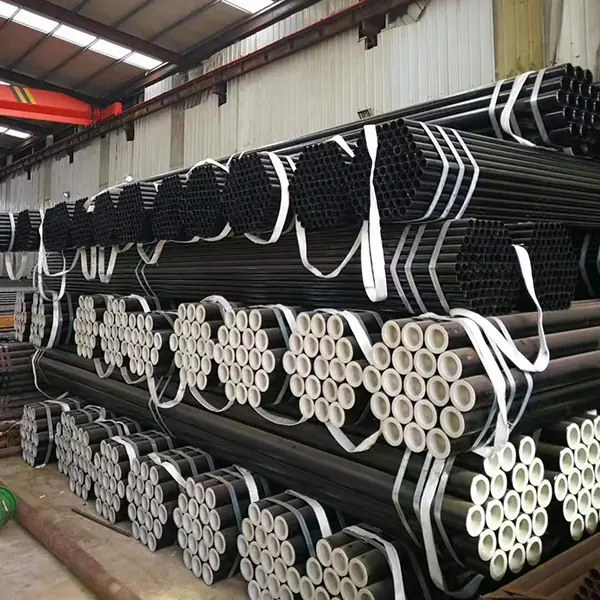
Performance & Engineering
The performance of cast iron square pipe is largely dictated by its mechanical properties and environmental resistance. Force analysis is critical, considering compressive strength, bending moment resistance, and shear strength. Square profiles are inherently efficient for resisting bending loads along both axes compared to circular profiles of equivalent weight. Environmental resistance, specifically corrosion, is a major concern. Cast iron is susceptible to oxidation, particularly in the presence of moisture and chloride ions. Protective coatings, such as epoxy, polyurethane, or zinc-rich primers, are frequently applied to mitigate corrosion. Galvanizing is also a common practice, providing a sacrificial zinc layer. Compliance requirements vary based on intended application. Structural applications necessitate adherence to building codes (e.g., IBC in the US, Eurocode in Europe) and relevant material standards. For potable water applications, the cast iron must comply with NSF/ANSI 61 standards, ensuring it doesn't leach harmful substances into the water. Functional implementation requires careful consideration of load distribution, support intervals, and connection methods. Welding cast iron is challenging due to its high carbon content and tendency to form brittle weld deposits. Alternative joining methods, such as mechanical clamping, bolted connections, or specialized cast iron welding electrodes (nickel-based), are preferred. Finite element analysis (FEA) is frequently employed to model stress distributions under various loading scenarios and optimize the pipe's structural integrity.
Technical Specifications
| Parameter | Gray Cast Iron (ASTM A48 Class 30) | Ductile Cast Iron (ASTM A536 Grade 65-35) | Units |
|---|---|---|---|
| Tensile Strength | 205 | 415 | MPa |
| Yield Strength | 138 | 276 | MPa |
| Hardness (Brinell) | 180-240 | 190-260 | HB |
| Elongation | 0.7 | 18 | % |
| Wall Thickness | 6.35 - 12.7 | 6.35 - 19.05 | mm |
| Outside Dimension (Typical) | 50.8 x 50.8 – 152.4 x 152.4 | 50.8 x 50.8 – 203.2 x 203.2 | mm |
Failure Mode & Maintenance
Cast iron square pipe is susceptible to several failure modes. Corrosion, as previously mentioned, is a primary concern, leading to wall thinning and eventual structural failure. Graphitic corrosion, a specific type of corrosion affecting cast iron, occurs when the graphite flakes act as anodes, accelerating material loss. Fatigue cracking can occur under cyclic loading, particularly at stress concentration points such as welds or corners. This is exacerbated by pre-existing defects or surface irregularities. Impact loading can cause brittle fracture, especially at low temperatures. Shrinkage cavities and porosity, inherent defects from the casting process, can weaken the material and initiate crack propagation. Maintenance strategies involve regular inspection for corrosion, cracks, and deformation. Protective coatings should be periodically inspected and reapplied as needed. Surface cleaning to remove debris and contaminants prevents accelerated corrosion. For cracked or damaged sections, repair welding may be possible with specialized electrodes, but complete replacement is often the preferred solution for critical structural components. Cathodic protection, using sacrificial anodes or impressed current systems, can be employed in buried applications to mitigate corrosion. Careful handling during installation and operation to avoid impact damage is crucial. Periodic non-destructive testing (NDT) methods like ultrasonic testing or radiographic inspection can detect internal defects before they lead to failure.
Industry FAQ
Q: What are the key differences between gray cast iron and ductile cast iron square pipe in terms of application suitability?
A: Gray cast iron, with its excellent damping capacity, is typically favored for applications where vibration absorption is critical, such as machine bases and structural supports in environments with significant dynamic loads. However, its lower tensile strength and ductility limit its use in applications subject to high stress or impact. Ductile cast iron, possessing superior strength and toughness, is preferred for more demanding applications, including pressure piping, structural components requiring higher load-bearing capacity, and environments prone to shock loading.
Q: How does the wall thickness of cast iron square pipe affect its structural performance?
A: Wall thickness directly influences the pipe’s bending moment resistance and compressive strength. Increasing wall thickness proportionally increases these properties, allowing the pipe to withstand higher loads without deformation or failure. However, increasing wall thickness also adds weight and cost. The optimal wall thickness is determined through structural analysis, considering the applied loads, support conditions, and required safety factor.
Q: What are the recommended coating systems for cast iron square pipe exposed to harsh marine environments?
A: In harsh marine environments, a multi-layer coating system is recommended. Typically, this begins with a surface preparation step, followed by a zinc-rich primer (for sacrificial protection), an epoxy intermediate coat (for corrosion resistance and adhesion), and a polyurethane topcoat (for UV protection and durability). Thermal spray coatings, such as aluminum metallization, also provide excellent long-term corrosion protection.
Q: Is welding cast iron square pipe a viable repair option, and what are the key considerations?
A: Welding cast iron is challenging due to its high carbon content and potential for cracking. It's generally not recommended for critical structural repairs. If welding is unavoidable, it must be performed using specialized nickel-based electrodes designed for cast iron, with slow cooling rates and pre- and post-weld heat treatment to minimize stress. However, complete replacement of the damaged section is often the preferred and more reliable solution.
Q: What are the typical inspection methods used to assess the integrity of cast iron square pipe in service?
A: Visual inspection for corrosion, cracks, and deformation is the first line of defense. Non-destructive testing (NDT) methods, such as ultrasonic testing (UT) for detecting internal flaws, radiographic inspection (RT) for identifying voids and cracks, and magnetic particle inspection (MPI) for surface crack detection, are crucial for more comprehensive assessments. Coating thickness measurements are also performed to verify corrosion protection integrity.
Conclusion
Cast iron square pipe, while possessing unique advantages in terms of damping and wear resistance, presents specific engineering challenges related to corrosion, brittleness, and joining techniques. A thorough understanding of the material science, manufacturing processes, and potential failure modes is paramount for ensuring long-term structural integrity and reliable performance. The selection of appropriate alloy compositions (gray vs. ductile iron), protective coatings, and joining methods, coupled with regular inspection and maintenance, are critical factors in maximizing the service life and minimizing the risk of failure.
Future developments in cast iron technology, such as advanced alloying techniques to enhance ductility and corrosion resistance, and improved coating systems offering extended protection, will further expand the applications of cast iron square pipe. Continued research into non-destructive testing methods and repair techniques will also contribute to enhancing its reliability and sustainability. Ultimately, a holistic approach encompassing material selection, design, fabrication, and maintenance is essential for realizing the full potential of this versatile structural material.
