
Introduction
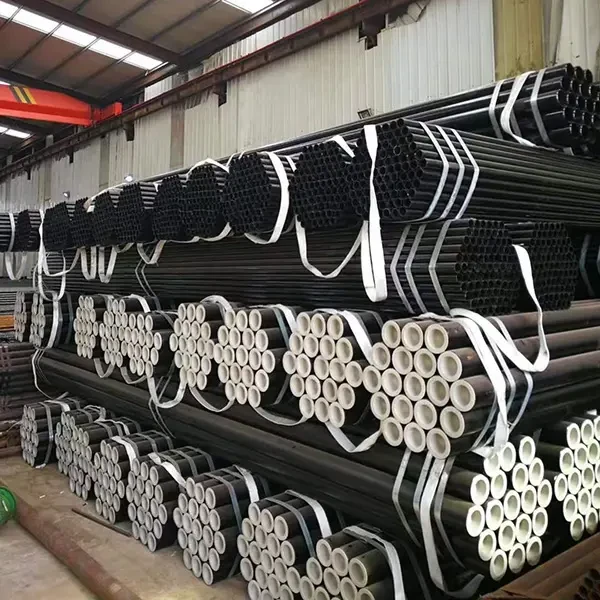
Chromoly square tubing, typically referring to alloys within the 4100 series (AISI/SAE 4130, 4140), represents a critical structural component across diverse industrial applications. Distinguished by its high strength-to-weight ratio and weldability, it occupies a specialized niche between standard carbon steel and more costly, exotic alloys like titanium. Its position in the supply chain spans raw material sourcing (alloy steel billets), precision forming (seamless or welded square tubing production), heat treatment for desired mechanical properties, and finally, fabrication into end-use components. Core performance characteristics include yield strength, tensile strength, fatigue resistance, and resistance to torsional stress – all critical parameters for applications demanding robust structural integrity. The selection of chromoly square tubing often addresses situations where carbon steel compromises on strength and lightweighting is a priority, avoiding the substantial cost premium of aerospace-grade materials. A key industry pain point centers on consistent alloy composition and heat treatment control to ensure predictable mechanical behavior and prevent premature failure, particularly in high-stress environments.
Material Science & Manufacturing
Chromoly square tubing derives its properties from the alloying of chromium and molybdenum with carbon steel. Chromium content (typically 0.8-1.1%) enhances corrosion resistance and contributes to increased hardenability. Molybdenum (0.15-0.25%) further refines grain structure, improving toughness and high-temperature strength. Raw material sourcing is crucial; the quality of the steel billets directly impacts the final product’s integrity. Manufacturing processes diverge based on tubing geometry and desired wall thickness. Seamless tubing is produced via mandrel piercing and subsequent drawing operations, yielding a homogeneous structure with superior strength but at a higher cost. Welded tubing, formed by rolling steel strips into a square shape and then welding the seam, offers cost-effectiveness but necessitates stringent quality control to ensure weld integrity. Key parameter control during manufacturing includes precise temperature regulation during heat treatment (quenching and tempering) to achieve specified hardness and ductility. Welding parameters, such as pre-heat temperature, welding current, and shielding gas composition, are critical to prevent hydrogen embrittlement and maintain weld strength comparable to the base metal. The internal surface finish is also significant, requiring processes like pickling and passivation to remove mill scale and enhance corrosion resistance. Chemical compatibility with welding consumables and potential coatings (e.g., powder coating, galvanizing) must also be carefully considered.
Performance & Engineering
The performance of chromoly square tubing is fundamentally governed by its mechanical properties. Force analysis is paramount, especially in structural applications. Engineers must accurately calculate bending moments, shear forces, and torsional stresses to select tubing with appropriate wall thickness and dimensions. Finite element analysis (FEA) is commonly employed to simulate stress distribution under various load conditions. Environmental resistance is another critical consideration. While chromoly offers improved corrosion resistance compared to carbon steel, it's still susceptible to oxidation and localized corrosion in harsh environments. Protective coatings, such as epoxy powder coating or zinc-rich primers, are frequently applied to mitigate these effects. Compliance requirements vary based on application. For example, tubing used in automotive chassis construction must meet stringent safety standards (e.g., FMVSS) regarding impact resistance and fatigue life. Aerospace applications necessitate adherence to AMS (Aerospace Material Specification) standards, dictating material composition, heat treatment, and non-destructive testing procedures. Functional implementation often involves welding or mechanical joining. Weld design must account for stress concentrations and potential corrosion sites. Surface preparation is essential for achieving strong, durable welds. Furthermore, considerations for thermal expansion and contraction due to temperature variations are crucial to avoid stress build-up and potential deformation in assembled structures.
Technical Specifications
| Property | AISI 4130 (Normalized) | AISI 4140 (Quenched & Tempered) | ASTM A519 Grade 4130 | Units |
|---|---|---|---|---|
| Yield Strength | 360 | 580 | 350 (min) | MPa |
| Tensile Strength | 580 | 740 | 580 (min) | MPa |
| Elongation (in 2 inches) | 23 | 18 | 17 (min) | % |
| Hardness (Brinell) | 170 | 250 | - | HB |
| Modulus of Elasticity | 200 | 200 | 200 | GPa |
| Corrosion Resistance (Salt Spray Test) | 48 | 60 | - | Hours to Red Rust |
Failure Mode & Maintenance
Chromoly square tubing, despite its robust properties, is susceptible to various failure modes. Fatigue cracking, particularly in high-cycle loading scenarios, is a common concern. This is often initiated at stress concentrations, such as weld points or sharp corners. Delamination can occur in welded tubing if proper welding procedures are not followed, resulting in separation of the weld metal from the base metal. Degradation due to corrosion, especially in chloride-rich environments, can lead to pitting corrosion and eventual structural weakening. Oxidation at elevated temperatures can also reduce material thickness and mechanical properties. Hydrogen embrittlement, induced by hydrogen diffusion into the metal lattice during welding, can significantly reduce ductility and promote brittle fracture. Maintenance strategies include regular visual inspection for cracks, corrosion, and deformation. Non-destructive testing (NDT) methods, such as ultrasonic testing and radiographic inspection, can detect subsurface flaws. Protective coatings should be periodically inspected for damage and reapplied as necessary. Welded joints should be inspected for weld defects and porosity. For applications involving high stress levels, periodic stress relieving may be necessary to prevent crack propagation. Proper lubrication of moving parts connected to the tubing can also reduce wear and fatigue. Avoidance of galvanic corrosion through appropriate material selection and insulation is also important.
Industry FAQ
Q: What is the primary difference between 4130 and 4140 chromoly tubing, and how does that impact application suitability?
A: 4130 chromoly boasts superior weldability and higher hardenability, making it ideal for applications requiring frequent welding and heat treatment, like automotive roll cages. 4140, with its increased chromium and molybdenum content, offers greater strength and toughness, better suited for components subjected to higher stress and impact loads, such as heavy machinery components or aircraft structural elements. The choice hinges on balancing weldability requirements with the severity of the operational stresses.
Q: How does the manufacturing process (seamless vs. welded) affect the long-term fatigue life of chromoly square tubing?
A: Seamless tubing generally exhibits superior fatigue life due to the absence of a weld seam, eliminating a potential stress concentration point. Welded tubing, however, can achieve comparable fatigue performance with meticulous welding procedures, thorough inspection, and post-weld heat treatment to relieve residual stresses. The quality of the weld is paramount; full penetration welds with minimal porosity are essential for maximizing fatigue resistance.
Q: What are the common corrosion prevention methods for chromoly tubing in marine environments?
A: In marine environments, chromoly is susceptible to chloride-induced pitting corrosion. Common prevention methods include applying epoxy-based coatings, zinc-rich primers, or specialized marine-grade paints. Cathodic protection, utilizing sacrificial anodes, can also be effective. Regular cleaning and inspection to remove salt deposits are crucial. Avoiding contact with dissimilar metals (to prevent galvanic corrosion) is also recommended.
Q: What Non-Destructive Testing (NDT) methods are typically used to verify the integrity of chromoly square tubing after welding?
A: Common NDT methods include visual inspection (for surface defects), liquid penetrant testing (to detect surface cracks), radiographic testing (X-ray inspection for internal flaws), and ultrasonic testing (to detect subsurface defects and measure wall thickness). The specific method chosen depends on the criticality of the application and the potential failure modes.
Q: What is the impact of heat treatment on the mechanical properties of chromoly tubing, and how is it controlled during manufacturing?
A: Heat treatment – specifically quenching and tempering – dramatically alters the mechanical properties of chromoly. Quenching hardens the steel, while tempering increases toughness and ductility. Precise temperature control and holding times during both processes are critical to achieve the desired hardness, yield strength, and impact resistance. Manufacturers employ controlled atmosphere furnaces and rigorous quality control procedures to ensure consistent heat treatment results.
Conclusion
Chromoly square tubing remains a vital material in industries demanding a balance of strength, weldability, and weight efficiency. Its selection is rarely arbitrary, instead rooted in detailed engineering analyses considering load conditions, environmental factors, and applicable regulatory standards. The success of any application leveraging chromoly hinges on meticulous material sourcing, precise manufacturing processes, and diligent quality control throughout the supply chain.
Future advancements will likely focus on optimizing alloy compositions for enhanced corrosion resistance, developing more efficient and reliable welding techniques, and exploring advanced coating technologies to extend service life in harsh environments. Understanding the nuances of failure modes and implementing proactive maintenance strategies will remain paramount to ensuring the long-term integrity and safety of structures utilizing chromoly square tubing.
