
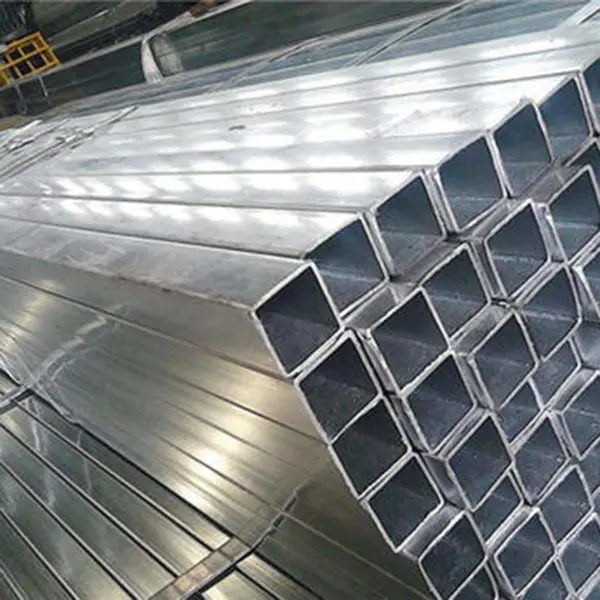
Introduction
Cold drawn seamless tubing represents a critical component in numerous industrial applications, distinguished by its precision dimensions, smooth surface finish, and enhanced mechanical properties. This manufacturing process, involving the deformation of a hollow billet through a die while heated, followed by cold drawing to achieve final dimensions, positions it significantly within the steel product supply chain. It serves as a direct substitute for welded and extruded seamless tubing in applications demanding superior uniformity and structural integrity. Core performance characteristics include tight tolerances, improved tensile strength, and excellent concentricity, making it vital in industries ranging from automotive and aerospace to oil and gas, and hydraulic systems. The primary advantage lies in the elimination of weld seams, reducing potential failure points and corrosion susceptibility. This guide provides a comprehensive technical overview of cold drawn seamless tubing, covering material science, manufacturing processes, performance engineering, failure analysis, and industry standards.
Material Science & Manufacturing
The typical raw material for cold drawn seamless tubing is carbon steel (e.g., 1020, 1045), alloy steel (e.g., 4140, 5140), or stainless steel (e.g., 304, 316). Carbon steel exhibits good machinability and weldability, but is susceptible to corrosion. Alloy steels offer increased strength, toughness, and hardenability, making them suitable for high-stress applications. Stainless steels provide superior corrosion resistance, albeit at a higher cost. Material properties like yield strength, tensile strength, elongation, and hardness are rigorously controlled throughout the process. The manufacturing process begins with hot working, usually piercing a solid billet to create a hollow tube. This is followed by multiple stages of cold drawing, reducing the diameter and wall thickness while increasing the length. Critical parameters include die angle, reduction ratio (the amount of diameter reduction per draw), drawing speed, and lubrication. Lubrication, typically employing phosphate coatings combined with soap-based or oil-based lubricants, is essential to reduce friction, prevent galling, and maintain surface finish. Annealing between drawing passes is often required to restore ductility and prevent work hardening. Final processes include straightening, cutting to length, and inspection. Precise control of these parameters is vital to achieving the desired dimensional accuracy and mechanical properties. The resulting microstructure is characterized by grain refinement and increased dislocation density, contributing to improved strength and toughness.

Performance & Engineering
The performance of cold drawn seamless tubing is governed by several engineering considerations. Stress analysis, utilizing finite element modeling (FEM), is crucial for determining the tubing's load-bearing capacity under various conditions, including axial tension, compression, bending, and torsional loads. Wall thickness is a primary factor influencing burst pressure and collapse resistance. Corrosion resistance is paramount in many applications. For carbon steel tubing, protective coatings (e.g., galvanizing, epoxy coatings) or cathodic protection may be necessary. Stainless steel grades offer inherent corrosion resistance but can still be susceptible to pitting corrosion in chloride environments. Environmental resistance also includes temperature considerations. High temperatures can reduce yield strength and creep resistance, while low temperatures can lead to brittle fracture. Compliance requirements vary depending on the industry. For example, tubing used in hydraulic systems must meet stringent standards for pressure testing and dimensional accuracy (SAE J524). Oil and gas applications require compliance with API 5L standards, dictating material composition, mechanical properties, and testing procedures. The concentricity and straightness of the tubing are critical parameters affecting flow characteristics and ease of installation. Deviation from circularity can increase flow turbulence and pressure drop. Fatigue life is a key consideration in applications involving cyclic loading. Surface finish plays a role, as scratches and imperfections can act as stress concentrators and initiate fatigue cracks.
Technical Specifications
| Parameter | ASTM A519 Grade 1020 | ASTM A519 Grade 4140 | ASTM A370 (Stainless 304) | Units |
|---|---|---|---|---|
| Yield Strength | 36,000 | 70,000 | 30,000 | psi |
| Tensile Strength | 60,000 | 90,000 | 75,000 | psi |
| Elongation | 23 | 18 | 30 | % |
| Wall Thickness Tolerance | ±0.005 | ±0.005 | ±0.005 | inches |
| Outer Diameter Tolerance | ±0.002 | ±0.002 | ±0.002 | inches |
| Surface Roughness (Ra) | 32 | 32 | 16 | μin |
Failure Mode & Maintenance
Common failure modes in cold drawn seamless tubing include fatigue cracking, corrosion-induced failure, denting, and yielding. Fatigue cracking typically initiates at stress concentrators, such as scratches, dents, or weld defects (if any repairs are made). Corrosion can lead to pitting, crevice corrosion, or uniform thinning of the wall thickness. Denting can occur due to external impacts, reducing the tube’s buckling resistance. Yielding happens when the applied stress exceeds the material’s yield strength, causing permanent deformation. Failure analysis often involves fractography, examining the fracture surface to determine the mode of failure. Non-destructive testing (NDT) methods, such as ultrasonic testing (UT), eddy current testing (ET), and radiographic testing (RT), are used to detect flaws and assess the remaining wall thickness. Preventive maintenance includes regular inspections for corrosion, dents, and cracks. Protective coatings should be maintained and reapplied as needed. Proper handling and storage are crucial to prevent damage. For hydraulic systems, regular fluid analysis can help detect contamination and prevent corrosion. In high-temperature applications, creep testing and periodic inspections are essential to monitor material degradation. Proper selection of materials and coatings is the first line of defense against failure. Addressing corrosion hotspots and reducing stress concentrations through design modifications can significantly extend the service life of the tubing.
Industry FAQ
Q: What is the primary advantage of cold drawn seamless tubing over welded tubing in high-pressure hydraulic applications?
A: The absence of a weld seam in cold drawn seamless tubing eliminates a potential failure point and significantly increases the burst pressure capability. Welded seams, even with high-quality welding processes, introduce inherent weaknesses that can propagate under high cyclic stress, making seamless tubing the preferred choice for critical hydraulic systems.
Q: How does the cold drawing process affect the mechanical properties of the base material?
A: The cold drawing process induces work hardening, increasing the yield strength and tensile strength of the material. It also refines the grain structure, enhancing toughness. However, it reduces ductility, which is why intermediate annealing steps are often necessary to restore formability.
Q: What are the common corrosion concerns for carbon steel cold drawn seamless tubing, and how can they be mitigated?
A: Carbon steel is susceptible to general corrosion, pitting corrosion (in chloride environments), and rust. Mitigation strategies include applying protective coatings like galvanizing or epoxy, using corrosion inhibitors in the fluid, and employing cathodic protection. Material selection is also crucial – alloy steels or stainless steels can offer improved corrosion resistance.
Q: What Non-Destructive Testing (NDT) methods are typically used to inspect cold drawn seamless tubing for defects?
A: Common NDT methods include Ultrasonic Testing (UT) for detecting internal flaws, Eddy Current Testing (ET) for surface and near-surface defects, Radiographic Testing (RT) using X-rays or gamma rays for volumetric inspection, and Liquid Penetrant Testing (PT) for detecting surface cracks.
Q: What is the impact of drawing speed and lubrication on the surface finish and dimensional accuracy of the tubing?
A: Higher drawing speeds can lead to increased friction and heat generation, potentially degrading the surface finish and causing dimensional inaccuracies. Effective lubrication is critical to minimize friction, reduce heat, and maintain a consistent surface finish. The type of lubricant and its application method significantly impact the final product quality.
Conclusion
Cold drawn seamless tubing represents a sophisticated manufacturing process resulting in a high-performance product crucial across diverse industries. Its superior mechanical properties, tight tolerances, and absence of weld seams make it ideal for demanding applications where reliability and safety are paramount. Understanding the intricacies of material science, manufacturing parameters, and potential failure modes is essential for engineers and procurement professionals alike.
The continued development of advanced materials and manufacturing techniques will further enhance the performance and applicability of cold drawn seamless tubing. Future trends include the use of laser-based welding for seam repairs (where unavoidable), the implementation of real-time process monitoring and control, and the exploration of new coatings and surface treatments to improve corrosion resistance and wear properties. Careful consideration of all technical aspects, from material selection to maintenance protocols, ensures optimal performance and longevity of this critical component.
