
Introduction
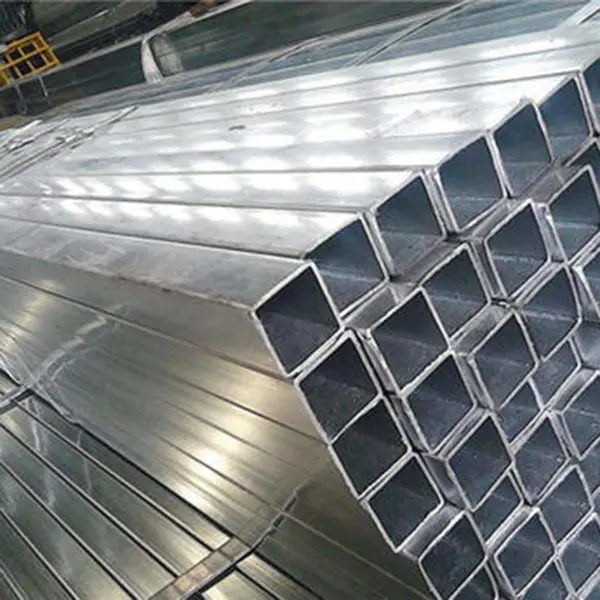
Copper square pipe is a hollow section fabricated from copper or copper alloys, characterized by its square cross-section. It occupies a critical position within the industrial piping and fabrication chain, serving as a foundational component in applications ranging from heat exchangers and plumbing to structural supports and instrumentation. Its primary performance attributes center around high thermal conductivity, corrosion resistance, ductility, and relative ease of fabrication through processes like bending, welding, and cutting. The selection of copper square pipe hinges on a precise understanding of the application’s thermal, mechanical, and chemical demands, particularly concerning fluid compatibility and operating temperatures. Industry pain points include maintaining consistent wall thickness, preventing dezincification in certain environments, and ensuring compliance with evolving standards regarding lead content and material traceability. Unlike seamless tubing, welded square pipe presents localized heat affected zones impacting material properties requiring careful inspection and process control.
Material Science & Manufacturing
The primary raw material is typically electrolytic tough pitch (ETP) copper (99.9% purity) or copper alloys such as brasses (copper-zinc) and bronze (copper-tin). ETP copper offers exceptional thermal and electrical conductivity but possesses limited strength. Alloying elements enhance mechanical properties like tensile strength and yield strength, albeit at the expense of some conductivity. Manufacturing typically involves two primary routes: extrusion and welding. Extrusion pushes copper billets through a square die to create seamless or near-seamless pipe. Welding, a more cost-effective method, involves forming copper sheets into a square profile and then longitudinally welding the seam. Key parameters during extrusion include billet temperature, extrusion speed, and die angle, all impacting grain structure and surface finish. Welding necessitates precise control of welding current, voltage, and shielding gas composition (typically argon or helium) to minimize porosity, oxidation, and heat-affected zone width. Post-welding processes commonly include annealing to relieve residual stresses and pickling to remove scale. The resulting microstructure is critical; grain size influences strength and ductility, with finer grains generally leading to improved properties. Material hardness is assessed via Vickers or Brinell hardness testing. Chemical composition is verified through spectroscopic analysis (e.g., Optical Emission Spectrometry).
Performance & Engineering
Performance of copper square pipe is governed by principles of structural mechanics and heat transfer. Under load, it exhibits characteristics of thin-walled pressure vessels, with buckling being a primary concern, especially for larger diameters and thinner wall thicknesses. Force analysis incorporates considerations for bending moments, shear forces, and axial loads. The section modulus directly correlates with bending resistance. Environmental resistance is crucial; copper's inherent corrosion resistance is compromised by exposure to certain chemicals (e.g., ammonia, sulfides) and aggressive soil conditions. Galvanic corrosion can occur when copper is in contact with dissimilar metals in a conductive environment. Thermal performance is quantified by thermal conductivity (approximately 401 W/m·K for pure copper), which dictates its efficiency in heat transfer applications. Design calculations must account for thermal expansion and contraction, especially in systems with significant temperature fluctuations. Compliance with standards such as ASME B31.3 (Process Piping) and ASTM B88 (Copper and Copper Alloy Seamless Wrought Straight Tubes) is paramount. Fatigue life is a critical engineering parameter, assessed through cyclic loading tests and S-N curve analysis. Creep resistance becomes relevant at elevated temperatures. Pressure testing is mandatory to ensure structural integrity and leak-tightness.
Technical Specifications
| Parameter | Units | Typical Value (ETP Copper) | Typical Value (C26000 Brass) |
|---|---|---|---|
| Outer Diameter | mm | 10-100 | 10-75 |
| Wall Thickness | mm | 1-5 | 1-4 |
| Tensile Strength | MPa | 220 | 310 |
| Yield Strength | MPa | 70 | 170 |
| Elongation | % | 45 | 30 |
| Thermal Conductivity | W/m·K | 401 | 120 |
Failure Mode & Maintenance
Common failure modes in copper square pipe include corrosion (uniform, pitting, galvanic, and dezincification), fatigue cracking (due to cyclic loading), and stress corrosion cracking (in aggressive environments). Dezincification, a selective leaching of zinc from brass alloys, weakens the material and leads to failure. Fatigue cracks typically initiate at stress concentrators (e.g., welds, bends, dents). Oxidation at high temperatures forms copper oxides, potentially reducing wall thickness. Maintenance involves regular visual inspections for signs of corrosion, cracks, or deformation. Non-destructive testing (NDT) methods such as ultrasonic testing (UT) and eddy current testing (ET) are employed to detect subsurface flaws. Periodic pressure testing verifies structural integrity. Cleaning to remove contaminants (e.g., scale, corrosion products) can extend service life. Protective coatings (e.g., epoxy, polyurethane) can mitigate corrosion in harsh environments. For welded pipe, weld inspection (radiographic testing, liquid penetrant testing) is crucial. Proper support and bracing are essential to prevent excessive stress and vibration. Prompt repair or replacement of damaged sections is vital to avoid catastrophic failure.
Industry FAQ
Q: What are the key differences between extruded and welded copper square pipe in terms of mechanical properties and applications?
A: Extruded pipe generally exhibits superior mechanical properties – higher tensile strength and ductility – due to the absence of a weld seam and a more homogeneous microstructure. It’s preferred for critical applications demanding high strength and reliability, such as hydraulic systems. Welded pipe, while typically less expensive, has localized heat-affected zones at the weld seam, which can reduce strength and corrosion resistance. It's suitable for less demanding applications like plumbing, HVAC, and low-pressure fluid transfer. Careful weld quality control is paramount for welded pipe.
Q: How does lead content in copper alloys impact compliance with regulations like RoHS and Safe Drinking Water Act?
A: Regulations such as RoHS (Restriction of Hazardous Substances) and the Safe Drinking Water Act (SDWA) restrict the permissible lead content in copper alloys used in plumbing and potable water systems. Leaded brass alloys (e.g., C36000) contain significant lead levels, making them non-compliant. Low-lead alloys (e.g., C69430) with a weighted average lead content of ≤0.25% are generally compliant. Material certification and traceability are essential to demonstrate compliance.
Q: What are the best practices for preventing dezincification in brass copper square pipes used in marine environments?
A: Dezincification is a major concern in marine environments. Employing alloys with higher zinc content (though this can affect other properties) or utilizing alloys containing inhibitors (e.g., arsenic) can mitigate dezincification. Applying protective coatings (e.g., epoxy coatings) provides a barrier against corrosive agents. Avoiding galvanic coupling with more noble metals (e.g., stainless steel) is crucial. Regular inspection and cathodic protection can also be employed.
Q: What non-destructive testing (NDT) methods are most effective for identifying flaws in copper square pipe during quality control?
A: Ultrasonic testing (UT) is highly effective for detecting internal flaws such as cracks, voids, and inclusions. Eddy current testing (ET) is suitable for detecting surface cracks and corrosion. Liquid penetrant testing (PT) can reveal surface-breaking flaws. Radiographic testing (RT) provides a visual representation of internal defects but requires specialized equipment and safety precautions. Visual inspection, while basic, is a crucial first step.
Q: What is the impact of annealing on the mechanical properties of copper square pipe?
A: Annealing is a heat treatment process that softens the copper, increases its ductility, and relieves internal stresses. It reduces tensile strength and hardness but improves formability, making the pipe easier to bend or form. The annealing temperature and cooling rate are carefully controlled to achieve the desired microstructure and properties. Post-annealing, the material is typically pickled to remove any scale formed during the process.
Conclusion
Copper square pipe remains a foundational material in numerous industrial applications, prized for its thermal conductivity, corrosion resistance, and relative ease of fabrication. However, successful implementation requires a thorough understanding of its material properties, manufacturing processes, potential failure modes, and relevant industry standards. Proper alloy selection, meticulous fabrication control, and diligent maintenance practices are paramount to ensure long-term performance and reliability.
Looking forward, advancements in alloy development (e.g., high-strength, low-lead alloys) and manufacturing techniques (e.g., additive manufacturing) will further enhance the capabilities and broaden the applications of copper square pipe. Increased emphasis on sustainability and material traceability will drive the adoption of recycled copper sources and stringent quality control measures. Continued research into corrosion mitigation strategies and failure analysis will be essential for optimizing the service life and minimizing the lifecycle costs of copper square pipe systems.
