
Introduction
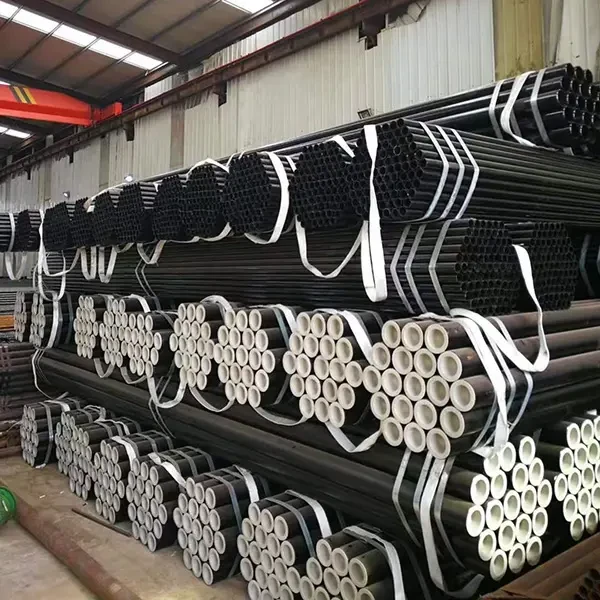
Duplex stainless steel seamless pipe represents a significant advancement in corrosion resistance and mechanical strength within the piping industry. Positioned as a critical component in high-performance applications, these pipes are characterized by a mixed microstructure of austenite and ferrite, typically containing 21-27% chromium, 1.5-8.0% nickel, and 3-8% molybdenum. This composition distinguishes them from austenitic and ferritic stainless steels, offering superior resistance to stress corrosion cracking (SCC), pitting, and crevice corrosion – a primary concern in harsh environments. Duplex stainless steels offer approximately double the yield strength of standard austenitic stainless steels, allowing for thinner wall thicknesses and reduced material costs in certain applications. This guide will delve into the material science, manufacturing processes, performance characteristics, potential failure modes, and relevant industry standards governing duplex seamless pipe, aiming to provide a comprehensive resource for engineers, procurement professionals, and quality control personnel.
Material Science & Manufacturing
The core material science of duplex stainless steel revolves around the balance between austenite and ferrite phases. Austenite provides excellent corrosion resistance and toughness, while ferrite contributes to strength, weldability, and resistance to SCC. The specific proportion of these phases is dictated by the chemical composition and subsequent heat treatment. Common duplex grades include 2205 (UNS S31803/S32205), 2507 (UNS S32750), and 2304 (UNS S32304). Raw materials typically include ferro-chromium, ferro-nickel, molybdenum, and carbon steel. The manufacturing process for seamless duplex pipe begins with the production of a solid billet, often via vacuum induction melting (VIM) or argon oxygen decarburization (AOD) refining to precisely control composition and minimize impurities. This billet undergoes hot piercing, followed by hot extrusion or rotary piercing to create the initial seamless tube. Subsequent cold drawing reduces the diameter and wall thickness to meet specifications. Critical parameters during hot working include temperature control (typically between 1100-1250°C) to maintain austenite-ferrite balance and prevent phase transformations. Cold working requires careful control of reduction ratios and intermediate annealing to avoid inducing residual stresses and maintaining ductility. Welding parameters, specifically heat input and interpass temperature, are crucial during fabrication, as excessive heat can lead to sigma phase formation, reducing corrosion resistance. Post-weld heat treatment (PWHT) may be required for specific applications to stabilize the microstructure and restore optimal properties.

Performance & Engineering
The performance of duplex seamless pipe is characterized by high mechanical strength and exceptional corrosion resistance. Tensile strength typically ranges from 550-800 MPa, with yield strength exceeding 300 MPa, significantly higher than comparable austenitic grades. This allows for reduced wall thicknesses, lowering material costs and weight. A key engineering consideration is the prevention of stress corrosion cracking (SCC). Duplex stainless steels exhibit a greater resistance to chloride SCC than austenitic alloys, making them ideal for marine environments, chemical processing plants, and oil & gas applications. However, susceptibility to SCC can increase with the formation of detrimental phases like sigma, therefore, proper heat treatment and welding procedures are paramount. Environmental resistance assessments also require consideration of pitting and crevice corrosion potential, particularly in concentrated chloride solutions. Finite element analysis (FEA) is frequently employed to model stress distribution within the pipe under various loading conditions, including internal pressure, external loads, and thermal stresses. Compliance with industry standards, such as NACE MR0175/ISO 15156, is essential for applications involving sour service (hydrogen sulfide environments). Fatigue performance is another critical parameter, especially in cyclic loading applications. Duplex stainless steels generally exhibit good fatigue resistance but require careful consideration of surface finish and stress concentrations.
Technical Specifications
| Grade | UNS Number | Tensile Strength (MPa) | Yield Strength (MPa) | Pitting Resistance Equivalent (PREN) |
|---|---|---|---|---|
| 2205 | S31803 / S32205 | 620-760 | 345-480 | 32-36 |
| 2507 | S32750 | 780-930 | 480-620 | 38-41 |
| 2304 | S32304 | 550-690 | 275-415 | 28-32 |
| 2101 | S31660 | 650-850 | 380-550 | 30-34 |
| 2205 (Welded) | S31803 / S32205 | 580-720 | 320-450 | 30-34 |
| 2507 (Welded) | S32750 | 720-880 | 450-580 | 36-39 |
Failure Mode & Maintenance
Duplex stainless steel seamless pipe, while highly resistant, is susceptible to specific failure modes. Sigma phase precipitation, induced by prolonged exposure to temperatures between 550-850°C, is a primary concern, leading to reduced ductility and increased susceptibility to cracking. Corrosion cracking, while less prevalent than in austenitic steels, can occur in highly corrosive environments, particularly if sigma phase is present. Pitting corrosion, initiated by localized defects or chloride attack, can propagate rapidly. Erosion-corrosion can occur in high-velocity fluid applications, removing the protective passive layer. Fatigue cracking, resulting from cyclic loading, can initiate at stress concentrators such as welds or dents. Maintenance strategies should focus on preventing these failures. Regular inspection, including non-destructive testing (NDT) methods like ultrasonic testing (UT) and radiography (RT), is crucial for detecting cracks, pitting, and corrosion. Surface cleaning to remove contaminants and deposits is essential. Cathodic protection may be employed in marine environments to mitigate corrosion. Proper weld procedures and PWHT are vital to prevent sigma phase formation. Internal inspection and cleaning can help identify and address erosion-corrosion issues. For applications involving sour service, adherence to NACE MR0175/ISO 15156 is paramount, including material selection, welding procedures, and inspection protocols.
Industry FAQ
Q: What is the primary advantage of duplex stainless steel over austenitic stainless steel in terms of corrosion resistance?
A: The primary advantage lies in the increased resistance to stress corrosion cracking (SCC) and pitting corrosion. The presence of ferrite in the microstructure enhances resistance to chloride-induced SCC, a common failure mode in austenitic steels. Additionally, the higher chromium, molybdenum, and nitrogen content contribute to improved pitting resistance.
Q: How does welding affect the corrosion resistance of duplex stainless steel pipe?
A: Welding can significantly affect corrosion resistance if not performed correctly. Excessive heat input can lead to the formation of detrimental phases like sigma, reducing corrosion resistance. Proper control of heat input, interpass temperature, and post-weld heat treatment (PWHT) are crucial to maintain optimal properties.
Q: What is the PREN (Pitting Resistance Equivalent) and why is it important?
A: PREN is a numerical indicator of a stainless steel's resistance to pitting corrosion. It's calculated based on the percentages of chromium, molybdenum, and nitrogen in the alloy. A higher PREN value generally indicates greater resistance to pitting corrosion, particularly in chloride-containing environments.
Q: What are the common applications for duplex stainless steel seamless pipe?
A: Common applications include oil and gas pipelines, chemical processing plants (especially handling chlorides), desalination plants, marine environments (offshore platforms, ship building), power generation, and wastewater treatment facilities. Any application requiring high strength and exceptional corrosion resistance is a potential candidate.
Q: What is the role of NACE MR0175/ISO 15156 in the context of duplex stainless steel piping?
A: NACE MR0175/ISO 15156 is a globally recognized standard for materials selection and corrosion control in sour service (environments containing hydrogen sulfide). It provides specific guidelines for the use of duplex stainless steels in sour environments, including material selection criteria, welding procedures, and inspection requirements.
Conclusion
Duplex stainless steel seamless pipe represents a superior material choice in demanding applications requiring a robust combination of high strength and exceptional corrosion resistance. The unique microstructure, carefully controlled through precise chemical composition and manufacturing processes, offers significant advantages over conventional austenitic stainless steels, particularly in mitigating stress corrosion cracking and pitting. However, achieving optimal performance requires a thorough understanding of potential failure modes, such as sigma phase precipitation and erosion-corrosion, and the implementation of appropriate inspection and maintenance strategies.
Looking ahead, advancements in duplex stainless steel alloy development are focusing on enhancing toughness, improving weldability, and reducing the susceptibility to sigma phase formation. Furthermore, increased adoption of non-destructive testing (NDT) techniques, coupled with data analytics and predictive modeling, will enable more proactive maintenance and extend the service life of duplex piping systems. Continued adherence to industry standards and best practices is crucial for ensuring the long-term reliability and safety of critical infrastructure utilizing this high-performance material.
