
Introduction
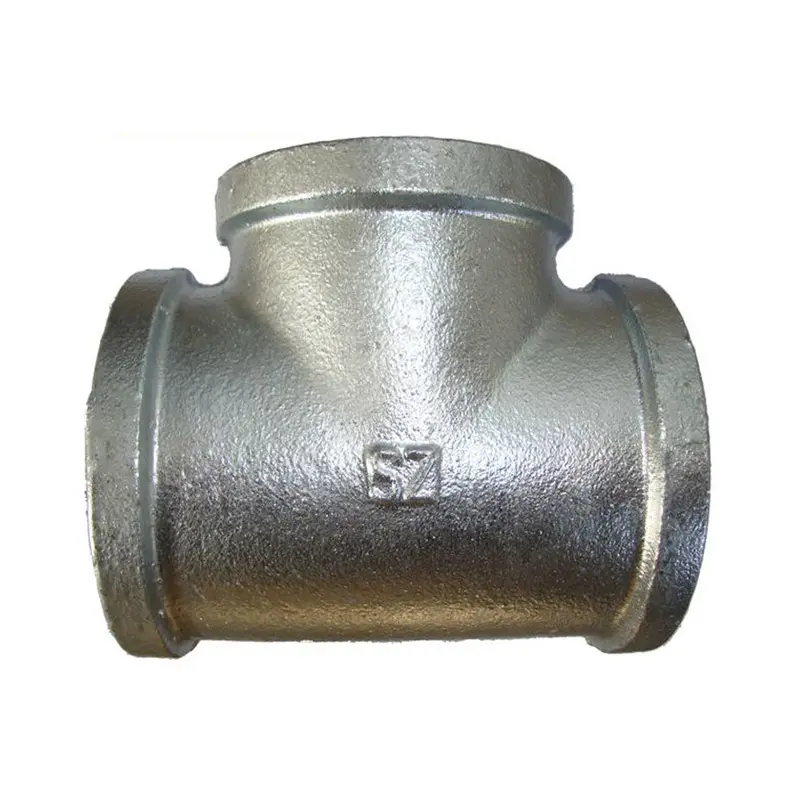
Electric Resistance Welded (ERW) galvanized pipe is a form of steel pipe manufactured through the ERW process and subsequently coated with a layer of zinc. It occupies a critical position in industries requiring fluid and gas conveyance, structural support, and protective conduits. The ERW process involves forming steel coils into tubes and welding the seam using high-frequency electric current, offering a cost-effective alternative to seamless pipe for many applications. Galvanization, typically hot-dip galvanizing, provides corrosion resistance, extending the service life of the pipe in diverse environments. Core performance characteristics include pressure rating, dimensional accuracy, weld strength, and the quality and adherence of the zinc coating. This guide provides an in-depth technical overview of ERW galvanized pipe, covering material science, manufacturing processes, performance parameters, failure modes, and relevant industry standards.
Material Science & Manufacturing
ERW galvanized pipe typically utilizes carbon steel grades such as ASTM A53 Grade B, A53 Grade A, or API 5L X42. These steels are selected for their weldability, formability, and mechanical properties. The steel substrate's chemical composition, notably carbon content, manganese, silicon, and sulfur, directly impacts weld strength and ductility. The manufacturing process begins with the slitting of steel coils into the desired width. These strips are then cold-formed into tubular shapes using roll forming machines. The edges are precisely prepared for welding. ERW welding employs high-frequency alternating current to generate heat at the seam, causing the steel edges to fuse together. Key parameters controlling weld quality include frequency, current density, welding speed, and electrode pressure. Following welding, the pipe undergoes non-destructive testing (NDT), including ultrasonic testing and radiographic inspection, to detect weld defects. Surface preparation for galvanization is crucial and involves pickling with hydrochloric acid to remove mill scale and rust, followed by fluxing to promote zinc adhesion. Hot-dip galvanizing involves immersing the cleaned pipe in a molten zinc bath (typically 98% pure zinc) at temperatures around 450°C (842°F). The zinc metallurgically bonds with the steel surface, forming a protective layer. Cooling is carefully controlled to achieve the desired zinc coating thickness and microstructure. The galvanizing process induces metallurgical changes in the steel surface forming alloy layers (Fe-Zn alloys) which are harder than the base steel and provide excellent corrosion resistance.
Performance & Engineering
The performance of ERW galvanized pipe is dictated by its ability to withstand internal and external pressures, axial loads, bending moments, and corrosive environments. Force analysis is critical, particularly in applications involving high-pressure fluids or structural loads. The hoop stress in the pipe wall is calculated using the Barlow's formula: σ = (P D) / (2 t), where σ is the hoop stress, P is the internal pressure, D is the outer diameter, and t is the wall thickness. Therefore, wall thickness is a key design parameter. Environmental resistance is primarily conferred by the zinc coating. The corrosion resistance of galvanized steel is influenced by the coating thickness, the presence of atmospheric pollutants (sulfur dioxide, chlorides), and temperature. Galvanic corrosion can occur when galvanized steel is in contact with dissimilar metals in the presence of an electrolyte. Compliance requirements vary depending on the application and region. For pressure applications, standards like ASME B31.1 (Power Piping) or ASME B31.3 (Process Piping) dictate design and testing procedures. For structural applications, building codes and standards like AISC (American Institute of Steel Construction) apply. The performance of the weld seam is paramount, requiring strict adherence to welding procedures and quality control measures to prevent cracking, porosity, and incomplete fusion. Finite Element Analysis (FEA) is often employed to model stress distribution under various loading conditions and optimize pipe design.
Technical Specifications
| Parameter | ASTM A53 Grade B | API 5L X42 | Typical Galvanizing (Hot-Dip) |
|---|---|---|---|
| Yield Strength (MPa) | 250 | 345 | N/A (Coating Property) |
| Tensile Strength (MPa) | 400 | 485 | N/A (Coating Property) |
| Zinc Coating Thickness (µm) | N/A | N/A | 50 - 150 (depending on diameter & standard) |
| Outer Diameter (mm) | 1/2" - 8" (12.7 - 203.2) | 6" - 48" (168.3 – 1219.2) | As per order specification |
| Wall Thickness (mm) | 2 - 10 | 4 - 25 | N/A (Pipe Property) |
| Corrosion Resistance (Salt Spray Test, hours) | Varies with coating | Varies with coating | > 500 (depending on coating thickness) |
Failure Mode & Maintenance
ERW galvanized pipe can experience several failure modes. Corrosion is the most common, particularly in harsh environments. Localized corrosion, such as pitting corrosion, can occur due to defects in the zinc coating or the presence of chlorides. Underground pipes are susceptible to microbiologically influenced corrosion (MIC). Weld defects, such as cracks, porosity, and lack of fusion, can lead to catastrophic failure under pressure or load. Fatigue cracking can occur due to cyclical loading. Mechanical damage, such as dents or gouges, can compromise the pipe's integrity. Hydrogen embrittlement, induced by the pickling process, can reduce ductility. Maintenance strategies include regular visual inspections to identify corrosion or damage. Coating repairs should be performed promptly to prevent corrosion propagation. Cathodic protection (CP) is an effective method for preventing corrosion in buried pipelines. Periodic hydrostatic testing can verify the pipe's pressure integrity. For pipelines transporting corrosive fluids, regular pigging (cleaning) can remove deposits that accelerate corrosion. Adherence to proper handling and installation procedures is crucial to prevent mechanical damage. Consideration should be given to soil resistivity and the application of protective coatings or wrappings for underground pipelines. Proper grounding is also essential to minimize the risk of galvanic corrosion.
Industry FAQ
Q: What is the difference between ERW and seamless pipe, and when would you choose one over the other?
A: ERW pipe is manufactured by welding a strip of steel, while seamless pipe is created without a weld seam. Seamless pipe generally offers higher strength and is preferred for critical high-pressure applications and those requiring a uniform structure. ERW pipe is more cost-effective for lower-pressure applications, structural supports, and where weld quality is rigorously controlled. The choice depends on the specific application requirements, budget, and performance expectations.
Q: How does the zinc coating thickness affect the corrosion resistance of galvanized pipe?
A: The zinc coating acts as a barrier and provides sacrificial protection to the steel. A thicker coating generally provides longer-lasting corrosion protection. However, exceeding a certain thickness can lead to issues like cracking or spalling. Coating thickness is typically specified based on the environmental exposure severity.
Q: What non-destructive testing (NDT) methods are commonly used to inspect ERW pipe welds?
A: Ultrasonic testing (UT) is the most common NDT method for detecting internal weld defects like cracks and porosity. Radiographic testing (RT), using X-rays or gamma rays, provides a visual representation of the weld structure and can detect subsurface defects. Magnetic particle inspection (MPI) is used to detect surface and near-surface defects.
Q: What factors contribute to premature failure of galvanized pipe in underground applications?
A: Soil composition, soil resistivity, the presence of stray currents, and microbiologically influenced corrosion (MIC) are major factors. Low soil resistivity increases the corrosion rate. Stray currents from nearby electrical systems can accelerate corrosion. MIC, caused by sulfate-reducing bacteria, can produce corrosive sulfides. Proper coating, cathodic protection, and soil analysis are crucial for mitigating these risks.
Q: What is the impact of bending and forming on the galvanized coating?
A: Bending and forming can induce stress in the zinc coating, potentially leading to cracking or spalling. The severity of the impact depends on the bend radius, the ductility of the coating, and the forming method. Careful design and forming procedures are essential to minimize coating damage. Applying a post-forming protective coating may be necessary in critical areas.
Conclusion
ERW galvanized pipe represents a versatile and cost-effective solution for a wide range of industrial applications. Its performance relies heavily on the interplay between steel material properties, the precision of the ERW welding process, and the integrity of the galvanized coating. Understanding the potential failure modes – predominantly corrosion and weld defects – is paramount for ensuring long-term reliability.
Effective maintenance strategies, incorporating regular inspection, coating repair, and cathodic protection where necessary, are critical for maximizing service life. Adherence to relevant international standards and rigorous quality control throughout the manufacturing and installation processes is non-negotiable. Continued advancements in coating technologies and welding techniques are likely to further enhance the performance and durability of ERW galvanized pipe in the future.
