
Introduction
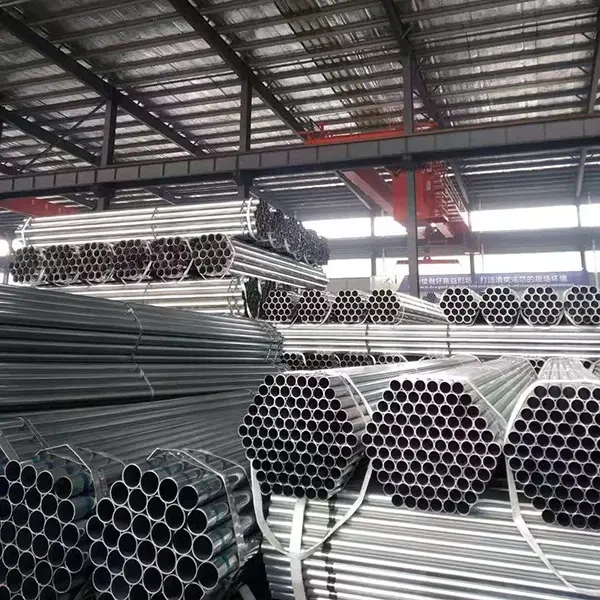
ERW (Electric Resistance Welded) galvanized steel pipe is a fundamental component across numerous industries, including construction, water conveyance, oil and gas, and structural engineering. Positioned within the steel manufacturing chain after hot or cold rolling and forming, ERW pipe is produced by longitudinally welding steel strips and then applying a protective zinc coating via galvanization. This process imbues the pipe with enhanced corrosion resistance, extending its service life in harsh environments. Core performance characteristics include pressure containment capability (dependent on wall thickness and diameter), structural load-bearing capacity, and resistance to internal and external corrosion. The selection of ERW galvanized steel pipe versus other piping materials (seamless, ductile iron, PVC) hinges on a balance of cost, mechanical properties, and the specific demands of the application. Its strength-to-weight ratio makes it a preferred choice in many scenarios where cost-effectiveness and durability are paramount.
Material Science & Manufacturing
The primary raw material for ERW galvanized steel pipe is typically low-carbon steel strip (e.g., ASTM A570). The steel’s chemical composition, crucial for weldability and mechanical properties, is tightly controlled, commonly containing carbon (C) ≤ 0.25%, manganese (Mn) ≤ 1.50%, phosphorus (P) ≤ 0.045%, and sulfur (S) ≤ 0.030%. The manufacturing process commences with the forming of steel strip into a cylindrical shape, followed by electric resistance welding. This involves passing a high electrical current through the edges of the steel strip as it’s pressed together, generating localized heating that fuses the metal without the addition of filler material. Key parameters during welding include current intensity, welding speed, and pressure applied by the welding rollers. Post-welding, the pipe undergoes normalizing to relieve residual stresses introduced during the forming and welding stages. Galvanization, typically hot-dip galvanizing according to ASTM A123, is then performed. This involves immersing the pipe in molten zinc, creating a metallurgical bond between the zinc and the steel substrate. The thickness of the zinc coating is a critical factor influencing corrosion resistance and is meticulously controlled through bath chemistry (zinc purity, aluminum content) and withdrawal speed. Quality control at each stage – strip analysis, weld inspection (non-destructive testing such as ultrasonic testing and radiographic testing), zinc coating thickness measurement, and hydrostatic testing – is essential to ensure product integrity.
Performance & Engineering
The performance of ERW galvanized steel pipe is governed by several engineering principles. From a structural perspective, hoop stress, induced by internal pressure, is a primary concern. Wall thickness and diameter are inversely proportional to hoop stress – thicker walls and smaller diameters enhance pressure containment. Calculations are performed based on Barlow's formula (S = P D / 2t, where S is hoop stress, P is internal pressure, D is diameter, and t is wall thickness). Corrosion resistance is directly related to the zinc coating’s sacrificial protection mechanism. Zinc corrodes preferentially to the steel, protecting the underlying substrate. The rate of zinc corrosion depends on environmental factors such as humidity, salinity, and the presence of pollutants. Galvanized steel pipe must meet specific environmental resistance standards depending on the application. For instance, pipelines transporting potable water must comply with NSF/ANSI 61 standards, which address lead leaching and other contaminants. Furthermore, compliance with API 5L (Specification for Line Pipe) is critical for oil and gas applications, outlining requirements for steel quality, dimensional accuracy, and mechanical properties. Fatigue resistance is another important consideration, particularly in applications involving cyclic loading. Stress concentration at welds can initiate fatigue cracks, highlighting the importance of high-quality welding and post-weld heat treatment.
Technical Specifications
| Parameter | ASTM A53 Grade B | ASTM A53 Grade A | API 5L X42 | BS EN 10255:2007 (Medium) |
|---|---|---|---|---|
| Yield Strength (MPa) | 250 | 225 | 345 | 275 |
| Tensile Strength (MPa) | 370 | 350 | 485 | 360 |
| Zinc Coating Thickness (µm) | 50-85 | 50-85 | Variable, as per specification | 45-75 |
| Wall Thickness (mm) | 2-12.7 | 2-12.7 | 6.35-25.4 | 2-12.7 |
| Outside Diameter (mm) | 10.2-660.4 | 10.2-660.4 | 21.3-1219.2 | 10.2-660.4 |
| Elongation (%) | 23 | 21 | 22 | 22 |
Failure Mode & Maintenance
ERW galvanized steel pipe can experience several failure modes. Uniform corrosion, resulting from the gradual consumption of the zinc coating and subsequent corrosion of the steel substrate, is a common issue, accelerated by exposure to harsh environments. Pitting corrosion, localized corrosion leading to small holes, can occur in the presence of chlorides. Weld defects, such as incomplete fusion or porosity, can compromise the pipe’s structural integrity, leading to cracking under stress. Hydrogen embrittlement, a phenomenon where hydrogen diffuses into the steel, reducing its ductility and causing cracking, can occur during galvanization, particularly with high-strength steels. Mechanical damage, including dents, gouges, and bending, can also induce failure. Maintenance strategies include regular visual inspections to identify signs of corrosion or damage. Periodic testing of the zinc coating thickness is recommended. For pipelines, cathodic protection systems can be implemented to mitigate corrosion. If localized corrosion is detected, localized repairs using appropriate coatings or welding techniques may be necessary. In cases of severe damage or corrosion, pipe replacement is the recommended course of action. Proper storage of pipe to prevent physical damage and exposure to corrosive elements is also crucial for long-term reliability. Furthermore, adhering to recommended operating pressures and temperatures can prevent premature failure.
Industry FAQ
Q: What is the primary difference between ASTM A53 and API 5L ERW galvanized steel pipe?
A: ASTM A53 is a general-purpose specification primarily used for structural applications and water conveyance. API 5L is specifically designed for pipelines transporting oil and gas, demanding stricter requirements for steel quality, welding procedures, and mechanical properties, including fracture toughness and resistance to sour service.
Q: How does the galvanizing process affect the weld integrity of ERW pipe?
A: The high temperatures involved in hot-dip galvanizing can potentially affect the weld’s mechanical properties, particularly in high-strength steels. Careful control of the galvanizing process parameters, including temperature and immersion time, is crucial. Post-galvanizing stress relieving may be necessary to restore weld integrity and prevent hydrogen embrittlement.
Q: What measures can be taken to prevent corrosion in buried ERW galvanized steel pipelines?
A: Cathodic protection, using sacrificial anodes or impressed current systems, is the most effective method for preventing corrosion in buried pipelines. Applying a durable external coating, such as polyethylene or epoxy, provides an additional barrier against corrosion. Regular monitoring of soil resistivity and pipeline potential is essential to ensure the effectiveness of the corrosion protection system.
Q: What is the expected lifespan of ERW galvanized steel pipe in a coastal environment?
A: The lifespan of ERW galvanized steel pipe in a coastal environment is significantly reduced due to the corrosive effects of salt spray. Expected lifespan can range from 10-20 years, depending on the zinc coating thickness, the severity of the exposure, and the implementation of corrosion mitigation measures. More robust corrosion protection systems may be required, such as duplex coatings (zinc + epoxy) or the use of stainless steel reinforcement.
Q: How does weld seam orientation influence the suitability of ERW pipe for specific applications?
A: The weld seam orientation (longitudinal or spiral) can impact the pipe's performance. Longitudinal welds are generally preferred for high-pressure applications as they offer greater resistance to hoop stress. However, spiral welds can be acceptable for lower-pressure applications, provided they meet stringent quality control standards.
Conclusion
ERW galvanized steel pipe remains a widely utilized and cost-effective solution for numerous piping applications. Its manufacturing process, anchored in established material science and welding techniques, delivers a robust product capable of withstanding a range of environmental and operational stresses. The effectiveness of the galvanization process in providing corrosion resistance, coupled with adherence to rigorous industry standards, ensures a prolonged service life.
However, a thorough understanding of potential failure modes, ranging from corrosion-related degradation to weld defects, is paramount for proper application and maintenance. Proactive implementation of corrosion mitigation strategies, coupled with regular inspections and adherence to appropriate operating parameters, is crucial for maximizing the long-term reliability and safety of ERW galvanized steel pipe installations. Continued advancements in coating technologies and steel alloys promise to further enhance the performance and lifespan of this essential industrial material.
