
Introduction
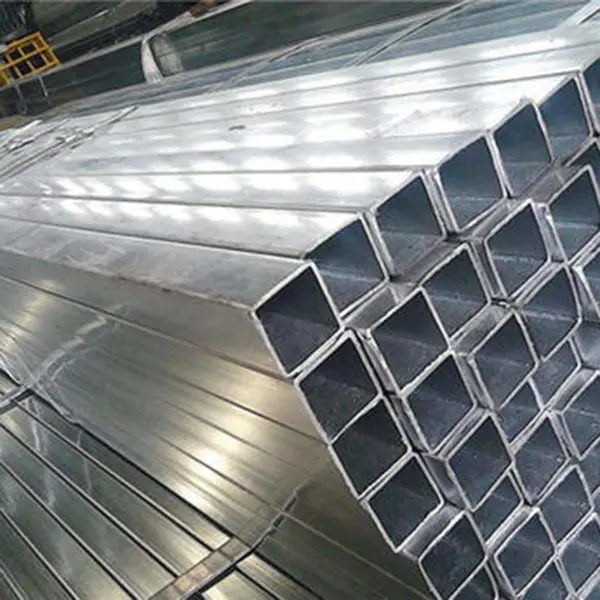
Galvanized square tube, commonly referred to as galv square tube, is a hollow structural section fabricated from steel and coated with a layer of zinc. This zinc coating provides corrosion resistance, making it a prevalent material in construction, infrastructure, manufacturing, and various industrial applications. Within the steel supply chain, galv square tube occupies a critical intermediary position, converting raw steel (produced via basic oxygen furnace or electric arc furnace routes) into a readily usable form for fabrication and assembly. Core performance characteristics center around its strength-to-weight ratio, weldability, and, crucially, its resistance to environmental degradation. The industry faces ongoing challenges related to zinc coating uniformity, formability limitations imposed by the square profile, and the rising cost of zinc itself. This guide offers an in-depth technical analysis of galv square tube, encompassing material science, manufacturing processes, performance parameters, failure modes, and relevant industry standards.
Material Science & Manufacturing
The base material for galv square tube is typically carbon steel, with grades such as ASTM A500 Grade B being commonly used. This steel possesses a predominantly ferritic microstructure with pearlite present depending on carbon content. Critical material properties include yield strength (typically 235-345 MPa), tensile strength (400-570 MPa), and elongation (16-23%). Manufacturing begins with the formation of the square tube through cold-forming or hot-rolling processes. Cold-forming offers tighter tolerances and superior surface finish but is limited by formability. Hot-rolling allows for thicker sections and larger dimensions but necessitates subsequent sizing and straightening operations. The galvanizing process itself is the cornerstone of corrosion protection. Hot-dip galvanizing, the most common method, involves immersing the steel tube in a bath of molten zinc (98% purity or higher). This creates a metallurgically bonded zinc-iron alloy layer, offering barrier protection and cathodic protection. Key process parameters during galvanizing include bath temperature (450-460°C), immersion time (sufficient for complete coating), and cooling rate (controlled to minimize distortion). Chemical composition of the steel directly impacts galvanizing adherence. Excessive silicon or phosphorus content can lead to brittle alloy layers and reduced coating quality. Post-galvanizing treatments like passivation (chromate conversion coating) may be applied to enhance corrosion resistance further, although this is becoming less common due to environmental concerns surrounding hexavalent chromium.
Performance & Engineering
The structural performance of galv square tube is governed by its section modulus (S), moment of inertia (I), and torsional properties. These parameters dictate its load-bearing capacity in bending, shear, and torsion. Finite element analysis (FEA) is frequently employed to model stress distribution under various loading scenarios, optimizing tube dimensions for specific applications. Environmental resistance is paramount. The zinc coating provides a sacrificial barrier, corroding preferentially to the steel substrate. The rate of zinc corrosion depends on atmospheric conditions (sulfur dioxide, salt spray, humidity) and the thickness of the coating (typically measured in microns). Compliance requirements vary significantly based on application and geographical location. For construction, adherence to building codes (IBC, Eurocodes) is essential. These codes specify minimum yield strength, weldability requirements, and allowable stress levels. In automotive applications, galv square tube must meet stringent dimensional tolerances and surface finish specifications. Furthermore, the galvanizing process introduces residual stresses within the material, which can affect its fatigue life. Fatigue analysis, considering stress concentration at welds and geometric discontinuities, is crucial for critical applications subjected to cyclic loading. The square profile inherently possesses lower torsional rigidity compared to circular or oval sections. This limitation must be considered in designs where torsional loads are significant.
Technical Specifications
| Parameter | Unit | Typical Value (ASTM A500 Grade B, Hot-Dip Galvanized) | Testing Standard |
|---|---|---|---|
| Yield Strength | MPa | 250 | ASTM A500 |
| Tensile Strength | MPa | 410 | ASTM A500 |
| Elongation | % | 18 | ASTM A500 |
| Zinc Coating Thickness | µm | 85 | ASTM A123 |
| Wall Thickness | mm | 2.0 - 6.35 | ASTM A500 |
| Outside Dimension | mm | 20x20 to 150x150 | ASTM A500 |
Failure Mode & Maintenance
Galv square tube can experience several failure modes. Uniform corrosion, while mitigated by the zinc coating, occurs over extended exposure to corrosive environments. Localized corrosion, such as pitting and crevice corrosion, can initiate at imperfections in the coating or at joints. Red rust formation (oxidation of the steel substrate) indicates coating failure and necessitates immediate attention. Mechanical failures include yielding, buckling, and fracture under excessive loads. Weld defects, such as porosity and incomplete fusion, significantly reduce the structural integrity of welded joints. Hydrogen embrittlement, a less common but critical failure mechanism, can occur during the galvanizing process if proper pre-treatment is not employed. Maintenance strategies center around regular inspection for coating damage (scratches, dents, corrosion) and timely application of touch-up coatings. For structures exposed to harsh environments (marine, industrial), periodic cleaning and re-coating are recommended. Proper drainage design is crucial to prevent water accumulation and accelerate corrosion. Welding procedures must adhere to established standards (AWS D1.1) to ensure joint quality. Non-destructive testing (NDT) methods, such as ultrasonic testing and magnetic particle inspection, can be employed to detect weld defects before service. Furthermore, avoiding contact between galvanized steel and dissimilar metals (e.g., aluminum) in the presence of an electrolyte can prevent galvanic corrosion.
Industry FAQ
Q: What is the impact of varying zinc coating thickness on the lifespan of galv square tube?
A: Increasing zinc coating thickness provides a proportionally longer corrosion protection lifespan. While a minimum coating thickness is often specified by standards (e.g., ASTM A123), exceeding this specification offers enhanced protection, particularly in aggressive environments. However, the relationship is not linear; diminishing returns are observed beyond a certain thickness. Cost-benefit analysis is essential, weighing the increased zinc cost against the extended service life.
Q: How does the welding process affect the corrosion resistance of galvanized steel?
A: Welding can compromise the zinc coating at the heat-affected zone, reducing corrosion resistance. The high temperatures involved can vaporize zinc, creating a brittle alloy layer. Post-weld treatment, such as zinc-rich paint or re-galvanizing, is crucial to restore the protective coating. Selecting appropriate welding parameters and shielding gases minimizes coating degradation during the welding process.
Q: What are the limitations of using galv square tube in high-temperature applications?
A: The zinc coating's melting point (419°C) limits the use of galv square tube in sustained high-temperature environments. Above approximately 200°C, the zinc coating begins to degrade, losing its protective properties. At higher temperatures, the steel substrate's strength also decreases. Alternative coatings, such as aluminizing or stainless steel cladding, are more suitable for high-temperature applications.
Q: Can galv square tube be powder coated, and if so, what surface preparation is required?
A: Yes, galv square tube can be powder coated, but proper surface preparation is critical for optimal adhesion. The galvanized surface must be thoroughly cleaned to remove any mill scale, rust, or contaminants. A phosphatizing pre-treatment is highly recommended to enhance adhesion and corrosion resistance. Direct powder coating onto galvanized steel without proper pre-treatment often results in poor adhesion and premature coating failure.
Q: How does the chemical composition of the steel substrate affect the galvanizing process and coating quality?
A: The chemical composition, specifically silicon and phosphorus content, significantly impacts galvanizing. Higher silicon content promotes the formation of thicker, more brittle alloy layers, potentially reducing coating ductility. Phosphorus can lead to a dull, powdery coating with reduced adhesion. Steel grades specifically designed for galvanizing (e.g., low-silicon steels) are preferred to ensure optimal coating quality and performance.
Conclusion
Galvanized square tube represents a robust and cost-effective structural material offering an excellent balance of strength, weldability, and corrosion resistance. Its widespread adoption across diverse industries stems from the inherent benefits of the zinc coating, providing sacrificial protection to the underlying steel substrate. Understanding the intricacies of its material science, manufacturing processes, and potential failure modes is paramount for ensuring long-term structural integrity and maximizing service life.
Future advancements in galvanizing technology, such as enhanced pre-treatment methods and the development of more durable zinc alloy coatings, will continue to improve the performance and sustainability of galv square tube. Furthermore, research into alternative corrosion protection strategies and the optimization of welding procedures will address existing industry challenges and expand the application scope of this versatile material. The continual pursuit of improved quality control and adherence to evolving industry standards will remain central to the continued success of galv square tube in demanding engineering applications.