

Introduction
Galvanized industrial pipe, typically manufactured from carbon steel, is a fundamental component in a vast array of industrial applications including fluid transfer, structural support, and process piping systems. The galvanization process – applying a protective zinc coating – provides crucial corrosion resistance, significantly extending the service life of the steel pipe, particularly in harsh environments. This guide will provide a comprehensive technical overview, detailing the material science, manufacturing processes, performance characteristics, potential failure modes, and relevant industry standards. Galvanized pipe represents a cost-effective solution compared to more exotic alloys, balancing durability with economic feasibility, and its widespread adoption necessitates a thorough understanding of its capabilities and limitations by engineers, procurement professionals, and maintenance personnel. The core performance characteristic is the longevity it provides through cathodic protection, preventing base metal corrosion.
Material Science & Manufacturing
The base material for galvanized industrial pipe is predominantly carbon steel, typically conforming to ASTM A53 Grade B or A106 Grade B specifications. These steels consist primarily of iron, with controlled additions of carbon (typically less than 0.30% by weight) and manganese (generally 0.80-1.00%). Other alloying elements such as silicon, phosphorus, and sulfur are present in limited quantities, impacting weldability and mechanical properties. The galvanization process itself relies on the electrochemical properties of zinc. Hot-dip galvanizing, the most common method, involves immersing the cleaned steel pipe in a molten zinc bath (typically 98% pure zinc) maintained at approximately 450°C (842°F). This forms a series of metallurgical layers: a zinc-iron alloy layer (zeta, gamma, delta, and alpha layers) bonded to the steel substrate, overlaid by a pure zinc layer (eta layer). The formation of these layers is critical; careful control of bath temperature, immersion time, and steel surface preparation (pickling, fluxing) is essential to achieve uniform coating thickness and strong adhesion. The zinc coating thickness, typically ranging from 50-150 μm, dictates the level of corrosion protection. Manufacturing also includes processes like seamless extrusion or Electric Resistance Welding (ERW) for pipe formation, followed by threading and end finishing. Parameter control during welding (current, voltage, speed) is vital to avoid defects that could compromise structural integrity and galvanization adherence. Pre-galvanization surface preparation – including removal of mill scale and rust – is critical to ensure a properly bonded zinc coating. Any residual surface contaminants lead to localized poor adhesion and premature corrosion.
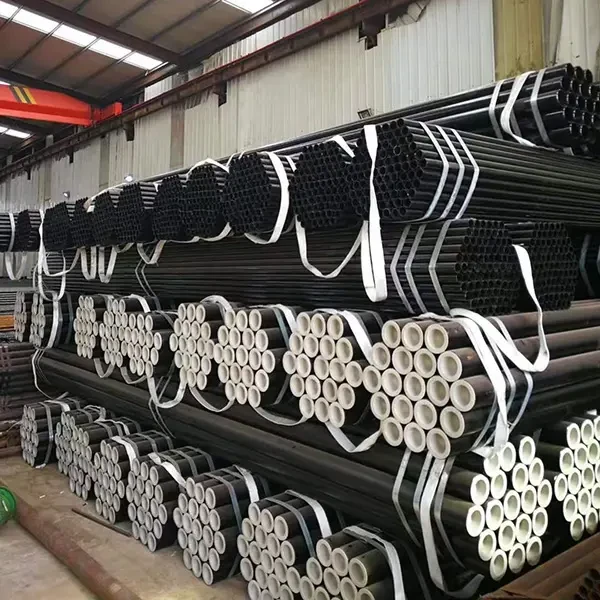
Performance & Engineering
The performance of galvanized industrial pipe is primarily dictated by its corrosion resistance and mechanical strength. The zinc coating provides cathodic protection: zinc corrodes preferentially to the steel, preventing the steel substrate from rusting. This sacrificial protection continues even if the coating is scratched or damaged. However, the rate of zinc corrosion is influenced by environmental factors such as humidity, salinity, and the presence of industrial pollutants (sulfur dioxide, chlorides). Engineering considerations include stress analysis under internal pressure and external loads. Pipe wall thickness is determined based on design pressure, safety factors, and applicable codes (e.g., ASME B31.1 for power piping). The yield strength of the underlying steel (typically 250 MPa or higher) dictates the pipe’s ability to withstand bending moments and axial loads. Galvanized pipe is susceptible to galvanic corrosion when in contact with dissimilar metals (e.g., copper, aluminum) in the presence of an electrolyte. This can be mitigated through the use of dielectric unions or coatings to isolate the dissimilar metals. Furthermore, prolonged exposure to high temperatures (above 200°C/392°F) can lead to the degradation of the zinc coating, reducing its protective effectiveness. Compliance requirements vary depending on the application. Potable water systems require compliance with NSF/ANSI 61 standards to ensure that the pipe does not leach harmful contaminants into the water. Industries handling hazardous materials may require specific certifications related to material traceability and pressure testing.
Technical Specifications
| Parameter | Unit | ASTM A53 Grade B | ASTM A106 Grade B |
|---|---|---|---|
| Yield Strength | MPa | 250 | 276 |
| Tensile Strength | MPa | 400 | 450 |
| Elongation | % | 20 | 22 |
| Wall Thickness | mm | Sch 40 (4.2mm) – Sch 80 (6.4mm) | Variable, based on pressure rating |
| Zinc Coating Thickness | μm | 50-150 | 50-150 |
| Operating Temperature | °C | -30 to 370 | -30 to 370 |
Failure Mode & Maintenance
Galvanized industrial pipe is subject to several failure modes. Uniform corrosion of the zinc coating is the most common, occurring due to atmospheric exposure and electrochemical reactions. Localized corrosion, such as pitting, can occur in the presence of chlorides or other corrosive agents, leading to rapid penetration of the coating and eventual failure of the underlying steel. White rust (zinc hydroxide) formation is common during storage and transportation in humid environments and doesn’t necessarily indicate immediate failure but suggests accelerated corrosion. Mechanical damage, including dents, scratches, and weld defects, can compromise the coating and create initiation sites for corrosion. Fatigue cracking can occur under cyclic loading, particularly at threaded connections or weld joints. Hydrogen embrittlement is a less common but potentially catastrophic failure mode, particularly in high-strength steel exposed to hydrogen sulfide or other hydrogen-generating environments. Maintenance strategies include regular visual inspections to identify areas of coating damage or corrosion. Damaged coatings can be repaired using zinc-rich paints or metallizing techniques. Periodic hydrostatic testing should be performed to verify the structural integrity of the pipe. Preventative maintenance includes controlling exposure to corrosive environments, applying protective coatings to exposed surfaces, and ensuring proper joint connections to minimize the risk of leaks and corrosion. Cathodic protection systems (sacrificial anodes or impressed current) can be implemented in critical applications to further enhance corrosion resistance. Regular cleaning to remove debris and contaminants is also crucial.
Industry FAQ
Q: What is the primary difference between Schedule 40 and Schedule 80 galvanized pipe in terms of suitability for high-pressure applications?
A: Schedule 80 pipe has a thicker wall thickness compared to Schedule 40. This increased wall thickness directly correlates to a higher pressure rating. While both can handle significant pressures, Schedule 80 is preferred for applications demanding higher safety factors or operating at substantially elevated pressures. The higher wall thickness also provides increased resistance to mechanical damage and erosion.
Q: How does the presence of chlorides in the environment affect the lifespan of galvanized pipe, and what mitigation strategies are available?
A: Chlorides significantly accelerate corrosion of galvanized coatings. They penetrate the zinc coating, disrupting the passive layer and promoting pitting corrosion. Mitigation strategies include applying a barrier coating over the galvanization (e.g., epoxy coatings), using a duplex coating system (e.g., galvanizing + powder coating), employing cathodic protection, and minimizing exposure to chloride-containing environments through proper ventilation and drainage.
Q: What are the limitations of using galvanized pipe in potable water systems, and are there alternative materials to consider?
A: While generally acceptable, galvanized pipe can contribute to zinc leaching into potable water, potentially affecting taste and aesthetic quality. Over time, scale buildup can also reduce water flow. Alternatives include copper pipe (more expensive but highly durable), CPVC (chlorinated polyvinyl chloride), and PEX (cross-linked polyethylene) which do not contribute to heavy metal contamination.
Q: What is the expected service life of galvanized pipe in a typical outdoor, industrial environment with moderate levels of pollution?
A: In a moderate industrial environment, galvanized pipe can be expected to last 20-50 years, depending on the zinc coating thickness, environmental conditions, and maintenance practices. Coastal environments with high salinity will significantly reduce the lifespan, potentially to 10-20 years. Regular inspections and preventative maintenance can extend the service life.
Q: Can galvanized pipe be welded, and if so, what precautions should be taken to maintain corrosion resistance?
A: Galvanized pipe can be welded, but it requires careful consideration. The zinc coating will vaporize during welding, producing harmful fumes that require adequate ventilation. The heat-affected zone (HAZ) will experience a loss of zinc protection, making it susceptible to corrosion. After welding, the HAZ should be immediately coated with a zinc-rich paint or metallized to restore the protective layer.
Conclusion
Galvanized industrial pipe remains a widely utilized material for fluid conveyance and structural applications due to its cost-effectiveness and inherent corrosion resistance. The hot-dip galvanization process provides a robust barrier against environmental degradation, extending the service life of the steel substrate. However, understanding the limitations – susceptibility to localized corrosion, galvanic corrosion, and potential for coating damage – is crucial for ensuring long-term reliability.
Proactive maintenance strategies, including regular inspections, coating repairs, and appropriate material selection for specific environments, are essential for maximizing the lifespan of galvanized pipe systems. Future advancements in coating technologies and corrosion monitoring techniques will continue to enhance the performance and durability of galvanized steel infrastructure. Careful consideration of the specific application requirements, adherence to relevant industry standards, and diligent maintenance practices will ensure the continued viability of galvanized pipe as a valuable engineering material.
