
Introduction
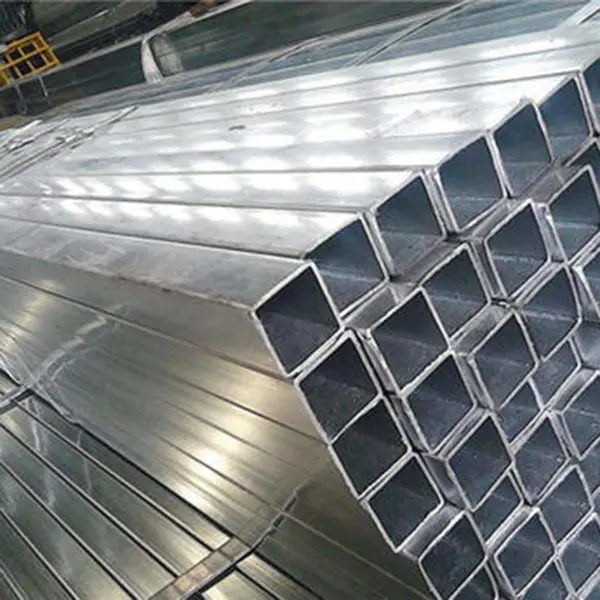
Galvanized metal square tube is a hollow structural section formed by welding or cold-forming steel sheet, subsequently coated with a zinc layer. Its primary function is to provide a high strength-to-weight ratio, corrosion resistance, and design versatility across a multitude of structural and industrial applications. Within the broader steel product chain, galvanized square tube occupies a critical position as a prefabricated component utilized in construction, manufacturing, infrastructure, and agricultural sectors. Core performance characteristics encompass yield strength, tensile strength, corrosion protection level (dependent on zinc coating thickness), dimensional accuracy, and weldability. The zinc coating acts as a sacrificial anode, protecting the underlying steel from environmental degradation. Industry pain points revolve around consistent zinc coating quality, the prevention of white rust formation during transportation and storage, and achieving precise dimensional tolerances to facilitate assembly processes. Furthermore, understanding the effects of prolonged exposure to specific chemical environments and elevated temperatures on coating longevity is crucial for long-term performance prediction.
Material Science & Manufacturing
The base material for galvanized square tube is typically carbon steel, often conforming to standards like ASTM A500 Grade B or equivalent EN 10210 S235JR. The steel's composition influences weldability, ductility, and susceptibility to corrosion. Manufacturing commences with the slitting and forming of steel coils into the desired square tube shape. This can be achieved via cold-forming, where the steel is passed through a series of rollers to progressively shape the section, or through welding of pre-formed steel strips. Subsequent to forming, the tubes undergo a cleaning process to remove oils, rust, and mill scale – typically involving alkaline cleaning, acid pickling, and fluxing. The galvanization process is the core of production. Hot-dip galvanizing is the most prevalent method; tubes are immersed in a bath of molten zinc (typically 98% pure) at approximately 450°C (842°F). A metallurgical reaction occurs, forming a series of zinc-iron alloy layers, culminating in an outer layer of pure zinc. Critical parameters include bath temperature, immersion time, steel surface preparation quality, and cooling rate. Zinc coating thickness is carefully controlled and measured (typically in grams per square meter or microns) to meet specified corrosion protection requirements. Post-galvanization, tubes may undergo inspection, cutting to length, and, potentially, end finishing such as threading or flanging. Control of the cooling process is vital to prevent distortion and ensure the formation of a uniform, adherent zinc coating. Variations in steel chemistry (e.g., silicon content) can affect the reactivity with zinc and influence coating adhesion.

Performance & Engineering
The performance of galvanized square tube in structural applications is governed by principles of mechanics and material science. Force analysis, including bending moment resistance, shear force capacity, and axial load-bearing capability, is crucial for ensuring structural integrity. Section modulus and moment of inertia are key geometric properties that dictate bending resistance. Corrosion resistance, the primary advantage of galvanization, is dependent on the coating thickness and the environmental conditions. Exposure to chlorides (e.g., saltwater environments) accelerates corrosion rates. Galvanic corrosion can occur when galvanized steel is in contact with dissimilar metals in the presence of an electrolyte. Compliance requirements are stringent, particularly in construction, where galvanized square tube must adhere to building codes and standards related to fire resistance, load-bearing capacity, and corrosion protection. Engineering considerations also include weldability – preheating and appropriate welding procedures are necessary to maintain the integrity of both the steel and the zinc coating. Furthermore, understanding the impact of thermal expansion and contraction, particularly in long spans, is important to prevent stress buildup. Finite element analysis (FEA) is frequently employed to model complex loading scenarios and optimize tube section sizes for specific applications. The zinc coating's performance is also affected by operating temperature; elevated temperatures can accelerate corrosion rates of the zinc itself.
Technical Specifications
| Parameter | Typical Value (ASTM A500 Grade B, Hot-Dip Galvanized) | Units | Testing Standard |
|---|---|---|---|
| Yield Strength | 250 | MPa | ASTM A500 |
| Tensile Strength | 450 | MPa | ASTM A500 |
| Zinc Coating Thickness | 85-140 | µm (or g/m²) | ASTM A653 |
| Wall Thickness | 1.5-6.0 | mm | ASTM A500 |
| Squareness Tolerance | ±0.5 | mm | EN 10210 |
| Elongation | 18 | % | ASTM A500 |
Failure Mode & Maintenance
Galvanized square tube, despite its corrosion resistance, is susceptible to various failure modes. Uniform corrosion occurs when the zinc coating is depleted, exposing the underlying steel to the environment. This process is accelerated in acidic or chloride-rich environments. Pitting corrosion, a localized form of corrosion, can initiate at defects in the zinc coating. White rust (zinc oxide/hydroxide) formation is a common issue, particularly during storage and transportation in humid conditions. It doesn't directly compromise structural integrity but indicates coating degradation. Fatigue cracking can occur under cyclic loading, initiating at stress concentration points (e.g., welds, corners). Galvanic corrosion arises when the galvanized tube is in electrical contact with a more noble metal in the presence of an electrolyte. Maintenance strategies include regular inspection for signs of corrosion, cleaning to remove dirt and contaminants, and the application of protective coatings (e.g., paint, epoxy) to supplement the zinc coating. Repairing damaged zinc coatings via zinc-rich paints or localized hot-dip galvanizing is possible. For structures exposed to harsh environments, sacrificial anodes (e.g., magnesium or aluminum) can be incorporated to provide additional cathodic protection. Avoiding contact with dissimilar metals and ensuring proper drainage to prevent water accumulation are crucial preventative measures. Periodic re-galvanizing may be required for long-term corrosion protection in severely corrosive environments. Proper welding techniques are essential to avoid damaging the zinc coating and creating corrosion cells.
Industry FAQ
Q: What is the impact of weld spatter on the corrosion resistance of galvanized tube?
A: Weld spatter deposits metallic iron onto the galvanized surface, creating localized galvanic cells that accelerate corrosion. The iron acts as the anode, corroding preferentially to the zinc. Removal of weld spatter and application of a zinc-rich repair paint are essential to restore corrosion protection in the affected areas.
Q: How does the silicon content in the steel substrate affect the galvanizing process?
A: Higher silicon content in the steel can lead to a thicker, more brittle zinc coating due to increased reactivity between iron and silicon during the hot-dip galvanizing process. This can sometimes result in reduced coating adhesion and increased susceptibility to cracking.
Q: What is the difference between G90 and G100 galvanizing, and which is preferable for outdoor structural applications?
A: G90 and G100 refer to the zinc coating weight in ounces per square foot. G100 (approximately 140 µm coating thickness) provides a heavier zinc coating and superior corrosion protection compared to G90 (approximately 85 µm). For outdoor structural applications, particularly in corrosive environments, G100 is generally preferable.
Q: Can galvanized square tube be powder coated, and what precautions should be taken?
A: Yes, galvanized square tube can be powder coated, but proper surface preparation is crucial. The galvanized surface must be thoroughly cleaned and degreased to ensure good adhesion of the powder coating. A zinc phosphate conversion coating is often applied as a primer to enhance adhesion and provide additional corrosion protection.
Q: What are the common causes of premature zinc coating failure in marine environments?
A: Premature failure in marine environments is typically caused by the high chloride concentration, which accelerates corrosion. Differential aeration corrosion, erosion, and mechanical damage to the coating also contribute. Regularly inspecting and maintaining the coating, and employing sacrificial anodes are vital.
Conclusion
Galvanized metal square tube represents a versatile and cost-effective structural material, particularly where corrosion resistance is paramount. The hot-dip galvanizing process provides a robust protective barrier, significantly extending the service life of steel structures. However, long-term performance is heavily reliant on meticulous manufacturing control, proper surface preparation, and diligent maintenance. Understanding the potential failure modes – including uniform corrosion, pitting, and white rust – is essential for implementing effective preventative strategies.
Future advancements may focus on optimizing zinc alloy compositions to enhance corrosion resistance and ductility, as well as developing more environmentally friendly galvanizing processes. Furthermore, improved non-destructive testing methods for assessing coating quality will play a critical role in ensuring structural integrity and minimizing life-cycle costs. Continued research into coating adhesion mechanisms and the mitigation of galvanic corrosion will further solidify the position of galvanized square tube as a cornerstone material in numerous industries.
