
Introduction
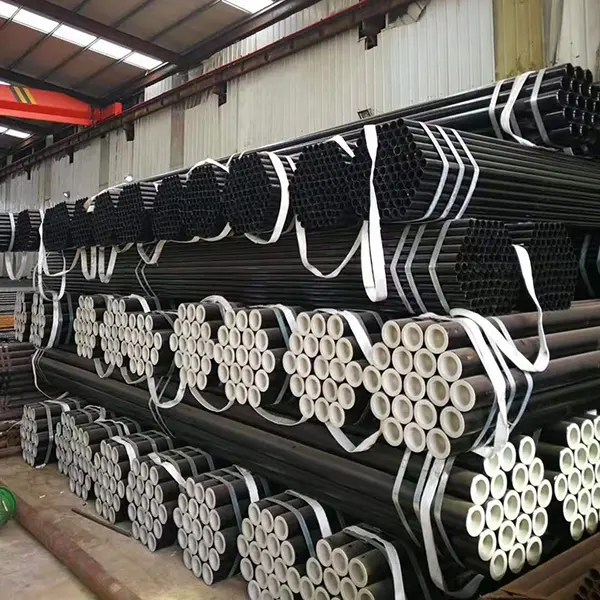
Galvanized steel pipe, specifically 3-inch diameter, is a fundamental component in fluid transport systems across numerous industries, including water distribution, fire suppression, plumbing, and structural applications. This technical guide provides an in-depth examination of its material science, manufacturing processes, performance characteristics, potential failure modes, and relevant industry standards. Galvanization, the process of applying a protective zinc coating to steel, provides crucial corrosion resistance, extending the service life of the pipe and reducing maintenance costs. The 3-inch nominal pipe size represents a common dimension offering a balance between flow capacity and structural integrity for medium-pressure applications. Understanding the nuanced properties and limitations of galvanized steel pipe is critical for engineers, procurement managers, and maintenance personnel to ensure system reliability and long-term performance. The core pain point within the industry revolves around balancing initial cost with long-term corrosion protection and maintaining consistent zinc coating quality.
Material Science & Manufacturing
The base material for 3-inch galvanized steel pipe is typically carbon steel, conforming to standards such as ASTM A53 Grade B. This steel consists primarily of iron, with controlled amounts of carbon (typically less than 0.3%) and other alloying elements like manganese, silicon, and phosphorus. The mechanical properties of the base steel – yield strength, tensile strength, and ductility – are crucial determinants of the pipe's structural capacity. Manufacturing begins with the production of seamless or welded steel pipe. Seamless pipes are created through processes like extrusion or piercing, resulting in a homogenous structure without weld seams. Welded pipes, conversely, are formed by rolling steel plates into cylindrical shapes and joining the edges via electric resistance welding (ERW) or submerged arc welding (SAW). Following pipe formation, surface preparation is paramount for effective galvanization. This involves pickling with hydrochloric or sulfuric acid to remove mill scale and rust, followed by fluxing to enhance zinc adhesion. The galvanization process itself is most commonly hot-dip galvanizing, where the steel pipe is immersed in a molten zinc bath (typically 98% pure zinc) at around 450°C. The resulting metallurgical reaction forms a series of zinc-iron alloy layers, providing a robust barrier against corrosion. Key parameters controlled during galvanization include bath temperature, immersion time, zinc bath chemistry (iron content, lead content), and cooling rate. The thickness of the zinc coating, typically ranging from 50 to 80 microns, is a critical factor in determining corrosion resistance. Post-galvanization, pipes undergo inspection for coating uniformity, thickness, and potential defects.
Performance & Engineering
The performance of 3-inch galvanized steel pipe is dictated by several engineering considerations. Hydrostatic pressure testing is mandatory to verify the pipe’s ability to withstand internal pressures without failure. Test pressures are typically 1.5 times the pipe’s working pressure, as defined by ASME B31.1 for power piping or similar standards. Corrosion resistance, conferred by the zinc coating, is the primary performance advantage. Zinc acts as a sacrificial anode, corroding preferentially to the steel substrate and protecting it from rust. However, the rate of zinc corrosion depends on environmental factors, including pH, salinity, and exposure to pollutants. Galvanized steel pipe exhibits good mechanical strength and can withstand significant loads. However, long-term exposure to sustained stresses, particularly in corrosive environments, can lead to stress corrosion cracking. The pipe's weight (approximately 11.8 lbs/ft for Schedule 40) must be accounted for in structural support designs. Thermal expansion and contraction, due to temperature fluctuations, also need consideration to prevent excessive stress on joints and connections. The coefficient of thermal expansion for steel is approximately 6.5 x 10⁻⁶ /°C. For applications involving flammable fluids, adherence to fire safety regulations is essential. While galvanized steel itself is not flammable, the zinc coating can release fumes upon heating. Compliance with relevant building codes and industry standards (e.g., NFPA 13 for sprinkler systems) is paramount.
Technical Specifications
| Parameter | Schedule 40 | Schedule 80 | ASTM A53 Grade B |
|---|---|---|---|
| Nominal Pipe Size (in) | 3 | 3 | 3 |
| Outside Diameter (in) | 3.5 | 3.5 | 3.5 |
| Wall Thickness (in) | 0.218 | 0.280 | Variable |
| Minimum Yield Strength (psi) | 36,000 | 36,000 | 36,000 |
| Minimum Tensile Strength (psi) | 58,000 | 58,000 | 58,000 |
| Zinc Coating Thickness (μm) | 50-80 | 50-80 | Typically 50-80 |
Failure Mode & Maintenance
Several failure modes can affect 3-inch galvanized steel pipe. Uniform corrosion, where the zinc coating gradually corrodes, is a common occurrence, particularly in harsh environments. However, localized corrosion, such as pitting corrosion and crevice corrosion, can accelerate the deterioration process. Pitting corrosion occurs due to localized breaches in the zinc coating, leading to concentrated attack at specific points. Crevice corrosion arises in shielded areas, such as under gaskets or at threaded connections, where oxygen depletion promotes corrosion. Galvanic corrosion can occur when the galvanized steel pipe is electrically connected to a dissimilar metal in the presence of an electrolyte. Hydrogen embrittlement, a phenomenon where hydrogen atoms diffuse into the steel lattice, can lead to cracking and reduced ductility, especially at high stresses. Mechanical damage, such as dents, gouges, and cracks, can compromise the integrity of the pipe. Fatigue cracking can occur under cyclic loading, particularly at weld seams or stress concentrators. Maintenance practices are crucial to extend the lifespan of galvanized steel pipe. Regular inspection for corrosion, damage, and leaks is essential. Damaged coatings should be repaired using zinc-rich paints or coatings. Connections should be tightened periodically to prevent leaks. The pipe should be properly supported to prevent excessive stress and deflection. In highly corrosive environments, cathodic protection systems can be implemented to mitigate corrosion rates. Internal cleaning to remove sediment and scale buildup can also help prevent corrosion.
Industry FAQ
Q: What is the expected service life of a 3-inch galvanized steel pipe in a typical potable water distribution system?
A: The expected service life varies significantly based on water quality (pH, chloride content, dissolved oxygen), soil conditions (if buried), and maintenance practices. Under optimal conditions (neutral pH water, low chloride levels, regular inspection), a service life of 50-70 years is achievable. However, in aggressive environments, the lifespan may be reduced to 20-30 years.
Q: How does the galvanization process affect the weldability of steel pipe?
A: The zinc coating must be completely removed from the weld area prior to welding to prevent zinc fumes (which are toxic) and to ensure a sound weld. Proper surface preparation, including grinding or sandblasting, is essential. The heat of welding can also alter the properties of the zinc coating in adjacent areas, potentially reducing corrosion resistance.
Q: What are the advantages and disadvantages of using galvanized steel pipe compared to ductile iron pipe?
A: Galvanized steel is generally more cost-effective upfront and lighter in weight. However, ductile iron offers superior strength, ductility, and resistance to corrosion, particularly in aggressive soils. Ductile iron also has a longer service life and requires less maintenance. Galvanized steel is more susceptible to pitting corrosion and requires more frequent inspection.
Q: Is galvanized steel pipe suitable for high-pressure applications?
A: While galvanized steel pipe can handle moderate pressures, it is generally not recommended for high-pressure applications (above 200 psi) due to the potential for corrosion-induced weakening and the risk of catastrophic failure. For high-pressure systems, seamless steel pipe or ductile iron pipe are preferred.
Q: What steps can be taken to mitigate the risk of galvanic corrosion when connecting galvanized steel pipe to other metals?
A: Use dielectric unions or fittings to electrically isolate the galvanized steel pipe from dissimilar metals. Apply a protective coating to both metals at the connection point. Consider using compatible metals whenever possible. Ensure that the environment is not conducive to corrosion (e.g., minimize exposure to electrolytes).
Conclusion
3-inch galvanized steel pipe remains a widely used material for fluid conveyance due to its cost-effectiveness and inherent corrosion resistance, albeit limited in specific environments. Its performance is intricately linked to the quality of the galvanization process, the properties of the underlying steel substrate, and the operating conditions of the system. Understanding the potential failure modes – including uniform corrosion, pitting, galvanic corrosion, and mechanical damage – is critical for effective maintenance and ensuring long-term reliability.
Continued advancements in coating technologies and corrosion inhibitors may enhance the lifespan and performance of galvanized steel pipe. Future research should focus on developing more durable zinc coatings and exploring alternative corrosion protection methods. Selecting the appropriate pipe material requires a thorough evaluation of the application's specific requirements, considering factors such as pressure, temperature, fluid compatibility, and environmental conditions, ultimately balancing cost with longevity and system integrity.