
Introduction
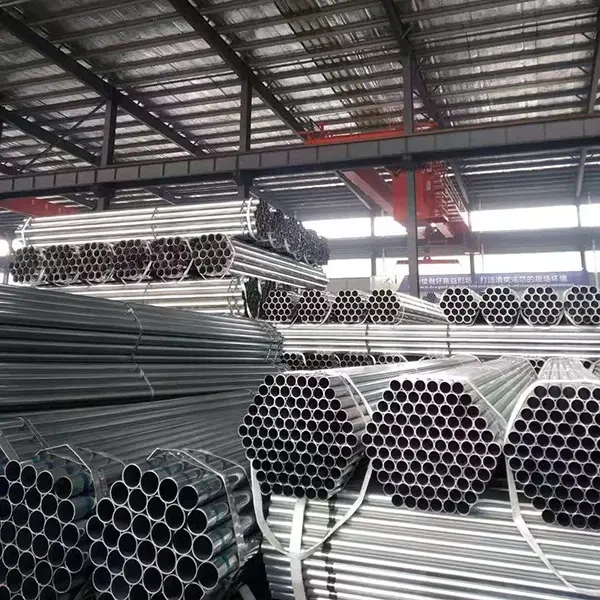
Galvanized Iron (GI) Pipe, specifically seamless GI pipe, represents a critical component in fluid conveyance systems across diverse industries, including water distribution, oil and gas, construction, and agriculture. Seamless pipes are manufactured without a welded seam, providing superior strength and resistance to pressure compared to welded alternatives. The galvanization process, involving a zinc coating, imparts corrosion resistance, extending the service life in harsh environmental conditions. This guide will provide an in-depth examination of seamless GI pipe, covering material science, manufacturing processes, performance characteristics, potential failure modes, and relevant industry standards. A key challenge in the selection and application of GI pipe lies in understanding the limitations of zinc coatings regarding temperature and pH exposure, and proactively mitigating potential corrosion issues through appropriate material selection and protective measures. Seamless GI pipe fulfills a crucial role in infrastructure development and industrial applications where reliability and longevity are paramount.
Material Science & Manufacturing
Seamless GI pipe begins with the production of steel, typically carbon steel conforming to specifications like ASTM A53 Grade B or equivalent. The steel’s chemical composition significantly impacts its weldability, ductility, and corrosion resistance. Key elements include carbon (C), manganese (Mn), silicon (Si), phosphorus (P), and sulfur (S), each contributing to the steel’s overall properties. The manufacturing process commences with heating a solid billet of steel to a high temperature, followed by extrusion through a die and piercing a mandrel to create a seamless hollow tube. Critical parameters during extrusion include temperature control (typically 1100-1300°C) to ensure proper material flow and avoid cracking, and the reduction ratio, which dictates the pipe's final dimensions and wall thickness. Following extrusion, the pipe undergoes normalizing and pickling to remove surface scale and prepare it for galvanization. The galvanization process, most commonly hot-dip galvanizing, involves immersing the steel pipe in a molten zinc bath (typically 450-460°C). This creates a metallurgical bond, forming a series of zinc-iron alloy layers protected by an outer layer of pure zinc. The coating thickness is a crucial parameter, typically ranging from 50-300 μm, and is meticulously controlled to achieve the desired level of corrosion protection. The adherence of the zinc coating is impacted by surface preparation; thorough pickling and cleaning are essential. Post-galvanization, the pipe is inspected for coating defects and dimensional accuracy.
Performance & Engineering
The performance of seamless GI pipe is largely dictated by its mechanical strength, corrosion resistance, and ability to withstand internal and external pressures. Stress analysis is critical in determining the appropriate wall thickness for a given application, considering factors such as operating pressure, temperature, and fluid properties. Burst pressure, calculated using Barlow’s formula (P = 2St/D, where P is pressure, S is tensile strength, t is wall thickness, and D is outer diameter), dictates the pipe’s maximum allowable pressure. Corrosion resistance is primarily provided by the zinc coating, which acts as a sacrificial anode, corroding preferentially to the steel. However, the effectiveness of this protection diminishes in environments with low or high pH levels. Electrochemical corrosion mechanisms, including galvanic corrosion and pitting corrosion, can accelerate degradation. The mechanical properties of the steel substrate, including yield strength, tensile strength, and elongation, are also important. Seamless GI pipe must conform to relevant engineering codes and standards, such as ASME B31.1 for power piping and ASME B31.3 for process piping, which specify design requirements, material selection criteria, and inspection procedures. Fatigue performance under cyclic loading is also a crucial consideration, particularly in applications involving vibration or pressure fluctuations. The choice of fittings and joining methods (e.g., threaded, welded, flanged) significantly impacts the overall integrity and performance of the piping system.
Technical Specifications
| Parameter | ASTM A53 Grade B | EN 10255:2007 (HDG) | DIN 2440 |
|---|---|---|---|
| Outer Diameter (mm) | 1/2" - 8" (13.7 - 219.1) | 10.2 - 610 | 10.2 - 610 |
| Wall Thickness (mm) | Schedule 40, 80, 160 | 1.5 - 10 | 1.5 - 10 |
| Yield Strength (MPa) | 250 | ≥235 | ≥235 |
| Tensile Strength (MPa) | 450 | ≥360 | ≥360 |
| Zinc Coating Thickness (µm) | Typically 50-300 | ≥45 (depending on diameter) | ≥45 (depending on diameter) |
| Chemical Composition (Max %C) | 0.30 | 0.22 | 0.25 |
Failure Mode & Maintenance
Seamless GI pipe is susceptible to several failure modes. Uniform corrosion, resulting from the gradual erosion of the zinc coating and subsequent corrosion of the steel substrate, is a common occurrence, particularly in marine or industrial environments. Pitting corrosion, characterized by localized attack, can occur in the presence of chlorides or other aggressive ions. Galvanic corrosion arises when GI pipe is connected to dissimilar metals in an electrolyte, accelerating the corrosion of the more anodic metal. Underground installations are prone to soil-induced corrosion, influenced by soil resistivity, pH, and moisture content. Mechanical failures include ductile fracture due to overpressure or impact, and fatigue cracking resulting from cyclic loading. Hydrogen embrittlement can occur in high-strength steels exposed to hydrogen-containing environments, leading to brittle failure. Maintenance strategies include regular inspection for coating damage and corrosion products, application of protective coatings (e.g., epoxy, polyurethane) to damaged areas, and cathodic protection for underground pipelines. Pressure testing and non-destructive examination (NDE) techniques, such as ultrasonic testing and radiography, can identify defects and assess the structural integrity of the pipe. Routine cleaning to remove debris and scale is also important. Periodic replacement of sections exhibiting significant corrosion or damage is a proactive maintenance measure. Proper grounding of the pipeline is essential to minimize galvanic corrosion.
Industry FAQ
Q: What is the primary advantage of seamless GI pipe over welded GI pipe in high-pressure applications?
A: The absence of a weld seam in seamless pipe eliminates a potential point of weakness and failure. Weld seams, even with rigorous quality control, can be susceptible to cracking and corrosion, particularly under high stress and cyclic loading. Seamless pipe offers superior strength and reliability in high-pressure environments.
Q: How does the pH of the surrounding environment affect the corrosion rate of galvanized steel?
A: Galvanized steel exhibits optimal corrosion resistance within a pH range of approximately 6.5 to 8.5. Acidic conditions (pH < 6) accelerate the dissolution of the zinc coating and subsequent corrosion of the steel. Alkaline conditions (pH > 9) can lead to the formation of zinc oxides and hydroxides, reducing the coating's protective properties.
Q: What are the limitations of hot-dip galvanizing in high-temperature applications?
A: At elevated temperatures (above approximately 200°C), the zinc coating can undergo creep and diffusion, reducing its thickness and protective capacity. The zinc can also react with other elements in the environment, forming volatile compounds. For high-temperature applications, alternative corrosion protection methods, such as aluminizing or specialized coatings, are often required.
Q: What NDE methods are typically used to inspect seamless GI pipe during manufacturing and in-service?
A: Common NDE methods include ultrasonic testing (UT) to detect internal flaws and measure wall thickness, radiographic testing (RT) to identify defects in the pipe body, and magnetic particle inspection (MPI) to detect surface cracks. Visual inspection is also crucial for identifying surface defects and coating imperfections.
Q: Can GI pipe be used for potable water systems, and what are the potential concerns?
A: GI pipe can be used for potable water systems, but it’s crucial to ensure proper passivation of the inner surface to minimize lead and zinc leaching into the water. Initial water flow may exhibit a metallic taste due to zinc dissolution. Modern GI pipes often have reduced lead content, and regulations limit permissible levels of lead and zinc in drinking water.
Conclusion
Seamless GI pipe remains a widely utilized material for fluid conveyance due to its combination of strength, corrosion resistance, and cost-effectiveness. The manufacturing process, from steel production to galvanization, is critical to ensuring the final product meets stringent quality standards. Understanding the failure modes and implementing appropriate maintenance strategies are essential for maximizing the service life of GI piping systems.
The selection of seamless GI pipe should be predicated on a thorough evaluation of the application’s specific requirements, including operating pressure, temperature, fluid compatibility, and environmental conditions. Continual advancements in coating technologies and corrosion protection methods will further enhance the performance and longevity of GI pipe in challenging applications. Adherence to relevant industry standards and best practices is paramount to ensuring the safe and reliable operation of these critical infrastructure components.
