
Introduction
Galvanized (GI) square pipe represents a foundational structural component across numerous industrial and construction applications. This guide provides an in-depth technical assessment of GI square pipe, addressing its material composition, manufacturing processes, performance characteristics, potential failure modes, and relevant industry standards. Within the broader piping system landscape, GI square pipe occupies a significant niche due to its cost-effectiveness, adequate corrosion resistance for many environments, and suitability for structural support and fluid conveyance. The 'price list' aspect is intrinsically linked to factors such as material grade, wall thickness, dimensional accuracy, and market demand, all of which are determined by the underlying manufacturing and performance capabilities. This document seeks to dissect these interconnected elements, providing a comprehensive technical understanding for procurement professionals, engineers, and quality control personnel. Core performance metrics include yield strength, tensile strength, corrosion resistance (measured in salt spray hours), and dimensional tolerances. Understanding these parameters is crucial for ensuring the structural integrity and longevity of any system utilizing GI square pipe.
Material Science & Manufacturing
GI square pipe is typically manufactured from carbon steel, specifically low-carbon steel conforming to standards like ASTM A53 Grade B or equivalent EN 10210 S235JR. The raw material’s chemical composition is critical, impacting weldability, ductility, and corrosion resistance. Key elements monitored include carbon (C), manganese (Mn), phosphorus (P), sulfur (S), and silicon (Si). The galvanization process, employing hot-dip galvanizing, is fundamental. This involves immersing the steel pipe in a molten zinc bath, creating a metallurgical bond and a protective zinc coating. The coating thickness is meticulously controlled, typically ranging from 50 to 150 μm, affecting corrosion protection levels. Manufacturing begins with the formation of the square profile, achieved through cold-forming or welding processes. Cold-forming involves passing steel strips through a series of rollers to achieve the desired square shape. Welding utilizes electric resistance welding (ERW) or submerged arc welding (SAW). Post-welding, non-destructive testing (NDT) like ultrasonic testing (UT) is employed to detect defects such as porosity or lack of fusion. Precise control of welding parameters – current, voltage, speed – is vital to ensure weld integrity. Heat treatment may be applied to relieve stresses induced during forming or welding, enhancing ductility and reducing the risk of cracking. Quality control focuses on dimensional accuracy (squareness, wall thickness) and coating adherence, utilizing techniques like magnetic particle inspection (MPI) and coating thickness gauges.
Performance & Engineering
The performance of GI square pipe is fundamentally governed by its structural integrity and corrosion resistance. Force analysis, particularly bending moment and torsional stress calculations, are crucial for selecting appropriate pipe dimensions and wall thicknesses for specific load-bearing applications. Buckling analysis is also essential, especially for long, unsupported spans. Environmental resistance is primarily determined by the zinc coating’s ability to provide barrier protection and sacrificial corrosion. Factors impacting corrosion rates include humidity, temperature, salinity, and the presence of pollutants. The coating’s longevity is evaluated through salt spray testing (ASTM B117), typically expressed in hours to corrosion initiation. GI square pipe’s performance is also affected by its susceptibility to galvanic corrosion when in contact with dissimilar metals. Proper insulation or the use of compatible materials is necessary to mitigate this risk. Compliance requirements vary geographically and by application. For structural applications, building codes such as IBC (International Building Code) and Eurocode 3 dictate design criteria and material specifications. For fluid conveyance, standards like ANSI B31.1 (Power Piping) or equivalent national standards apply. Additionally, specific industries (e.g., oil & gas, water treatment) may have their own stringent performance and quality requirements. The mechanical properties of the underlying steel, including yield strength, tensile strength, and elongation, play a pivotal role in determining the pipe’s load-carrying capacity.
Technical Specifications
| Parameter | Unit | ASTM A53 Grade B (Typical) | EN 10210 S235JR (Typical) |
|---|---|---|---|
| Yield Strength | MPa | 250 | 235 |
| Tensile Strength | MPa | 450 | 360 |
| Elongation | % | 23 | 20 |
| Wall Thickness | mm | 1.0 - 6.35 | 1.0 - 6.35 |
| Zinc Coating Thickness | μm | 50 - 150 | 50 - 150 |
| Salt Spray Resistance | Hours | >720 | >720 |
Failure Mode & Maintenance
GI square pipe is susceptible to several failure modes. Corrosion is the most prevalent, manifesting as localized pitting, uniform corrosion, or galvanic corrosion. The zinc coating provides protection, but eventually, it will deplete, exposing the underlying steel to corrosion. Mechanical failures include fatigue cracking, particularly under cyclic loading, and yielding or buckling under excessive stress. Weld defects, such as porosity or incomplete fusion, can also lead to premature failure. Physical damage from impact or abrasion can compromise the coating and expose the steel. Oxidation can occur at high temperatures, accelerating corrosion. Maintenance strategies include regular visual inspections for signs of corrosion, coating damage, or deformation. Damaged coatings should be repaired using zinc-rich paints. Periodic cleaning to remove contaminants (e.g., salt, dirt) is crucial. For applications involving corrosive environments, cathodic protection may be considered. Preventive maintenance programs should also include torque checks on bolted connections and regular inspection of supports. In case of significant corrosion or damage, pipe replacement is necessary. A thorough failure analysis, including metallographic examination and chemical analysis, is vital to determine the root cause of failure and prevent recurrence.
Industry FAQ
Q: What is the typical lifespan of a galvanized square pipe in a coastal environment?
A: The lifespan varies significantly based on zinc coating thickness and salt concentration. Typically, expect 10-20 years with a 75-150μm coating in moderately corrosive coastal areas. More aggressive environments necessitate thicker coatings or alternative corrosion protection methods.
Q: How does welding affect the galvanization on GI square pipe?
A: Welding burns off the zinc coating in the heat-affected zone, creating a non-protected area prone to corrosion. Post-weld galvanizing or application of a zinc-rich coating is essential to restore corrosion protection.
Q: What is the difference between hot-dip galvanizing and electrogalvanizing for square pipe?
A: Hot-dip galvanizing provides a thicker, more durable coating with better adhesion. Electrogalvanizing offers a thinner, more uniform coating but generally provides less corrosion protection. Hot-dip galvanizing is preferred for structural applications.
Q: Can GI square pipe be used for potable water applications?
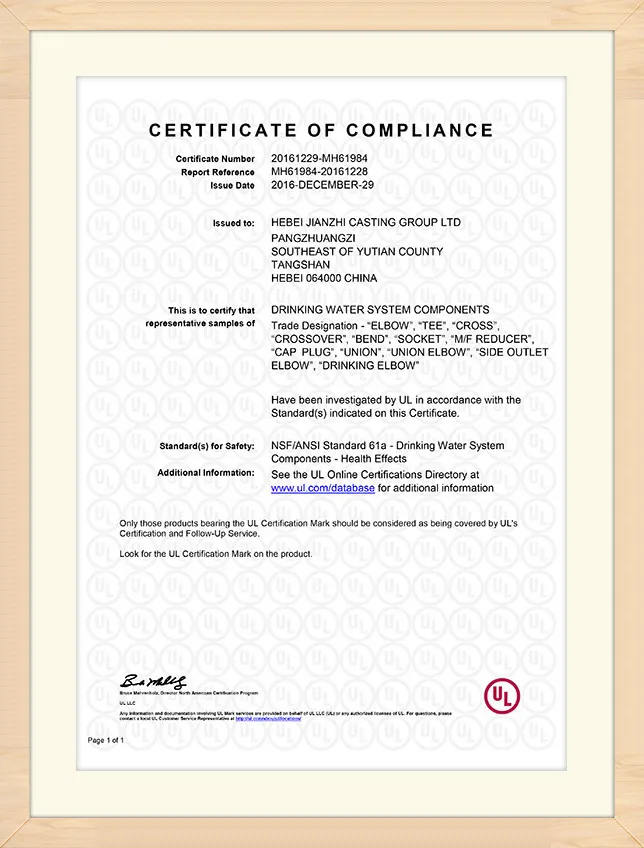
A: While generally acceptable, it’s crucial to verify compliance with local potable water regulations. Some jurisdictions require internal coatings to prevent zinc leaching into the water supply. NSF/ANSI 61 certification is often required.
Q: What are the limitations of using GI square pipe in high-temperature environments?
A: The zinc coating begins to degrade at temperatures above approximately 200°C (392°F). High-temperature oxidation can also accelerate corrosion. Alternative materials like stainless steel are recommended for sustained high-temperature applications.
Conclusion
GI square pipe remains a versatile and cost-effective structural material, particularly when corrosion resistance requirements are moderate. A comprehensive understanding of its material science, manufacturing processes, and potential failure modes is paramount for ensuring long-term performance and reliability. The price of GI square pipe is directly correlated with its material grade, dimensional accuracy, and the quality of the galvanization process.
Moving forward, advancements in coating technology, such as duplex systems combining galvanizing with organic coatings, are expected to further enhance corrosion protection and extend service life. Careful consideration of application-specific requirements, coupled with diligent maintenance practices, will maximize the value and longevity of GI square pipe installations.
