

Introduction
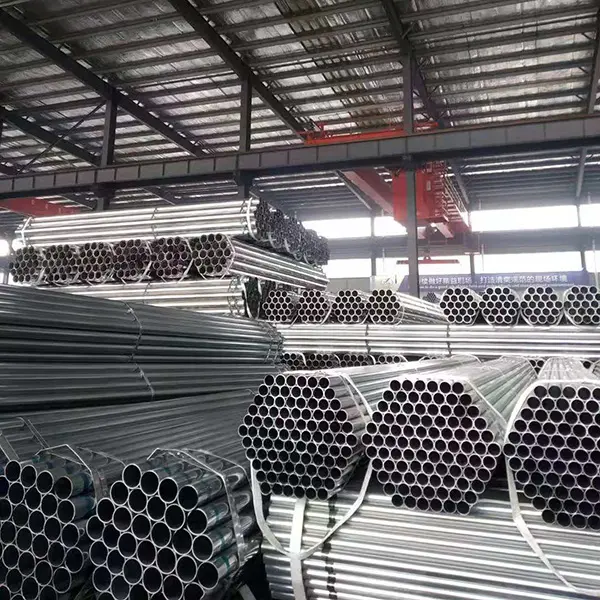
Galvanized Iron (GI) tubular products represent a critical component in numerous construction, infrastructure, and industrial applications. This guide provides an in-depth technical assessment of GI tubing, encompassing its material composition, manufacturing processes, performance characteristics, potential failure modes, and relevant industry standards. GI tubing, primarily produced via hot-dip galvanization of carbon steel, offers a cost-effective corrosion resistance solution. Its pricing is heavily influenced by steel market fluctuations, zinc coating thickness, diameter, wall thickness, and overall demand. Understanding these parameters is crucial for procurement professionals and engineers seeking to optimize cost-benefit ratios and ensure long-term structural integrity. The industrial chain position of GI tubing spans from raw material sourcing (iron ore, coal, zinc) through steel production, forming, galvanization, and finally, distribution and installation. Core performance attributes center around mechanical strength, corrosion resistance, weldability, and dimensional accuracy, all of which directly impact lifecycle costs and safety factors within various applications. Price lists are dynamic and must be interpreted in conjunction with detailed specifications.
Material Science & Manufacturing
The primary raw material for GI tubing is carbon steel, typically AISI 1018 or similar low-carbon grades, selected for formability and weldability. The steel’s composition dictates its inherent mechanical properties, including yield strength, tensile strength, and ductility. The galvanization process utilizes zinc (Zn) as the protective coating. Zinc's effectiveness stems from its electrochemical properties: it acts as a sacrificial anode, corroding preferentially to the underlying steel. The manufacturing process begins with steel strip production, followed by forming into tubular shapes via either welding (Electric Resistance Welding - ERW, or Longitudinal Submerged Arc Welding - LSAW) or seamless extrusion. ERW is more common for smaller diameters and thinner walls, offering higher production rates but potentially lower strength at the weld seam. LSAW is favored for larger diameters and thicker walls, providing superior weld integrity. Following forming, the tubing undergoes surface preparation including pickling (acid cleaning to remove mill scale) and fluxing. Hot-dip galvanization involves immersing the steel tubing in a molten zinc bath (typically 98% pure zinc) at a temperature of around 450°C (842°F). Key parameter control during galvanization includes bath temperature, immersion time, and cooling rate. Coating thickness (measured in grams per square meter - g/m²) is critical, directly correlating to corrosion protection. Post-galvanization treatments like chromate conversion coatings can further enhance corrosion resistance but are increasingly restricted due to environmental concerns. Material properties such as zinc adherence and coating uniformity are meticulously monitored through quality control tests, including coating thickness measurements, salt spray testing, and metallographic analysis.
Performance & Engineering
The performance of GI tubing is largely dictated by its load-bearing capacity and its resistance to environmental degradation. Force analysis, particularly for structural applications, involves considering tensile stress, compressive stress, bending moment, and torsional stress. These are calculated based on the tubing’s dimensions (diameter, wall thickness), material properties (yield strength, tensile strength), and the applied loads. Buckling is a critical failure mode for thin-walled GI tubing under compressive loads. Environmental resistance encompasses corrosion protection, resistance to UV degradation (for exterior applications), and tolerance to temperature fluctuations. The zinc coating acts as a barrier and sacrificial anode, mitigating corrosion in various environments (atmospheric, freshwater, saltwater). However, prolonged exposure to acidic environments can accelerate zinc corrosion. Compliance requirements vary depending on the application and geographic location. Building codes (IBC, Eurocodes) specify minimum requirements for structural tubing, including yield strength, tensile strength, and weld quality. For potable water systems, GI tubing must meet standards related to lead content and zinc solubility. Functional implementation details depend on the intended application. For example, in sprinkler systems, tubing must withstand hydrostatic pressure testing and maintain dimensional accuracy to ensure proper water distribution. In fencing applications, corrosion resistance and aesthetic considerations are paramount. Galvanic corrosion, the accelerated corrosion of dissimilar metals in contact, should be addressed by using compatible fittings and fasteners.
Technical Specifications
| Parameter | Units | Typical Value (ERW Tubing) | Typical Value (LSAW Tubing) |
|---|---|---|---|
| Outside Diameter | mm | 1/2" - 4" (12.7 - 101.6) | 4" - 60" (101.6 - 1524) |
| Wall Thickness | mm | 1.0 - 3.2 | 3.2 - 20 |
| Yield Strength (Steel) | MPa | 250 - 350 | 345 - 485 |
| Tensile Strength (Steel) | MPa | 400 - 550 | 530 - 690 |
| Zinc Coating Thickness | g/m² | 60 - 80 | 80 - 150 |
| Minimum Burst Pressure | MPa | Dependent on diameter & wall thickness; consult manufacturer's data. | Dependent on diameter & wall thickness; consult manufacturer's data. |
Failure Mode & Maintenance
Common failure modes in GI tubing include uniform corrosion, pitting corrosion, galvanic corrosion, and mechanical failures like fatigue cracking and denting. Uniform corrosion results from the gradual depletion of the zinc coating and subsequent corrosion of the underlying steel. Pitting corrosion occurs due to localized defects in the zinc coating or the presence of chlorides. Galvanic corrosion arises when GI tubing is coupled with dissimilar metals in a conductive environment. Fatigue cracking can occur under cyclic loading, especially around weld seams. Denting, caused by impact damage, can reduce the tubing’s load-bearing capacity. Oxidation of the zinc coating over time can also reduce its protective qualities. Maintenance strategies involve regular visual inspections to identify signs of corrosion or damage. For minor corrosion, cleaning and the application of zinc-rich paints can provide temporary protection. For significant corrosion or damage, replacement of the affected section is recommended. Protective coatings, such as epoxy or polyurethane, can be applied to extend the service life of the tubing, especially in harsh environments. Proper installation practices, avoiding direct contact with dissimilar metals, and ensuring adequate support are crucial to prevent premature failure. Periodic assessment of coating thickness using non-destructive testing methods can help monitor the effectiveness of the corrosion protection system.
Industry FAQ
Q: What is the typical lifespan of galvanized steel tubing in a freshwater application?
A: The lifespan of GI tubing in freshwater is highly dependent on water chemistry (pH, chloride content), flow rate, and coating thickness. However, a well-maintained system typically lasts 20-50 years. Regular inspection and protective coatings can extend this lifespan.
Q: How does the manufacturing process (ERW vs. LSAW) affect the price of GI tubing?
A: LSAW tubing generally commands a higher price due to the more complex manufacturing process and superior weld quality. ERW is more cost-effective for smaller diameters and thinner walls, but may require more stringent quality control.
Q: What is the impact of higher zinc coating thicknesses on price and performance?
A: Increasing zinc coating thickness significantly enhances corrosion resistance, but also increases the material cost. A balance must be struck based on the severity of the exposure environment. Thicker coatings generally provide longer service life, reducing long-term lifecycle costs.
Q: Can galvanized tubing be painted? What precautions should be taken?
A: Yes, galvanized tubing can be painted, but surface preparation is crucial. The surface must be thoroughly cleaned to remove any zinc salts or contaminants. Using a zinc-rich primer is recommended to ensure good adhesion and enhance corrosion protection. Avoid using acidic primers.
Q: What standards govern the quality and testing of GI tubing for structural applications?
A: ASTM A53 and ASTM A500 are commonly referenced standards for GI tubing used in structural applications. These standards specify requirements for material composition, mechanical properties, dimensions, and testing procedures. Local building codes will also dictate specific requirements.
Conclusion
GI tubular products provide a robust and cost-effective solution for a wide range of applications requiring both mechanical strength and corrosion resistance. The pricing of GI tubing is a complex function of raw material costs, manufacturing processes, coating thickness, and market demand. A thorough understanding of the material science, manufacturing techniques, and performance characteristics is crucial for informed procurement decisions and ensuring long-term structural integrity.
Future advancements in GI tubing technology will likely focus on developing more environmentally friendly galvanization processes (e.g., zinc-aluminum coatings) and improving the durability and performance of zinc coatings in aggressive environments. Continued adherence to industry standards and best practices in installation and maintenance will be paramount to maximizing the service life and minimizing the lifecycle costs of GI tubular systems.
