
Introduction
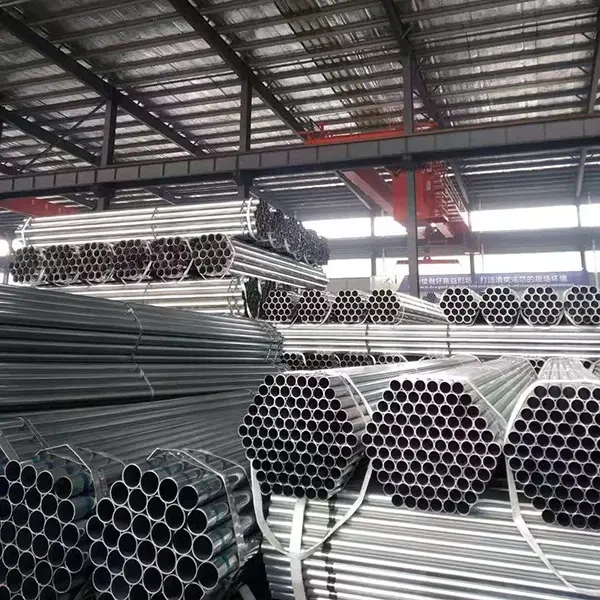
Heavy wall seamless pipe is a critical component across numerous industrial sectors, including oil and gas, petrochemical processing, power generation, and structural engineering. Unlike welded pipe, seamless pipe is manufactured without a weld seam, offering superior strength, pressure containment, and corrosion resistance. This is achieved through processes like hot rolling and extrusion, resulting in a homogenous material structure. Its “heavy wall” designation refers to a thicker wall thickness compared to standard pipe, enabling it to withstand higher internal and external pressures, extreme temperatures, and corrosive environments. The technical position within the supply chain places it as a finished product ready for integration into complex piping systems, pressure vessels, and structural frameworks. Core performance characteristics are defined by its ability to maintain structural integrity under demanding operational conditions, complying with stringent industry standards and ensuring long-term reliability.
Material Science & Manufacturing
The predominant material for heavy wall seamless pipe is carbon steel, specifically grades like ASTM A53 Grade B, A106 Grade B, and API 5L X42/X52, though alloy steels (e.g., chromium-molybdenum alloys) are employed for high-temperature and high-pressure applications, as well as corrosion resistance. Carbon steel’s properties – high tensile strength, ductility, and weldability – make it cost-effective for a wide range of uses. Alloy steels introduce enhanced properties like improved creep resistance and oxidation resistance. Manufacturing typically begins with billet preparation. Billets, cylindrical blocks of steel, are heated to high temperatures (around 1200°C) and pierced with a mandrel to create a hollow tube. This is followed by processes like rotary piercing, extrusion, and hot rolling to achieve the desired dimensions and wall thickness. Key parameter control during manufacturing involves precise temperature regulation, mandrel speed, and reduction ratios during rolling. Deviation from optimal parameters can lead to defects like ovality, eccentricity, or internal flaws. Non-destructive testing (NDT) methods, including ultrasonic testing (UT), radiographic testing (RT), and eddy current testing (ECT), are essential for quality control, verifying the absence of defects. Surface finishing, such as pickling or coating, is applied to enhance corrosion resistance and prepare the pipe for downstream applications.
Performance & Engineering
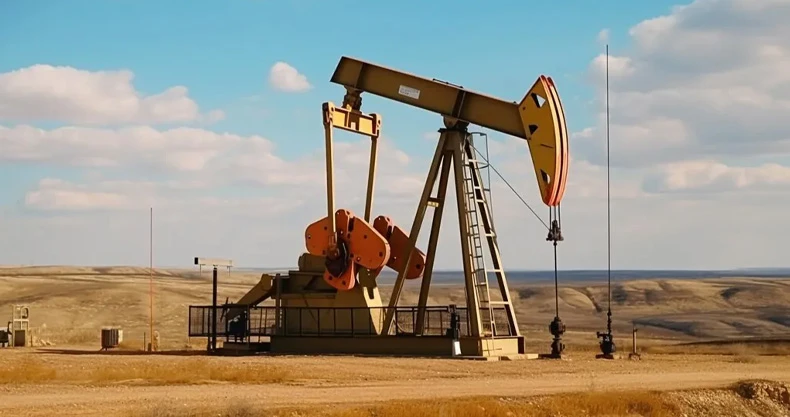
Performance of heavy wall seamless pipe is governed by several critical engineering considerations. Firstly, hydrostatic pressure testing is mandated to verify the pipe’s ability to withstand specified internal pressures without failure. The test pressure is typically 1.5 times the design pressure. Secondly, mechanical properties such as yield strength, tensile strength, and elongation are crucial, dictating the pipe’s resistance to deformation and fracture. These properties are determined through standardized tensile testing. Thirdly, environmental resistance is paramount. Corrosion, particularly in the presence of chlorides, sulfides, and sour gas (H2S), necessitates careful material selection and potentially the application of protective coatings (epoxy, polyethylene). Fatigue analysis is vital for applications involving cyclic loading, such as offshore platforms or pipelines subjected to wave action. Buckling analysis is performed to assess the pipe’s resistance to collapse under external loads. Compliance requirements are rigorous, with adherence to standards like ASME B31.3 (Process Piping), ASME B31.4 (Pipeline Transportation Systems), and API 5L being essential. Force analysis involves calculating stresses induced by internal pressure, axial loads, bending moments, and thermal expansion. Thermal stress calculations are particularly important for high-temperature applications to prevent creep and thermal fatigue.
Technical Specifications
| Parameter | ASTM A53 Grade B | API 5L X42 | ASTM A335 P11 |
|---|---|---|---|
| Outside Diameter (inch) | 0.5 – 48 | 6 – 48 | 0.5 – 8 |
| Wall Thickness (inch) | 0.065 – 1.25 | 0.154 – 1.0 | 0.065 – 0.5 |
| Yield Strength (psi) | 36,000 | 42,000 | 30,000 |
| Tensile Strength (psi) | 58,000 | 65,000 | 65,000 |
| Elongation (%) | 23 | 21 | 20 |
| Maximum Operating Temperature (°F) | 300 | 400 | 850 |
Failure Mode & Maintenance
Heavy wall seamless pipe can experience several failure modes. Corrosion is a prevalent issue, particularly in corrosive environments, leading to pitting, crevice corrosion, and ultimately, wall thinning and leakage. Stress corrosion cracking (SCC) can occur under tensile stress in the presence of specific corrosive agents. Fatigue cracking initiates from surface flaws or weld defects (even in seamless pipe, residual stresses can exist) and propagates under cyclic loading. Hydrogen embrittlement occurs when hydrogen atoms diffuse into the metal lattice, reducing ductility and increasing susceptibility to cracking, particularly in high-strength steels. Erosion-corrosion results from the combined action of fluid flow and corrosion, accelerating material loss. Maintenance strategies include regular inspection using NDT methods (UT, RT, ECT) to detect corrosion, cracks, and wall thinning. Protective coatings (epoxy, polyethylene) can mitigate corrosion. Cathodic protection is used to prevent corrosion in buried pipelines. Periodic hydrostatic testing verifies the pipe’s continued integrity. Proper cleaning and removal of debris prevent erosion-corrosion. For alloy steel pipes operating at high temperatures, creep monitoring is crucial to assess long-term deformation and prevent failure. Detailed failure analysis (fractography, metallography) is essential to determine the root cause of failures and implement corrective actions.
Industry FAQ
Q: What are the key differences between seamless pipe and welded pipe in terms of mechanical properties?
A: Seamless pipe generally exhibits superior mechanical properties, specifically higher yield strength and tensile strength, due to the absence of a weld seam, which can be a point of weakness. The homogenous structure of seamless pipe minimizes stress concentrations and reduces susceptibility to cracking. Welded pipe, while cost-effective, often requires post-weld heat treatment (PWHT) to improve weld metal properties and reduce residual stresses.
Q: How does the choice of steel grade affect the corrosion resistance of heavy wall seamless pipe?
A: The steel grade significantly impacts corrosion resistance. Carbon steel is susceptible to corrosion in many environments. Alloy steels, such as those containing chromium, nickel, and molybdenum, offer enhanced corrosion resistance. For example, adding chromium forms a passive oxide layer that protects the underlying metal. Stainless steels provide superior corrosion resistance but are considerably more expensive.
Q: What NDT methods are most commonly used for inspecting heavy wall seamless pipe during and after manufacturing?
A: Ultrasonic testing (UT) is widely used to detect internal flaws, such as laminations and inclusions. Radiographic testing (RT) provides a visual representation of the internal structure and can detect cracks and porosity. Eddy current testing (ECT) is effective for detecting surface cracks and measuring wall thickness. Magnetic particle inspection (MPI) is used to detect surface and near-surface cracks in ferromagnetic materials.
Q: What are the critical considerations when selecting a coating for heavy wall seamless pipe exposed to a marine environment?
A: In marine environments, the coating must provide excellent resistance to saltwater corrosion, UV degradation, and mechanical abrasion. Epoxy coatings are commonly used as a primer, providing good adhesion and corrosion protection. Polyurethane topcoats offer enhanced UV resistance and durability. Fusion bonded epoxy (FBE) coatings are frequently applied for buried pipelines. The coating thickness and application method are crucial for long-term performance.
Q: How does temperature affect the allowable pressure rating of heavy wall seamless pipe?
A: As temperature increases, the yield strength and tensile strength of the pipe material decrease, reducing its ability to withstand internal pressure. Allowable pressure ratings are derated at higher temperatures based on established design codes (e.g., ASME B31.3). Creep, the time-dependent deformation under sustained stress, becomes a significant consideration at elevated temperatures and must be factored into the design.
Conclusion
Heavy wall seamless pipe remains a foundational material in critical infrastructure applications due to its inherent strength, reliability, and adaptability to challenging operating conditions. The selection of appropriate materials, meticulous manufacturing processes, and robust quality control measures are paramount to ensuring long-term performance and preventing catastrophic failures. Understanding the potential failure modes – corrosion, fatigue, and embrittlement – and implementing proactive maintenance strategies are essential for maximizing the service life and minimizing operational risks.
Future trends point towards the development of advanced materials with enhanced corrosion resistance and higher strength-to-weight ratios, as well as the increasing adoption of non-destructive testing technologies, such as phased array ultrasonic testing and guided wave testing, for more comprehensive and accurate inspection. Continued adherence to industry standards and best practices will be crucial for maintaining the integrity and safety of critical piping systems utilizing heavy wall seamless pipe.
