
Introduction
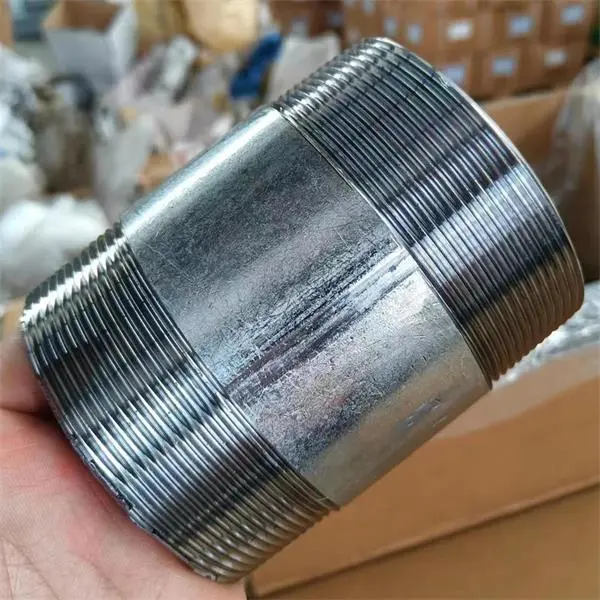
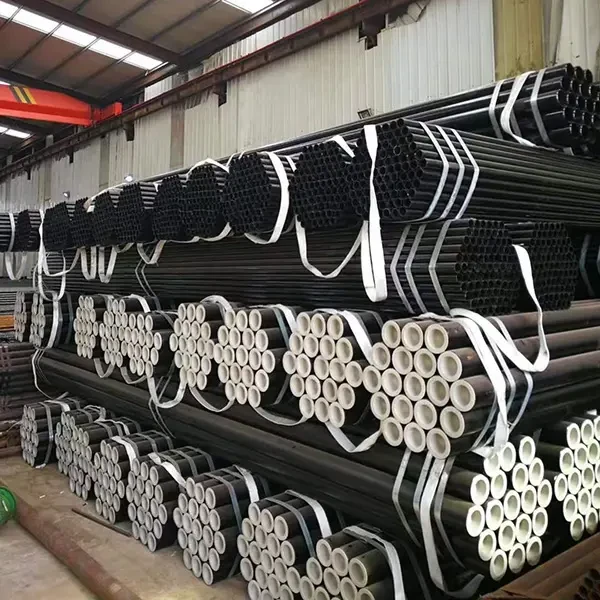
Hot rolled seamless tubing is a manufactured product formed by heating a billet of steel and pushing it or drawing it through a die, creating a hollow section without a weld seam. Positioned within the steel product chain between semi-finished products like billets and finished components, it serves as a fundamental material in numerous industries including oil and gas, automotive, construction, and mechanical engineering. Its primary performance characteristics revolve around its pressure-bearing capacity, corrosion resistance (dependent on alloy composition), and dimensional accuracy. The absence of a weld seam offers superior mechanical properties and makes it suitable for critical applications requiring high strength and reliability. The core industry pain point lies in balancing cost-effectiveness with the stringent quality requirements dictated by high-pressure, high-temperature, or corrosive service environments. Ensuring consistent material properties throughout the tube’s wall thickness and maintaining tight dimensional tolerances are key challenges for manufacturers and end-users alike.
Material Science & Manufacturing
The primary raw material for hot rolled seamless tubing is carbon steel, alloy steel, or stainless steel. Carbon steel, utilizing grades like A53, A106, and API 5L, offers good weldability and formability at a lower cost. Alloy steels, containing elements like chromium, molybdenum, and nickel, enhance strength, toughness, and corrosion resistance. Stainless steels (304, 316, etc.) provide superior corrosion resistance but are generally more expensive. The manufacturing process begins with heating a solid billet of steel to its plastic range (typically 1200-1300°C). This billet is then pierced with a mandrel – a solid, bullet-shaped tool – to create the initial hollow profile. Subsequently, the tube undergoes multiple stages of hot rolling and drawing, progressively reducing its diameter and wall thickness while elongating its length. Critical parameters during manufacturing include billet temperature control (to prevent defects like grain boundary segregation), mandrel alignment (to ensure concentricity), rolling reduction per pass (to manage material flow and avoid cracking), and cooling rate (to control microstructure and mechanical properties). Surface finishing often involves pickling (removal of scale) and oiling to prevent corrosion during storage and transportation. Quality control incorporates non-destructive testing (NDT) methods like ultrasonic testing (UT), eddy current testing (ET), and hydrostatic testing to detect internal and surface defects.
Performance & Engineering
The performance of hot rolled seamless tubing is dictated by its mechanical properties (yield strength, tensile strength, elongation), corrosion resistance, and pressure-bearing capacity. Force analysis is crucial in determining the appropriate wall thickness and diameter for a given application. Equations governing hoop stress (σ = PD/2t, where P is pressure, D is diameter, and t is wall thickness) and longitudinal stress are fundamental in designing pipelines and pressure vessels. Environmental resistance is primarily governed by the alloy composition. Carbon steel tubes require coatings (epoxy, polyethylene) or cathodic protection to mitigate corrosion in aggressive environments. Alloy and stainless steel tubes offer inherent corrosion resistance but may still be susceptible to localized corrosion (pitting, crevice corrosion) in specific conditions. Compliance requirements vary depending on the intended application. For oil and gas pipelines, API 5L dictates stringent requirements for chemical composition, mechanical properties, and NDT testing. For pressure vessels, ASME Boiler and Pressure Vessel Code Section VIII Division 1 provides detailed design and fabrication rules. Functional implementation considerations include the tube’s ability to withstand cyclic loading (fatigue resistance), thermal expansion and contraction (requiring expansion joints or flexible connections), and external loads (bending moments, shear forces).
Technical Specifications
| Standard | Outside Diameter (mm) | Wall Thickness (mm) | Material Grade | Yield Strength (MPa) |
|---|---|---|---|---|
| API 5L | 10.2 - 660 | 2 - 25 | A, B, X42, X52, X60, X70 | 235 - 550 |
| ASTM A106 Grade B | 1/2” - 8” (12.7 - 203.2) | Schedule 40, 80, 160 | C, L | 30,000 - 45,000 psi (207-310 MPa) |
| ASTM A53 Grade B | 1/2” - 6” (12.7 - 152.4) | Schedule 40, 80 | Carbon Steel | 36,000 psi (248 MPa) |
| EN 10208-2 | DN6 - DN600 | 2 - 20 | P195GH, P235GH, P265GH | 195 - 265 |
| DIN 2448 | DN10 - DN700 | 1.5 - 25 | St35.8, St45.8, St52.4 | 235 - 345 |
| GB/T 8163 | Φ10.2 – Φ660 | 2 – 25 | Q235, Q345, 16Mn | 235 – 345 |
Failure Mode & Maintenance
Common failure modes in hot rolled seamless tubing include corrosion (general, pitting, galvanic), fatigue cracking (due to cyclic loading), stress corrosion cracking (SCC) in corrosive environments, denting or deformation (from external impact), and erosion (from abrasive fluids). Fatigue cracking typically initiates at stress concentrators like surface scratches or weld defects (if any minor welding is performed for connections). Corrosion can lead to wall thinning and eventual perforation. Failure analysis often involves metallographic examination to identify the root cause of failure – whether it’s material defects, improper heat treatment, or environmental factors. Maintenance strategies include regular inspection (visual inspection, NDT), corrosion monitoring, application of protective coatings, cathodic protection, and periodic hydrostatic testing. Preventative maintenance programs should also address operational parameters like fluid velocity (to minimize erosion) and temperature (to prevent SCC). For pipelines, pigging operations are used to remove debris and corrosion products. When damage is detected, repairs typically involve localized grinding and re-coating or, in severe cases, section replacement. Proper storage is also crucial; tubes should be stored in a dry, protected environment to prevent corrosion.
Industry FAQ
Q: What is the difference between hot rolled and cold drawn seamless tubing, and when would I choose one over the other?
A: Hot rolled seamless tubing is produced at higher temperatures, resulting in a coarser grain structure and lower dimensional accuracy. It’s generally more cost-effective and suitable for applications where precise dimensions aren’t critical. Cold drawn tubing undergoes further processing at room temperature, improving its surface finish, dimensional tolerances, and mechanical properties (strength, hardness). It's preferred for applications requiring tight tolerances, high strength, and a smooth surface, but at a higher cost.
Q: How does the manufacturing process affect the chemical composition and mechanical properties of the tube?
A: The hot rolling process can lead to some degree of chemical segregation, where certain elements concentrate at grain boundaries. This can affect weldability and corrosion resistance. Controlled cooling rates during manufacturing are crucial to refine the grain structure and optimize mechanical properties. Alloy additions are carefully controlled to achieve the desired strength, toughness, and corrosion resistance.
Q: What are the key considerations when specifying seamless tubing for high-pressure applications?
A: The primary considerations are material selection (based on pressure, temperature, and fluid compatibility), wall thickness (calculated using hoop stress equations), and NDT testing (to ensure the absence of defects). It’s crucial to adhere to relevant industry standards (API 5L, ASME) and conduct a thorough stress analysis to verify the tube’s ability to withstand the operating conditions.
Q: What types of corrosion are most common in seamless steel tubing, and how can they be mitigated?
A: Common corrosion types include general corrosion, pitting corrosion, and stress corrosion cracking. Mitigation strategies include using corrosion-resistant alloys (stainless steel), applying protective coatings (epoxy, polyethylene), cathodic protection, and controlling the corrosive environment (pH, chloride concentration).
Q: What is the role of non-destructive testing (NDT) in ensuring the quality of seamless tubing?
A: NDT methods like ultrasonic testing (UT), eddy current testing (ET), and hydrostatic testing are critical for detecting internal and surface defects without damaging the tube. UT can detect internal flaws like inclusions and cracks, while ET is sensitive to surface defects and variations in material properties. Hydrostatic testing verifies the tube’s pressure-bearing capacity.
Conclusion
Hot rolled seamless tubing remains a cornerstone material in a wide range of industries due to its robust mechanical properties and cost-effectiveness. Understanding the interplay between material science, manufacturing processes, and performance characteristics is paramount for selecting the appropriate tube for a given application. The ability to accurately predict failure modes and implement proactive maintenance strategies is crucial for ensuring long-term reliability and safety.
Looking ahead, advancements in manufacturing technologies, such as laser welding and precision rolling, will likely lead to even tighter dimensional tolerances and improved material properties. Continued research into corrosion-resistant alloys and protective coatings will further expand the application envelope of seamless tubing, particularly in harsh environments. The increasing demand for lightweight and high-strength materials will also drive innovation in alloy design and manufacturing techniques.
