
Introduction
NKK seamless pipe represents a critical component in numerous industrial applications, particularly within the oil and gas, petrochemical, and power generation sectors. Distinguished by its manufacturing process – extrusion of solid billets without a welded seam – it offers superior mechanical properties and reliability compared to welded pipe. Its technical position in the industry chain is as a finished product, directly preceding installation and operation within complex piping systems. Core performance characteristics center on its ability to withstand high pressures, extreme temperatures, and corrosive environments, attributes defined by stringent material composition and dimensional tolerances. The primary challenge faced by users lies in selecting the appropriate alloy grade and wall thickness to match specific operational demands and mitigating risks associated with potential failure modes, demanding a thorough understanding of its material science and engineering principles.
Material Science & Manufacturing
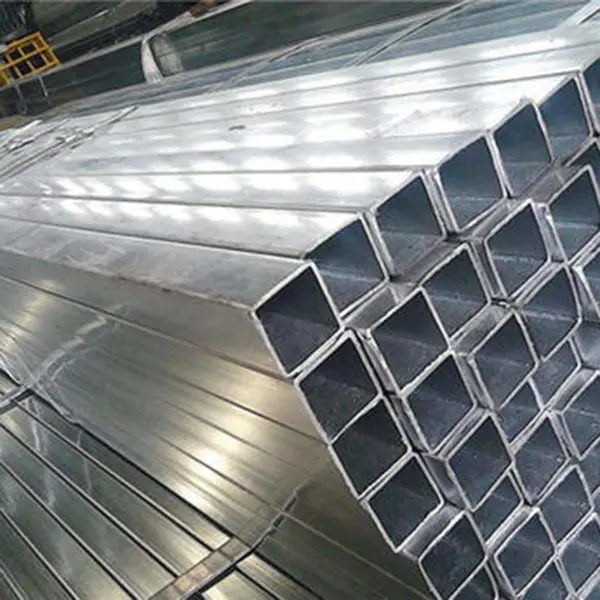
NKK seamless pipe is predominantly manufactured from carbon steel, alloy steel, and stainless steel alloys, with specific compositions tailored to intended service conditions. Carbon steel grades (e.g., ASTM A53, API 5L Grade B) utilize primarily iron with controlled carbon content, providing good weldability and cost-effectiveness. Alloy steel grades (e.g., ASTM A335 P11, P22) incorporate elements like chromium, molybdenum, and nickel to enhance high-temperature strength, creep resistance, and corrosion resistance. Stainless steel grades (e.g., 304, 316) leverage high chromium content to form a passive layer, providing exceptional corrosion protection. The manufacturing process begins with heating a solid billet to a plastic state and forcing it through a die and over a mandrel, creating a hollow tube. Key parameters controlling the quality of the resulting pipe include billet temperature, extrusion speed, mandrel speed, and die design. Critical control points during manufacturing encompass chemical composition verification through spectroscopic analysis, non-destructive testing (NDT) such as ultrasonic testing (UT) and radiographic testing (RT) to detect internal flaws, dimensional accuracy checks using calibrated measuring instruments, and heat treatment processes (normalizing, quenching, tempering) to achieve desired mechanical properties. Surface finish is also crucial, often requiring pickling or passivation to remove scale and prepare for further processing.
Performance & Engineering
The performance of NKK seamless pipe is dictated by its ability to withstand internal and external pressures, axial and bending loads, and cyclic stresses. Force analysis requires consideration of hoop stress (σh = PD/2t, where P=pressure, D=diameter, t=wall thickness), longitudinal stress (σl = PD/4t), and Von Mises stress for complex loading scenarios. Environmental resistance is a major concern, particularly in corrosive environments. Material selection must account for the type and concentration of corrosive agents, temperature, and flow velocity. For high-temperature applications, creep rupture strength and oxidation resistance are paramount. Compliance requirements vary by industry and geographical location, with key standards including ASME B31.3 (Process Piping), ASME B31.1 (Power Piping), and API 5L (Line Pipe). Functional implementation requires careful consideration of welding procedures (preheating, post-weld heat treatment, filler metal selection) to maintain the pipe’s integrity. Expansion and contraction due to temperature fluctuations must also be accounted for through the incorporation of expansion loops or flexible joints. Fatigue analysis is critical for applications involving cyclic loading, requiring determination of the S-N curve for the specific material and operating conditions. Proper support design is vital to prevent excessive stresses on the pipe and its connections.
Technical Specifications
| Parameter | ASTM A53 Grade B | ASTM A335 P11 | 304/304L Stainless Steel | API 5L X42 |
|---|---|---|---|---|
| Yield Strength (MPa) | 240 | 240 | 205 | 345 |
| Tensile Strength (MPa) | 400 | 415 | 515 | 485 |
| Elongation (%) | 22 | 20 | 30 | 21 |
| Maximum Operating Temperature (°C) | 150 | 425 | 870 | 200 |
| Corrosion Rate (mm/year in NaCl solution) | 1.5 | 0.2 | 0.05 | 0.5 |
| Wall Thickness Range (mm) | 2-25 | 3-60 | 2-12 | 6-25 |
Failure Mode & Maintenance
Common failure modes in NKK seamless pipe include corrosion (general, pitting, crevice, galvanic), erosion, fatigue cracking, stress corrosion cracking (SCC), and creep rupture. Corrosion occurs due to electrochemical reactions with the environment, exacerbated by temperature, pH, and flow velocity. Erosion results from abrasive wear caused by fluid-borne particles. Fatigue cracking initiates from stress concentrations (e.g., welds, dents) and propagates under cyclic loading. SCC occurs when tensile stress combines with a corrosive environment, leading to localized cracking. Creep rupture happens at elevated temperatures over extended periods, due to time-dependent deformation. Maintenance strategies include regular inspection using NDT methods (UT, RT, eddy current testing), internal inspection utilizing robotic crawlers with visual and ultrasonic inspection capabilities, protective coatings (epoxy, polyurethane, corrosion inhibitors), cathodic protection, and proper drainage systems. Preventive maintenance programs should also address issues such as pipe supports, insulation, and valve operation. Failure analysis, involving metallurgical examination of fractured surfaces, is crucial for determining the root cause of failures and implementing corrective actions. Periodic hydrostatic testing confirms the structural integrity of the pipeline system.
Industry FAQ
Q: What is the primary advantage of seamless pipe over welded pipe in high-pressure applications?
A: Seamless pipe lacks a weld seam, which represents a potential point of weakness. The absence of this discontinuity results in a more uniform stress distribution under pressure, leading to a higher burst pressure and improved reliability in critical applications.
Q: How does the choice of material affect the susceptibility to stress corrosion cracking (SCC)?
A: Certain alloy compositions are more prone to SCC in specific environments. For instance, austenitic stainless steels can be susceptible to chloride-induced SCC. Selecting alloys with enhanced resistance to SCC, such as duplex stainless steels or nickel alloys, is crucial for mitigating this risk.
Q: What Non-Destructive Testing (NDT) methods are commonly employed to assess the integrity of NKK seamless pipe?
A: Ultrasonic Testing (UT) is widely used to detect internal flaws such as laminations and inclusions. Radiographic Testing (RT) provides a visual representation of internal defects. Eddy Current Testing (ECT) is effective for surface crack detection. Liquid Penetrant Testing (LPT) and Magnetic Particle Testing (MPT) are also utilized for surface flaw detection.
Q: What considerations are critical when specifying the wall thickness of seamless pipe for a given application?
A: Wall thickness is determined by a combination of factors including operating pressure, temperature, corrosion allowance, and applicable design codes. A higher pressure or temperature requires a thicker wall. Corrosion allowance compensates for material loss over the pipe's service life. Codes like ASME B31.3 provide detailed guidance on wall thickness calculations.
Q: How important is proper heat treatment during the manufacturing process of seamless pipe and what are the common heat treatment methods?
A: Heat treatment is crucial for achieving the desired mechanical properties of the pipe. Common methods include normalizing (to refine grain structure and improve toughness), quenching and tempering (to increase strength and ductility), and stress relieving (to reduce residual stresses introduced during manufacturing). Improper heat treatment can lead to reduced strength, increased susceptibility to cracking, or dimensional instability.
Conclusion
NKK seamless pipe represents a vital engineered product, its performance inextricably linked to a nuanced understanding of material science, manufacturing processes, and application-specific engineering principles. Accurate material selection, stringent quality control during manufacturing, and diligent maintenance practices are all paramount to ensuring long-term reliability and preventing catastrophic failure. The ability to correctly assess and mitigate potential failure modes – from corrosion and erosion to fatigue and SCC – directly translates to operational efficiency and safety within demanding industrial environments.
Future trends in NKK seamless pipe technology will likely focus on the development of advanced alloys with enhanced corrosion resistance, improved manufacturing techniques to reduce cost and lead times, and the integration of smart sensors for real-time monitoring of pipe integrity. The evolution of non-destructive testing methods, including advanced ultrasonic and phased array techniques, will enable more accurate and reliable flaw detection, further extending the operational lifespan and ensuring the safe operation of critical infrastructure.
