
Introduction
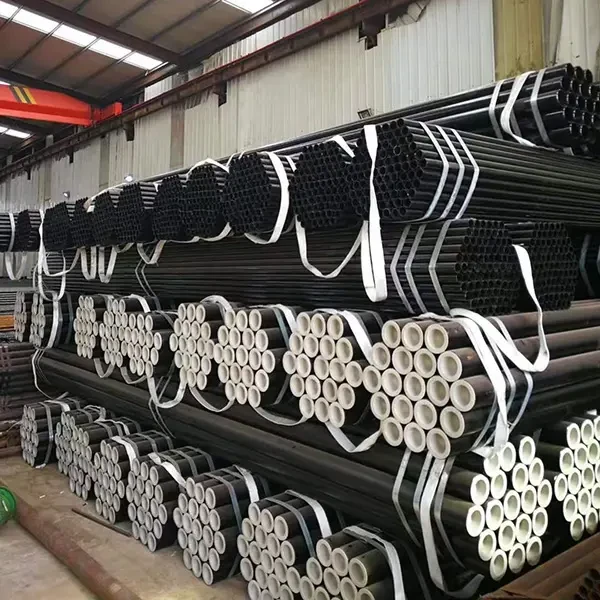
Pre-drilled square steel tubing represents a significant component in diverse structural and fabrication applications. Distinguished by its inherent rigidity, weldability, and ease of assembly facilitated by pre-existing holes, it serves as a critical material in industries ranging from construction and automotive to furniture manufacturing and machinery frameworks. Positioned within the supply chain as a semi-finished good, it bridges the gap between raw steel production (typically hot-rolled or cold-drawn) and final product assembly. Core performance characteristics include load-bearing capacity, dimensional accuracy, hole positioning precision, and resistance to deformation. A primary industry pain point centers around maintaining consistent hole quality (diameter, roundness, deburring) and minimizing distortion during the drilling process, coupled with ensuring compliance with specific material certifications and traceability requirements.
Material Science & Manufacturing
Pre-drilled square steel tubing is predominantly manufactured from carbon steel grades such as A36, A500, 1018, and 1020, selected based on required strength and weldability. Stainless steel grades (304, 316) and aluminum alloys (6061, 6063) are also utilized for applications demanding corrosion resistance or weight reduction. The raw material begins as steel coils or sheets, which are then formed into square tubes through processes like cold-forming or welding. Cold-forming offers superior dimensional accuracy and surface finish but is limited by tube size and wall thickness. Welded tubing, typically employing Electric Resistance Welding (ERW) or High-Frequency Induction Welding (HFI), allows for larger sizes and thicker walls, but requires careful control of welding parameters to prevent porosity and ensure weld strength. The pre-drilling process itself utilizes CNC drilling machines equipped with carbide or high-speed steel drill bits. Key parameters include drill speed, feed rate, coolant application, and hole pattern. Maintaining consistent drill bit sharpness and proper alignment are critical to achieving accurate hole dimensions and minimizing burr formation. Chemical compatibility considerations involve selecting appropriate coolants that prevent corrosion and do not negatively impact subsequent welding or coating processes. Post-drilling operations often include deburring, chamfering, and surface treatment (e.g., galvanizing, powder coating) to enhance corrosion resistance and aesthetics.
Performance & Engineering
The performance of pre-drilled square steel tubing is heavily dictated by its section modulus, moment of inertia, and yield strength. Structural engineering calculations must account for bending moments, shear forces, and torsional stresses when utilizing this tubing in load-bearing applications. The presence of pre-drilled holes introduces stress concentrations, particularly around the hole edges. Finite Element Analysis (FEA) is commonly employed to optimize hole placement and size to minimize stress concentration and ensure structural integrity. Environmental resistance is paramount. Carbon steel tubing requires protective coatings (e.g., galvanizing, epoxy paint) to prevent corrosion, particularly in humid or corrosive environments. Stainless steel offers inherent corrosion resistance but can still be susceptible to pitting corrosion in chloride-rich environments. Compliance requirements vary depending on the application. Construction applications necessitate adherence to building codes (IBC, AISC) and material standards (ASTM A500). Automotive applications demand compliance with safety regulations (FMVSS) and material specifications (SAE). Functional implementation relies on the precise positioning and dimensional accuracy of the pre-drilled holes. Tolerances for hole diameter, location, and perpendicularity are critical for successful assembly and fastener integration. Fatigue analysis is important in cyclic loading applications to predict the lifespan of the tubing and prevent catastrophic failure.
Technical Specifications
| Parameter | A36 Steel | A500 Grade B | 6061-T6 Aluminum | 304 Stainless Steel |
|---|---|---|---|---|
| Yield Strength (MPa) | 250 | 345 | 276 | 205 |
| Tensile Strength (MPa) | 400 | 500 | 310 | 517 |
| Wall Thickness (mm) | 1.2 - 6.4 | 1.2 - 6.4 | 1.6 - 10 | 1.2 - 6.4 |
| Square Tube Size (mm) | 12.7 x 12.7 - 152.4 x 152.4 | 12.7 x 12.7 - 203.2 x 203.2 | 12.7 x 12.7 - 152.4 x 152.4 | 12.7 x 12.7 - 152.4 x 152.4 |
| Hole Diameter Tolerance (mm) | ±0.13 | ±0.13 | ±0.13 | ±0.13 |
| Hole Position Tolerance (mm) | ±0.25 | ±0.25 | ±0.25 | ±0.25 |
Failure Mode & Maintenance
Common failure modes in pre-drilled square steel tubing include fatigue cracking, particularly around the pre-drilled holes, accelerated by cyclic loading and stress concentrations. Corrosion is another prevalent failure mechanism, especially in unprotected carbon steel exposed to harsh environments. Weld defects (porosity, incomplete fusion) can lead to brittle fracture in welded tubing. Shear deformation or bending beyond the yield point results in permanent deformation. Delamination can occur in multi-layered structures or coatings. Oxidation, forming rust on carbon steel surfaces, weakens the material and promotes further corrosion. Maintenance involves regular visual inspection for signs of corrosion, cracks, or deformation. Protective coatings should be reapplied as needed. Fasteners should be checked for tightness and replaced if corroded. For heavily loaded applications, non-destructive testing (NDT) methods such as ultrasonic testing or radiographic inspection can detect internal flaws. In case of significant deformation or cracking, the tubing should be replaced immediately. Proper storage is crucial to prevent corrosion; storing the tubing in a dry, indoor environment is recommended.
Industry FAQ
Q: What is the typical hole diameter tolerance achievable on pre-drilled square steel tubing?
A: Typically, a hole diameter tolerance of ±0.13mm can be consistently achieved using CNC drilling processes. However, tighter tolerances may be possible with specialized tooling and more stringent quality control measures, but will increase manufacturing cost.
Q: How does the welding process affect the mechanical properties of ERW or HFI welded square tubing?
A: The welding process can introduce a Heat-Affected Zone (HAZ) with altered microstructural properties and reduced ductility compared to the base metal. Proper control of welding parameters (current, voltage, speed) and post-weld heat treatment are crucial to minimize HAZ effects and maintain adequate weld strength and toughness.
Q: What are the common corrosion protection methods for carbon steel pre-drilled tubing?
A: Common corrosion protection methods include galvanizing (hot-dip or electro-galvanizing), epoxy powder coating, painting with corrosion-inhibitive primers, and applying protective oils or waxes. The selection of the appropriate method depends on the severity of the environment and the desired lifespan of the tubing.
Q: How does the placement of pre-drilled holes impact the load-bearing capacity of the tubing?
A: Pre-drilled holes introduce stress concentrations, reducing the load-bearing capacity of the tubing, particularly in bending or shear. Hole placement should be optimized based on structural analysis to minimize stress concentrations and avoid critical areas of high stress. Staggered hole patterns are often preferred over linear patterns.
Q: What material certifications are typically required for pre-drilled square steel tubing used in structural applications?
A: Material certifications, such as Mill Test Reports (MTRs) verifying chemical composition and mechanical properties, are typically required. For critical applications, additional certifications like ASTM A500 for structural steel tubing may be mandated. Traceability to the steel mill and welding procedures (if applicable) is also essential.
Conclusion
Pre-drilled square steel tubing represents a versatile and cost-effective structural component, but its successful implementation demands a thorough understanding of its material properties, manufacturing processes, and potential failure modes. Optimizing hole placement to mitigate stress concentrations, selecting appropriate corrosion protection methods, and ensuring adherence to relevant industry standards are critical for maximizing performance and longevity. Careful consideration of the application’s specific loading conditions, environmental factors, and regulatory requirements is paramount throughout the design and fabrication process.
Future developments in this field will likely focus on advanced drilling techniques (laser drilling, waterjet cutting) to achieve higher precision and minimize material distortion. The increasing adoption of high-strength, lightweight materials, such as advanced high-strength steels (AHSS) and aluminum alloys, will also drive innovation. Further research into non-destructive testing methods and predictive modeling for fatigue life will enhance the reliability and safety of structures utilizing pre-drilled square steel tubing.
