
The LD45Q Belt Module is increasingly recognized as a critical component in modern pipe fabrication lines, where automated handling, cutting, and forming operations demand precise linear positioning. As pipe manufacturers push for higher throughput and tighter tolerances, the underlying motion systems that drive saws, clamps, and conveyors must deliver consistent performance under harsh shop-floor conditions. This article examines how advances in linear motion technology—particularly ball screws, linear guides, and modular actuators—are reshaping the capabilities of pipe processing equipment, from basic cutting to complex weld preparation and bending.
The pipe fittings industry has long relied on robust machinery to shape, cut, and join metal and plastic pipes. However, as global infrastructure projects demand ever-stricter quality standards, fabricators are turning to automation solutions that reduce human error while increasing repeatability. At the heart of this shift lies the need for reliable linear motion components that can withstand continuous operation, contamination from cutting fluids, and the mechanical shock of heavy pipe handling. Understanding the role of these components helps industry professionals specify equipment that delivers long-term value.
The Evolution of Pipe Fabrication Machinery
Traditional pipe fabrication relied on manual measurement and fixed tooling, where each joint and cut required skilled labor and significant setup time. Over the past two decades, computer numerical control (CNC) systems have become standard, enabling programmable cutting, beveling, and threading operations. These machines depend on linear motion systems to position tools and workpieces with sub-millimeter accuracy. Early systems used simple lead screws and bronze nuts, but modern fabricators demand higher speeds, longer service life, and greater load capacity—all of which are delivered by precision-ground ball screws and recirculating linear guides.
The transition from manual to automated fabrication has also driven the adoption of modular linear actuators, which combine the guide and drive mechanism into a single sealed unit. These modules simplify machine design, reduce assembly time, and protect internal components from the particulates and coolants common in pipe shops. Manufacturers now offer belt-driven and ball-screw-driven modules, each suited to different speed and accuracy requirements. Belt-driven modules excel in high-speed transfer applications, while screw-driven units provide the stiffness needed for heavy cutting forces.
Key Linear Motion Components in Pipe Processing
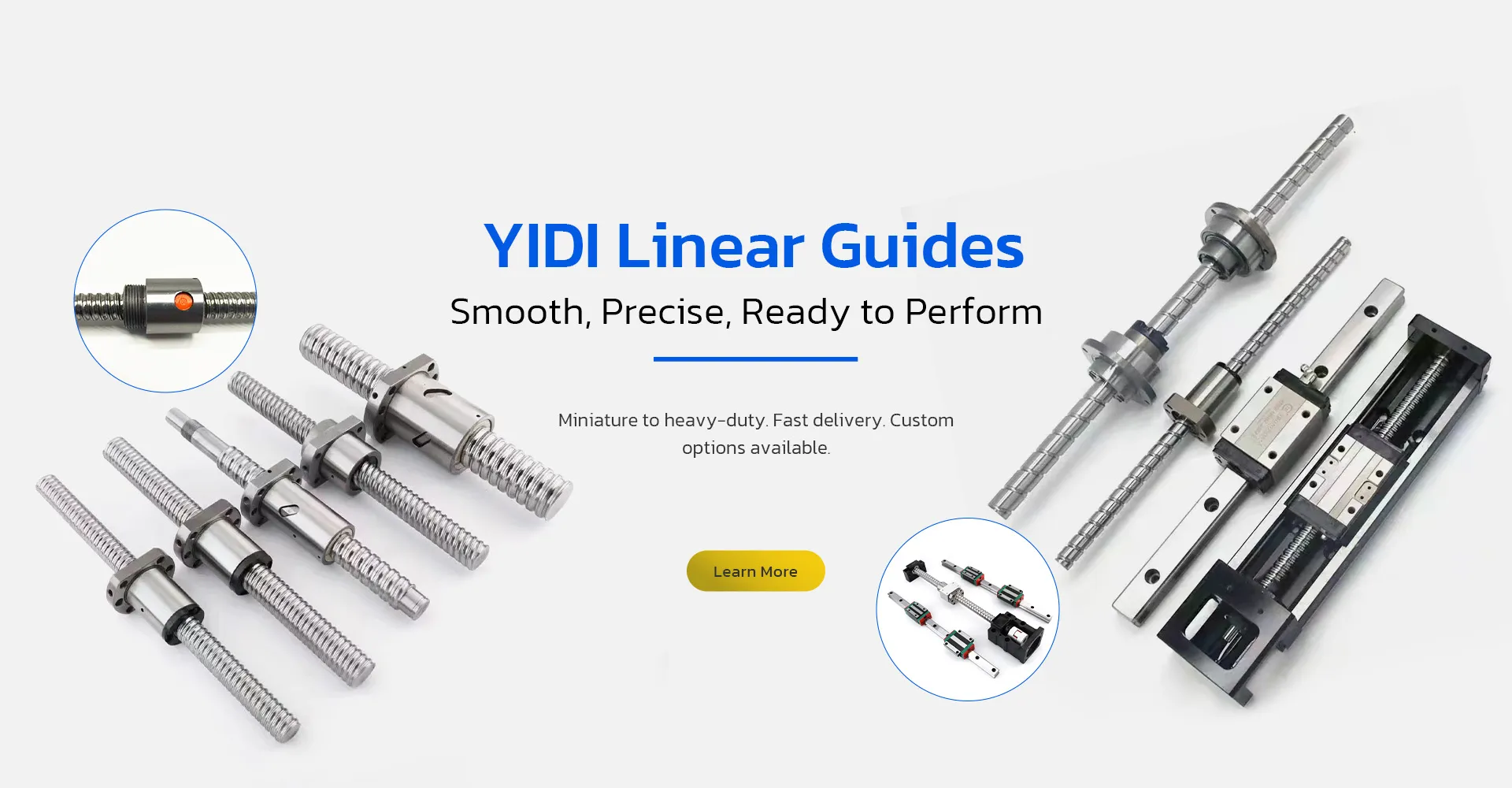
Several categories of linear motion components are integral to pipe fabrication equipment. Ball screws convert rotary motion into precise linear displacement with minimal friction, making them ideal for axes that carry cutting tools or clamping assemblies. Linear guides support and guide moving carriages, providing smooth travel even under eccentric loads from pipe weight. Ball Spline systems offer a unique solution for applications requiring both linear motion and torque transmission, such as rotating pipe clamps or indexing fixtures. Each component must be selected based on the specific demands of the operation—load, speed, duty cycle, and environmental exposure.
For pipe bending machines, the carriage that advances the pipe through the bend die must move smoothly and resist sideways forces. Linear guides with wide rails and multiple carriages distribute the load and maintain alignment. In cutting systems, the saw head or laser nozzle must travel along the pipe axis with consistent velocity to produce clean, square cuts. Here, ball screws with preloaded nuts eliminate backlash and ensure positional repeatability over thousands of cycles. The choice between belt and screw drive depends on the trade-off between speed and accuracy: belt drives achieve rapid traverse rates, while screw drives deliver higher thrust and positioning precision.
Applications in Cutting, Beveling, and Welding
Automated pipe cutting machines use linear motion to guide the cutting tool along the pipe circumference and length. Orbital cutters rotate around the pipe while a linear axis advances the blade or plasma torch. The coordination of rotary and linear motion requires precise control of acceleration and deceleration to avoid chatter marks. Ball screws with fine leads and low inertia deliver smooth motion at the cutting interface, while linear guides with sealed wipers protect against swarf and coolant ingress. In beveling operations, the tool must follow a compound path that combines linear travel with angular adjustment, demanding multi-axis motion systems that are both accurate and rigid.
Welding automation also benefits from advanced linear motion. Pipe welding positioners rotate the workpiece while a welding torch moves along the joint line. Longitudinal and circumferential welds require consistent travel speed and torch-to-work distance. Linear actuators with integrated encoders provide real-time feedback to the welding controller, enabling adaptive adjustments based on joint geometry. Sealed belt modules are particularly effective in welding environments where spatter and fumes would contaminate exposed ball screws. The enclosed design of the LD45Q Belt Module, for example, keeps debris out while maintaining smooth motion, making it suitable for automated welding cells.
Quality and Reliability in Production Environments
Pipe fabrication shops operate in demanding conditions—temperature fluctuations, airborne particles, cutting fluids, and heavy loads. Linear motion components must be designed to withstand these challenges without frequent maintenance or premature failure. Manufacturers that source components from suppliers with rigorous quality control processes benefit from longer equipment uptime and lower total cost of ownership. Features such as hardened steel rails, ball screws with induction-hardened surfaces, and multi-lip seals extend service life in contaminated environments. Pre-lubricated and sealed units reduce the need for daily greasing, which is often neglected in busy production settings.
Reliability extends beyond the component itself to the supply chain. Fabricators and machine builders need consistent access to replacement parts and technical support. Suppliers that maintain inventory of standard sizes and offer customization services help ensure that production lines stay operational. The ability to source both standard and custom linear modules from a single partner simplifies procurement and reduces lead times. As pipe fabrication continues to embrace Industry 4.0 principles, smart linear actuators with integrated sensors will provide real-time data on position, load, and wear, enabling predictive maintenance and further reducing unplanned downtime.
Selecting the Right Motion System for Pipe Applications
Choosing the appropriate linear motion system requires a thorough analysis of the application parameters. Engineers must consider the maximum travel length, required speed and acceleration, load magnitude and direction, duty cycle, and environmental factors. For pipe cutting and beveling, where precision directly affects weld quality, ball-screw-driven modules with preloaded nuts are often preferred. For material handling and transfer applications, belt-driven modules offer higher speed and longer travel at lower cost. In multi-axis systems, the interaction between axes—such as the effect of cantilevered loads on guide life—must be evaluated to ensure balanced performance.
Collaboration between machine builders and motion component suppliers is essential to achieve optimal results. Early involvement allows suppliers to recommend the best combination of guide type, drive mechanism, and sealing options. Many suppliers offer calculation tools and engineering support to size components correctly and predict service life. By investing in quality linear motion systems, pipe fabricators can achieve the throughput, accuracy, and reliability needed to compete in a global market where quality and delivery performance are paramount.
Conclusion
Precision linear motion technology is a foundational enabler of modern automated pipe fabrication. From cutting and beveling to welding and handling, ball screws, linear guides, belt modules, and ball spline systems provide the accuracy, speed, and durability that fabricators require. As the industry moves toward greater automation and data-driven operations, the choice of motion components will increasingly influence equipment performance and total cost of ownership. Understanding the capabilities and limitations of each technology allows engineers and procurement professionals to specify systems that deliver consistent results over years of service. The continued evolution of linear motion components will support the pipe fittings industry in meeting the challenges of higher quality standards, tighter tolerances, and greater production efficiency.
