
Introduction
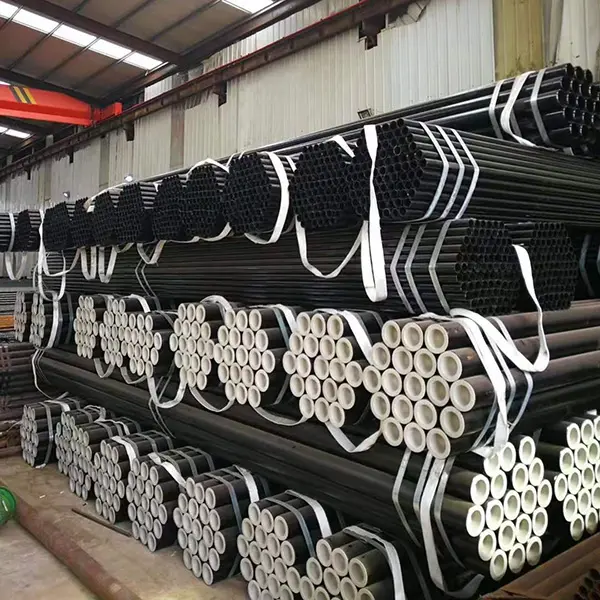
Rectangular square pipe, commonly referred to as hollow structural sections (HSS), represents a fundamental component in modern engineering and construction. It is a fabricated product, typically manufactured from steel, but also available in aluminum and other alloys, characterized by its consistent wall thickness and precise dimensional tolerances. Within the industry supply chain, it serves as a crucial intermediary product, bridging the gap between raw material production (steel mills, aluminum foundries) and finished goods manufacturing (buildings, machinery, infrastructure). Its core performance characteristics center around a high strength-to-weight ratio, exceptional torsional rigidity, and ease of fabrication through welding, bolting, and other joining techniques. Addressing prevalent industry concerns related to material traceability, dimensional accuracy, and consistent mechanical properties is paramount for ensuring structural integrity and project success. The selection of appropriate grade and dimensions directly impacts load-bearing capacity, corrosion resistance, and the overall lifespan of the final application.
Material Science & Manufacturing
The most common material for rectangular square pipe is carbon steel, specifically grades like A36, A500 (Grades B & C), and ASTM A53. These steels derive their properties from varying percentages of carbon, manganese, silicon, and phosphorus. Higher carbon content increases strength and hardness but reduces ductility and weldability. Alloy steels, incorporating elements like chromium and molybdenum, are employed for enhanced corrosion resistance and higher temperature applications. Aluminum alloys (6061-T6, 6063-T6) offer significant weight reduction but generally have lower strength than steel. Manufacturing processes typically begin with steel slab or coil. These are formed into rectangular or square shapes through cold-forming or hot-rolling processes. Electric Resistance Welding (ERW) is the predominant joining method, creating a longitudinal seam. Critical parameters in ERW include welding current, welding speed, and electrode force, all carefully controlled to ensure full penetration and minimal defects. Alternatively, seamless pipe is produced via extrusion, offering superior uniformity and eliminating the weld seam vulnerability. Post-fabrication, processes such as normalizing and stress relieving may be applied to enhance mechanical properties and reduce residual stresses. Quality control necessitates rigorous inspection for dimensional accuracy, wall thickness variations, weld integrity (through non-destructive testing like ultrasonic testing and radiographic inspection), and surface finish.
Performance & Engineering
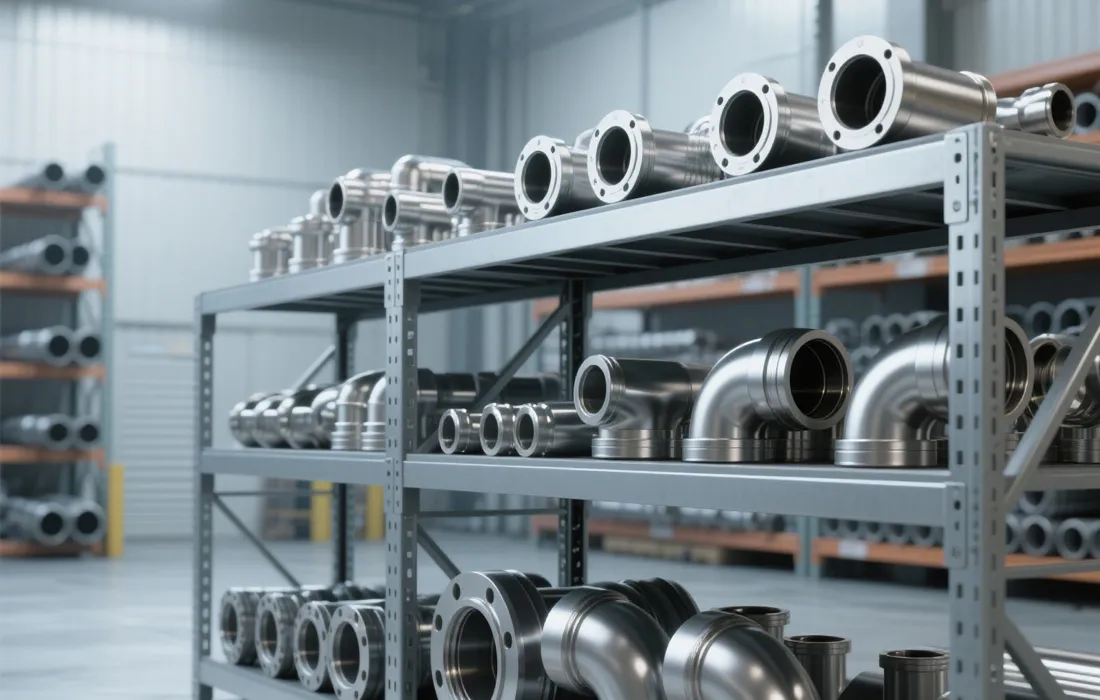
The performance of rectangular square pipe is governed by several key engineering principles. Section modulus (S) and moment of inertia (I) are critical parameters dictating bending resistance. Rectangular sections, unlike circular sections, exhibit different S and I values depending on the orientation of the bending moment. This anisotropy must be accounted for in structural design. Torsional resistance is significantly higher in square sections compared to rectangular sections with large aspect ratios. Force analysis involves considering axial loads, bending moments, shear forces, and torsional stresses. Buckling is a common failure mode, particularly for thin-walled sections under compressive loads; therefore, proper bracing and stiffening are essential. Environmental resistance is a major concern. Steel is susceptible to corrosion, necessitating protective coatings like galvanizing, painting, or epoxy coatings. Aluminum forms a protective oxide layer but can still experience galvanic corrosion in contact with dissimilar metals. Compliance requirements vary significantly by region and application. Building codes (IBC, Eurocodes) dictate load factors, safety margins, and material specifications. Pressure vessel applications require adherence to ASME Boiler and Pressure Vessel Code. Transportation infrastructure projects often necessitate compliance with AASHTO standards. Fatigue analysis is crucial for applications subjected to cyclic loading, predicting crack initiation and propagation rates.
Technical Specifications
| Parameter | Steel (A36) | Aluminum (6061-T6) | Typical Tolerance |
|---|---|---|---|
| Yield Strength (MPa) | 250 | 276 | ±10 MPa |
| Tensile Strength (MPa) | 400 | 310 | ±20 MPa |
| Wall Thickness (mm) | 2-12 | 2-6 | ±0.13 mm (for thicknesses ≤ 6.35mm) |
| Outside Dimension (mm) | 20x20 to 300x300 | 25x25 to 200x200 | ±0.5 mm |
| Elongation (%) | 20 | 12 | N/A |
| Corrosion Resistance | Low (requires coating) | Moderate (naturally forms oxide layer) | N/A |
Failure Mode & Maintenance
Rectangular square pipe is susceptible to several failure modes in practical applications. Corrosion is a primary concern, leading to section loss and reduced load-bearing capacity. Types of corrosion include uniform corrosion, pitting corrosion, and galvanic corrosion. Fatigue cracking can occur under cyclic loading, initiating at stress concentrations (weld seams, corners) and propagating over time. Buckling, as previously mentioned, is a risk for thin-walled sections. Weld defects (porosity, incomplete penetration, slag inclusions) compromise joint strength and can lead to catastrophic failure. Dents and deformations from impact loads reduce section modulus and increase stress concentrations. Maintenance strategies include regular visual inspections for corrosion, cracks, and deformations. Protective coatings should be inspected and reapplied as needed. Weld seams require non-destructive testing (ultrasonic testing, radiographic inspection) to detect internal defects. Proper drainage should be ensured to prevent water accumulation and corrosion. For heavily loaded applications, periodic stress analysis and structural health monitoring may be warranted. Repair options for minor damage include grinding and re-coating, or weld repair (performed by certified welders). Severe damage often necessitates section replacement.
Industry FAQ
Q: What is the impact of heat affected zone (HAZ) on the mechanical properties of welded rectangular square pipe?
A: The HAZ is the area surrounding a weld that experiences changes in microstructure and mechanical properties due to the heat of welding. It typically exhibits lower ductility and toughness compared to the base metal, making it a potential location for crack initiation. Careful control of welding parameters (heat input, cooling rate) and post-weld heat treatment (PWHT) are critical for minimizing HAZ degradation and ensuring weld integrity.
Q: How does the aspect ratio of a rectangular section affect its torsional stiffness?
A: A larger aspect ratio (significant difference between the longer and shorter dimensions) results in lower torsional stiffness. Square sections provide the highest torsional resistance. For rectangular sections, the torsional constant (J) decreases as the aspect ratio increases, reducing the section's ability to resist twisting forces.
Q: What are the advantages of using seamless rectangular square pipe over ERW pipe?
A: Seamless pipe offers superior uniformity in mechanical properties and eliminates the potential for weld-related defects. It generally exhibits higher strength and toughness. However, seamless pipe is typically more expensive to manufacture than ERW pipe.
Q: What type of coating is most effective for corrosion protection in a marine environment?
A: For marine environments, a duplex coating system is often recommended. This typically involves a hot-dip galvanizing layer for sacrificial protection, followed by an epoxy or polyurethane topcoat for enhanced barrier protection and UV resistance. Regular inspection and maintenance of the coating are crucial.
Q: How do dimensional tolerances affect the fit-up and alignment of rectangular square pipe in a fabricated structure?
A: Tight dimensional tolerances are essential for ensuring proper fit-up and alignment. Significant deviations from specified dimensions can lead to assembly difficulties, increased fabrication costs, and compromised structural integrity. Careful quality control during manufacturing and inspection upon receipt are critical.
Conclusion
Rectangular square pipe represents a versatile and essential structural element across diverse industries. Its performance characteristics, dictated by material science, manufacturing processes, and engineering principles, necessitate a comprehensive understanding for optimal application. Addressing potential failure modes through proper design, fabrication, and maintenance is paramount to ensuring long-term structural integrity and safety.
The selection of appropriate material grade, dimensions, and protective coatings should be based on a thorough assessment of the intended application, environmental conditions, and relevant industry standards. Continued advancements in manufacturing techniques, materials, and non-destructive testing methods will further enhance the performance and reliability of rectangular square pipe in future engineering projects.
