
Introduction
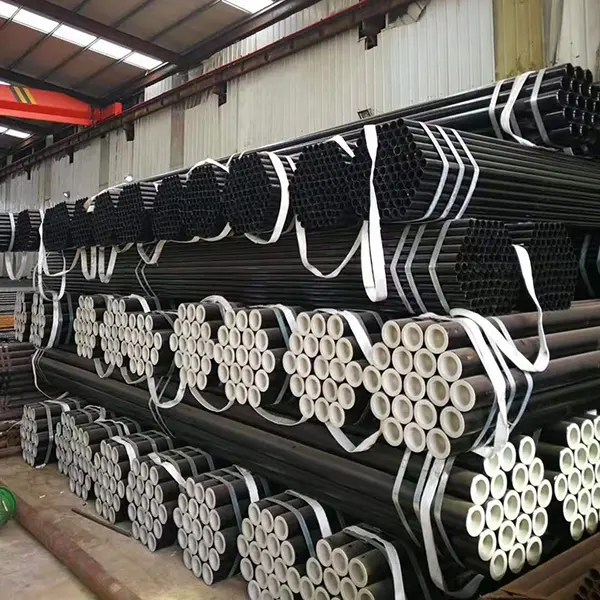
Rectangular square tubing, often referred to as hollow structural sections (HSS), is a versatile structural component widely utilized across diverse industries including construction, automotive, manufacturing, and infrastructure. It is characterized by its closed, box-like cross-section, offering a high strength-to-weight ratio and exceptional resistance to bending and torsional loads. Unlike open sections (e.g., I-beams, channels), HSS provides inherent stability and simplifies fabrication processes. Its position within the industry chain is foundational, acting as a primary building block for frameworks, supports, and structural members. Core performance characteristics encompass yield strength, tensile strength, weldability, and dimensional accuracy, directly influencing the integrity and longevity of finished structures. A key industry pain point revolves around consistent material quality and precise dimensional control, as deviations can significantly impact structural calculations and fabrication efficiency.
Material Science & Manufacturing
Rectangular square tubing is predominantly manufactured from carbon steel (ASTM A500 Grade B is common), although stainless steel (304, 316) and aluminum alloys (6061-T6) are also employed for specialized applications requiring corrosion resistance or weight reduction. The primary raw material for steel HSS is hot-rolled steel coils. Manufacturing processes vary, but typically involve cold-forming or hot-forming techniques. Cold-forming, utilizing processes like roll forming, is employed for smaller sizes and tighter tolerances. This process work-hardens the steel, increasing its yield strength but reducing its ductility. Hot-forming, involving heating the steel to a plastic state before forming, allows for the production of larger tubes with thicker walls. Key parameters in both processes include roll pass design, reduction ratios, and cooling rates. Welding is a crucial aspect of HSS production, typically employing Electric Resistance Welding (ERW) or High-Frequency Induction Welding (HFIW). Precise control of welding parameters – current, voltage, frequency, and speed – is essential to ensure a strong, defect-free weld seam. Post-weld heat treatment (PWHT) is often applied to relieve residual stresses and improve weld toughness. Chemical composition directly impacts weldability; carbon equivalent (CE) calculations are critical to mitigate the risk of hydrogen-induced cracking. Surface preparation before welding is paramount, requiring removal of mill scale and contaminants to ensure adequate fusion.
Performance & Engineering
The performance of rectangular square tubing is governed by its geometric properties (section modulus, moment of inertia) and material characteristics. Section modulus (S) dictates the resistance to bending stress, while moment of inertia (I) reflects the resistance to deflection. A larger section modulus and moment of inertia equate to greater structural rigidity. Force analysis, particularly Finite Element Analysis (FEA), is widely used to predict stress distribution under various loading conditions (axial, bending, shear, torsion). Environmental resistance is a critical consideration. Carbon steel HSS is susceptible to corrosion, particularly in chloride-rich environments. Protective coatings, such as galvanizing, epoxy coatings, or painting, are employed to mitigate corrosion. Stainless steel HSS offers superior corrosion resistance but at a higher cost. Compliance requirements vary depending on the application and region. For structural applications, adherence to building codes (e.g., IBC, Eurocode) is mandatory. These codes specify allowable stress levels, safety factors, and connection design requirements. Fatigue resistance is another important performance characteristic, especially in applications involving cyclic loading. Weld quality significantly impacts fatigue life; defects such as porosity or incomplete fusion can act as stress concentrators and initiate crack propagation. The design must account for potential buckling, particularly in long, slender tubes under compressive loads.
Technical Specifications
| Dimension (inches) | Wall Thickness (inches) | Yield Strength (psi) | Tensile Strength (psi) |
|---|---|---|---|
| 2x2x0.125 | 0.125 | 36,000 | 58,000 |
| 3x3x0.1875 | 0.1875 | 42,000 | 65,000 |
| 4x4x0.25 | 0.25 | 50,000 | 75,000 |
| 6x6x0.375 | 0.375 | 55,000 | 85,000 |
| 8x8x0.5 | 0.5 | 60,000 | 90,000 |
| 10x10x0.625 | 0.625 | 65,000 | 100,000 |
Failure Mode & Maintenance
Common failure modes in rectangular square tubing include corrosion, fatigue cracking, yielding, buckling, and weld failure. Corrosion, as previously mentioned, is prevalent in exposed environments and can lead to material loss and reduced load-carrying capacity. Fatigue cracking typically initiates at stress concentrators, such as weld toes, corners, or notches, under cyclic loading. Yielding occurs when the applied stress exceeds the material's yield strength, resulting in permanent deformation. Buckling is a sudden failure mode that occurs when the compressive load exceeds the critical buckling load, leading to instability. Weld failures can manifest as cracking, porosity, or incomplete fusion, compromising the structural integrity of the joint. Maintenance strategies include regular inspection for corrosion and damage, application of protective coatings, and periodic weld inspection using non-destructive testing (NDT) methods such as ultrasonic testing (UT) or radiographic testing (RT). Repairing minor corrosion damage through localized patching or coating application can extend the service life. Severe corrosion or cracking necessitates replacement of the affected section. Proper drainage design is crucial to prevent water accumulation and accelerate corrosion. Galvanic corrosion, occurring when dissimilar metals are in contact, should be avoided through appropriate material selection or the use of insulating materials.
Industry FAQ
Q: What is the impact of different welding processes (ERW vs. HFIW) on the mechanical properties of the weld seam?
A: High-Frequency Induction Welding (HFIW) generally produces a superior weld seam compared to Electric Resistance Welding (ERW) due to the more concentrated and uniform heat input. This results in a narrower heat-affected zone (HAZ), minimizing distortion and improving the weld’s strength and toughness. HFIW also tends to have fewer weld defects, leading to higher fatigue resistance.
Q: How does the wall thickness of rectangular square tubing affect its buckling resistance?
A: Buckling resistance is directly proportional to the wall thickness. Increasing the wall thickness significantly enhances the tube’s resistance to buckling under compressive loads. This is because a thicker wall provides greater stiffness and reduces the tendency for the tube to deflect laterally.
Q: What are the key considerations when specifying stainless steel HSS for corrosive environments?
A: When specifying stainless steel HSS for corrosive environments, consider the specific corrosive agent (e.g., chlorides, acids). Type 316 stainless steel offers superior corrosion resistance compared to Type 304, particularly in chloride-rich environments. Passivation treatment after fabrication is also crucial to restore the protective chromium oxide layer. Proper weld procedures are essential to avoid sensitization, which can reduce corrosion resistance in the HAZ.
Q: What is the difference between A500 Grade B and A500 Grade C steel for HSS applications?
A: A500 Grade C steel has higher yield and tensile strength than A500 Grade B steel. This allows for the use of thinner walls while maintaining the same load-carrying capacity, potentially reducing weight and cost. However, Grade C steel typically has lower ductility and may be more challenging to form and weld.
Q: How do dimensional tolerances affect the fit-up and welding of rectangular square tubing in fabricated structures?
A: Dimensional tolerances are critical for ensuring accurate fit-up and efficient welding. Tight tolerances minimize the amount of gap filling required during welding, reducing weld volume and potential distortion. Significant variations in dimensions can lead to alignment issues, increased fabrication time, and potentially compromised structural integrity. It’s important to specify appropriate tolerances based on the fabrication methods and required accuracy.
Conclusion
Rectangular square tubing remains a cornerstone material in numerous engineering applications due to its advantageous strength-to-weight ratio, versatility, and ease of fabrication. A thorough understanding of its material properties, manufacturing processes, performance characteristics, and potential failure modes is essential for ensuring the long-term reliability and safety of structures. Selecting the appropriate material grade, considering environmental factors, and adhering to relevant industry standards are paramount to successful implementation.
Future advancements in HSS technology will likely focus on developing higher-strength steels, improving welding techniques, and enhancing corrosion resistance through novel coatings and alloy compositions. The increasing adoption of Building Information Modeling (BIM) and digital fabrication techniques will further optimize the design and manufacturing of HSS structures, leading to greater efficiency and sustainability. Continued research into fatigue behavior and buckling resistance will refine design guidelines and ensure the ongoing safety and performance of these critical structural components.
