
Introduction
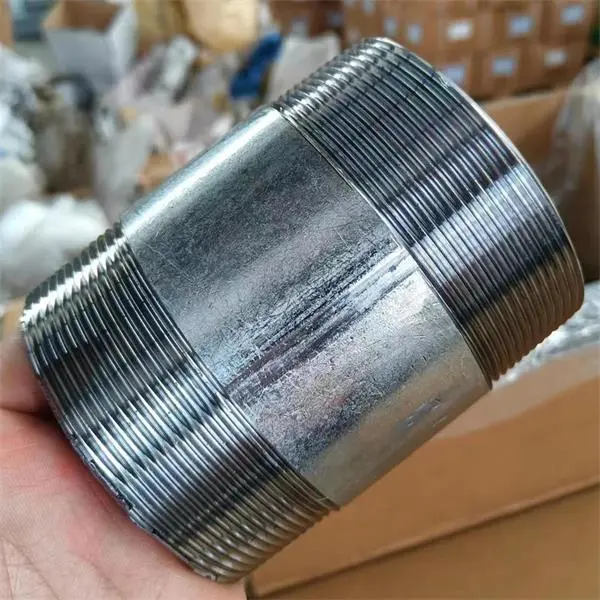
Seamless black iron pipe is a type of pipe manufactured without a welded seam, offering superior strength and reliability compared to welded alternatives. Predominantly composed of carbon steel, it undergoes a surface treatment process involving a light oil coating for corrosion resistance during storage and transportation – hence the “black” designation. Positioned as a foundational component in fluid and gas conveyance systems, it finds extensive application across diverse industries including potable water distribution, natural gas transmission, fire sprinkler systems, and industrial piping. Core performance characteristics include its high tensile strength, pressure-holding capacity, and adaptability to threaded connections. A significant challenge within the industry revolves around maintaining consistent material composition to mitigate corrosion risks and ensuring adherence to stringent safety standards for high-pressure applications.
Material Science & Manufacturing
The primary raw material for seamless black iron pipe is carbon steel, typically grades like A53 Grade B or A106 Grade B. These steels consist predominantly of iron, with carefully controlled additions of carbon (0.05-0.25%), manganese (0.2-1.0%), silicon (0.05-0.30%), phosphorus (max 0.04%), and sulfur (max 0.05%). These alloying elements influence properties like hardness, ductility, and weldability. Manufacturing commences with the creation of a solid billet of steel. This billet is then heated to a high temperature (typically above 1100°C) and pushed or drawn through a piercing die and a mandrel, forming a hollow tube. This process, known as rotary piercing, eliminates the need for welding. Subsequent steps involve re-rolling to achieve the desired wall thickness and diameter, heat treatment to refine the grain structure and enhance mechanical properties, and finally, the application of a protective oil coating. Critical parameters during manufacturing include temperature control in the piercing process to prevent cracking, mandrel speed and reduction ratio to ensure dimensional accuracy, and the cooling rate during heat treatment to optimize microstructure. Chemical composition verification is continuously performed through spectroscopic analysis at each stage to maintain quality control.
Performance & Engineering
The performance of seamless black iron pipe is fundamentally governed by its ability to withstand internal and external pressures, tensile stresses, and environmental corrosion. Force analysis involves calculating hoop stress (σh = PD/2t, where P is pressure, D is diameter, and t is wall thickness) and longitudinal stress, ensuring these values remain within the material's yield strength. Environmental resistance is a major consideration, particularly in applications involving exposure to moisture, corrosive chemicals, or fluctuating temperatures. Galvanic corrosion can occur when black iron pipe is coupled with dissimilar metals; therefore, proper dielectric fittings are crucial. Compliance requirements are dictated by industry standards like ASME B31.1 for power piping and ASME B31.3 for process piping. These standards specify allowable stresses, inspection procedures, and welding requirements. Functional implementation frequently relies on threaded connections adhering to ANSI/ASME B1.20.1 standards. Proper joint preparation and thread sealant application are vital to prevent leaks and maintain system integrity. Fatigue analysis is critical in applications subject to cyclic loading, such as fire sprinkler systems, to predict lifespan and prevent catastrophic failures.
Technical Specifications
| Parameter | ASTM A53 Grade B | ASTM A106 Grade B | ASTM A120 |
|---|---|---|---|
| Outside Diameter (inches) | 0.5 – 8.625 | 0.5 – 8.625 | 0.5 – 4 |
| Wall Thickness (inches) | Schedule 40, 80 | Schedule 40, 80 | Various |
| Tensile Strength (psi) | 70,000 min | 70,000 min | 70,000 min |
| Yield Strength (psi) | 36,000 min | 35,000 min | 30,000 min |
| Elongation (%) | 18 min | 18 min | 20 min |
| Hydrostatic Test Pressure (psi) | Varies by size & schedule | Varies by size & schedule | Varies by size & schedule |
Failure Mode & Maintenance
Common failure modes in seamless black iron pipe include corrosion (both general and pitting), fatigue cracking, and thread failure. Corrosion is often initiated by localized defects in the protective oil coating or by the presence of chlorides in the conveyed fluid. Fatigue cracking typically occurs in areas of high stress concentration, such as near threaded connections or welds (if subsequently welded for repairs). Thread failure can result from over-tightening, improper sealant application, or corrosion of the threads. Delamination, although less common in seamless pipe, can occur due to subsurface defects introduced during manufacturing. Oxidation occurs at high temperatures, leading to scale formation and reduced pipe wall thickness. Preventative maintenance involves regular visual inspections for signs of corrosion, particularly in exposed areas. Periodic hydrostatic testing can verify the integrity of the pipe. Application of additional protective coatings (e.g., epoxy coatings) can enhance corrosion resistance. Damaged threads should be replaced or repaired using appropriate threading tools. For significant corrosion or cracking, pipe replacement is recommended. Proper grounding is essential to prevent electrolytic corrosion. A comprehensive corrosion monitoring program should be implemented for critical applications.
Industry FAQ
Q: What is the primary difference between seamless and welded black iron pipe regarding pressure ratings?
A: Seamless pipe generally exhibits higher pressure ratings compared to welded pipe due to the absence of a weld seam, which represents a potential point of failure. The seamless construction provides a more uniform material structure and eliminates the stress concentration associated with welding. However, modern welding techniques have significantly narrowed this gap, and high-quality welded pipe can often meet similar pressure requirements.
Q: How does the oil coating on black iron pipe contribute to its long-term performance?
A: The oil coating serves as a temporary corrosion inhibitor, protecting the pipe surface from rust and oxidation during storage and transport. While not a permanent solution, it significantly extends the lifespan of the pipe before installation. However, this coating must be removed and threads properly prepared before applying thread sealant and making connections. Failure to do so can compromise the joint’s integrity.
Q: What are the implications of using black iron pipe with dissimilar metals in a fluid system?
A: Combining black iron pipe with dissimilar metals (e.g., copper, aluminum) can lead to galvanic corrosion. This occurs because of differences in electrochemical potential, causing the more active metal (typically iron) to corrode preferentially. To mitigate this, dielectric unions or couplings should be used to electrically isolate the different metal sections.
Q: What considerations are important when selecting the appropriate schedule (e.g., Schedule 40, Schedule 80) for a black iron pipe application?
A: The schedule dictates the pipe's wall thickness and, consequently, its pressure-holding capacity. Schedule 80 pipe has a thicker wall and higher pressure rating than Schedule 40. Selection should be based on the maximum operating pressure, fluid temperature, and any applicable safety factors specified by industry standards. Higher pressures and temperatures necessitate a higher schedule.
Q: What is the role of hydrostatic testing in ensuring the integrity of a newly installed black iron pipe system?
A: Hydrostatic testing involves pressurizing the pipe system with water to a specified pressure (typically 1.5 times the maximum operating pressure) and holding it for a defined period. This test verifies the absence of leaks and confirms the structural integrity of the pipe and connections. It is a critical step in ensuring a safe and reliable fluid conveyance system.
Conclusion
Seamless black iron pipe remains a vital component in numerous industrial and commercial applications due to its inherent strength, durability, and cost-effectiveness. Understanding the interplay between material science, manufacturing processes, and engineering principles is paramount for ensuring optimal performance and preventing premature failures. Proper selection of pipe schedule, careful installation practices, and a robust maintenance program are all critical elements in maximizing the lifespan and reliability of these systems.
Future advancements in coatings technology and corrosion inhibition will continue to enhance the performance and longevity of black iron piping. The integration of smart monitoring systems, capable of detecting early signs of corrosion or stress, offers the potential for proactive maintenance and reduced downtime. Adherence to evolving industry standards and best practices will remain crucial for ensuring the safe and efficient operation of these essential fluid conveyance systems.
