

Introduction
Seamless casing is a hollow, cylindrical pipe manufactured without a welded seam. This distinguishes it from welded pipe, offering superior structural integrity and resistance to pressure. Primarily utilized in demanding applications within the oil and gas, petrochemical, and power generation industries, seamless casing functions as a critical component in well construction, serving to prevent borehole collapse, isolate zones, and facilitate the safe extraction of hydrocarbons. Its technical position resides within the upstream sector of the oil and gas industry chain, acting as a foundational element for wellbore stability. Core performance characteristics center around its ability to withstand high internal and external pressures, resist corrosion, and maintain dimensional stability under extreme temperatures. The increasing demand for deeper wellbores and harsher operating environments is driving a constant need for higher-grade, more durable seamless casing solutions, presenting ongoing challenges in material science and manufacturing techniques.
Material Science & Manufacturing
Seamless casing is typically manufactured from high-strength alloy steels, primarily carbon steel, alloy steel (containing chromium, molybdenum, nickel, etc.), and stainless steel. The raw materials' physical properties are paramount; yield strength, tensile strength, elongation, and impact toughness are tightly controlled. Carbon content influences weldability and hardness, while alloying elements contribute to corrosion resistance and strength at elevated temperatures. Manufacturing begins with billet preparation, often involving controlled heating and forging to refine the grain structure. The most common method is the Mannesmann process, where a solid billet is pierced and then drawn over a mandrel to create a hollow tube. Alternatively, hot extrusion can be employed, particularly for specialized alloys. Key parameter control includes precise temperature regulation during heating and forming, accurate mandrel sizing to achieve desired wall thickness and diameter, and controlled cooling rates to minimize residual stresses. Non-destructive testing (NDT) methods, such as ultrasonic testing (UT), magnetic particle inspection (MPI), and hydrostatic testing, are crucial to detect any internal or surface defects. Chemical composition is verified through techniques like optical emission spectroscopy (OES) to ensure compliance with specified standards.
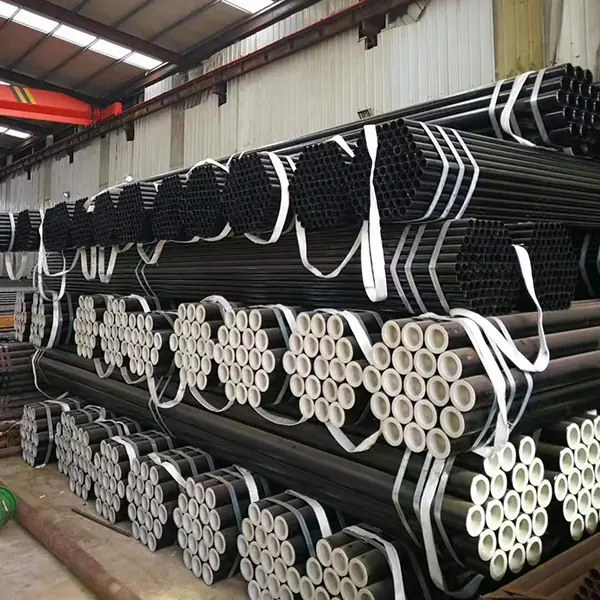
Performance & Engineering
The performance of seamless casing is dictated by its ability to resist various forces, including axial tension and compression from the weight of the tubing and fluids, burst pressure from internal wellbore pressure, and collapse pressure from external formation stresses. Force analysis involves applying principles of mechanics of materials, considering factors like casing diameter, wall thickness, material properties, and connection type. Environmental resistance is critical, particularly in corrosive wellbore environments. Corrosion can be mitigated through the selection of appropriate alloy steels, application of internal and external coatings (epoxy, polyethylene, etc.), and the use of corrosion inhibitors. Compliance requirements are stringent, adhering to standards set by organizations like the American Petroleum Institute (API) and various international regulatory bodies. Functional implementation involves threading the casing with specific connections (e.g., API connections, premium connections) to ensure a leak-proof seal. Connection design plays a vital role in load transfer and overall casing string integrity. Buckling analysis is performed to predict the casing’s behavior under compressive loads, and fatigue analysis assesses the long-term durability under cyclic loading.
Technical Specifications
| Grade | Outside Diameter (inches) | Wall Thickness (inches) | Yield Strength (psi) |
|---|---|---|---|
| J55 | 4 ½ | 0.280 | 57,000 |
| K55 | 5 ½ | 0.375 | 65,000 |
| N80 | 7 | 0.438 | 85,000 |
| L80 | 9 ⅝ | 0.500 | 95,000 |
| P110 | 13 ⅜ | 0.625 | 110,000 |
| Q125 | 16 | 0.750 | 125,000 |
Failure Mode & Maintenance
Common failure modes in seamless casing include corrosion (general, pitting, galvanic, and stress corrosion cracking), fatigue cracking (caused by cyclic loading), collapse (due to external pressure exceeding casing strength), and thread failure (resulting from improper make-up or overload). Failure analysis often involves metallurgical examination of fractured surfaces to determine the root cause. Corrosion can be identified through visual inspection, electrochemical testing, and weight loss measurements. Fatigue cracking typically initiates at stress concentrators (e.g., thread roots, dents) and propagates under cyclic loading. Collapse can be predicted through buckling analysis, and thread failure is often related to improper torque application. Preventive maintenance involves regular inspection for corrosion and damage, application of protective coatings, implementation of corrosion monitoring programs, and adherence to proper make-up procedures. In cases of localized corrosion or damage, casing patches or liners can be deployed to restore integrity. Periodic hydrostatic testing can verify the casing’s pressure-holding capacity. Monitoring for hydrogen embrittlement is crucial for high-strength steels operating in sour environments. Proper cementing practices are also essential to prevent corrosion and provide support for the casing string.
Industry FAQ
Q: What is the primary difference between API 5L X52 and API 5L X65 seamless casing, and how does this impact selection criteria?
A: The primary difference lies in their yield strength. X65 has a minimum yield strength of 65,000 psi, while X52 is 52,000 psi. This higher strength allows X65 to be used with thinner wall thicknesses for the same design pressure, potentially reducing material costs. However, X65 is more susceptible to hydrogen embrittlement in sour service and requires more stringent manufacturing controls. Selection criteria depend on the specific wellbore conditions, expected pressures, and the presence of corrosive fluids.
Q: How does the choice of casing connection (e.g., API, premium) influence the overall integrity of a wellbore?
A: Casing connections are critical for load transfer and preventing fluid leakage. API connections are more common and cost-effective but offer lower sealing efficiency and axial load capacity. Premium connections (e.g., VAM, TenarisBlue) incorporate advanced thread designs and sealing mechanisms to provide higher axial load capacity, enhanced sealing, and improved resistance to galling and corrosion. Premium connections are often preferred in high-pressure, high-temperature wells or in applications where reliable sealing is paramount.
Q: What are the implications of using non-conforming casing materials, and what quality control measures are typically implemented?
A: Using non-conforming materials can lead to catastrophic failures, including burst, collapse, and corrosion. Strict quality control measures are implemented throughout the manufacturing process, including raw material verification, chemical composition analysis, mechanical property testing, dimensional inspection, and non-destructive testing (UT, MPI, hydrostatic testing). Detailed documentation and traceability are essential to ensure material conformity and identify any potential defects.
Q: What is the role of corrosion inhibitors and internal coatings in extending the service life of seamless casing?
A: Corrosion inhibitors are chemicals added to the wellbore fluids to reduce the corrosion rate of the casing. They form a protective film on the metal surface, preventing contact with corrosive agents. Internal coatings (e.g., epoxy, polyethylene) provide a physical barrier between the casing and the wellbore fluids, significantly reducing corrosion. The choice of inhibitor or coating depends on the specific corrosive environment and the casing material.
Q: How are the effects of thermal expansion and contraction managed in long casing strings?
A: Thermal expansion and contraction can induce significant stresses in long casing strings. These stresses are managed through careful design considerations, including the use of expansion joints, centralizers to maintain casing alignment, and proper cementing practices to provide support and distribute loads. Buckling analysis is performed to predict the casing’s behavior under thermal loading, and stress analysis is used to optimize the casing design for minimizing thermal stresses.
Conclusion
Seamless casing remains a critical component in the oil and gas industry, ensuring wellbore integrity and enabling safe and efficient hydrocarbon extraction. Its superior strength and resistance to pressure compared to welded alternatives make it indispensable in demanding applications. Advances in material science, manufacturing processes, and corrosion mitigation techniques continue to enhance its performance and extend its service life. The ongoing challenges of deeper wells, harsher environments, and increasing regulatory scrutiny necessitate continuous innovation in seamless casing technology.
Looking forward, the industry is likely to see increased adoption of high-alloy steels, advanced coatings, and sophisticated connection designs to address the evolving demands of well construction. Furthermore, the integration of digital technologies, such as real-time corrosion monitoring and predictive failure analysis, will play a crucial role in optimizing casing performance and minimizing operational risks. A thorough understanding of the material properties, manufacturing processes, and potential failure modes of seamless casing is essential for ensuring the long-term integrity and reliability of wellbores.
